 PalV's Kasti
On this page
- Why does Mumbai love Parsi food so much?
- Where can you eat Parsi food in Mumbai today?
- Where can you buy Parsi snacks, sweets and takeaway meals?
- Is an Irani cafe the same as a Parsi restaurant?
- Which well-known Parsi and Irani eateries have closed?
- Where do Mumbai Parsis eat the wedding feast?
- Frequently asked questions
For a sit-down plate of Parsi cuisine in Mumbai, start in Fort. Britannia & Co. at Ballard Estate, which opened in 1923, turns up in every guide we checked for berry pulao, sali boti and dhansak. Ideal Corner and Café Military, a short walk away, serve sali boti, dhansak and caramel custard to the office crowd. The Ripon Club does a Wednesday dhansak for its Parsi circle, and the Ratan Tata Institute sells packed Parsi meals and snacks. The fullest version of the food, though, is still the wedding feast cooked by Parsi caterers. Mumbai loves this food for a plain reason: it has been the Parsis' main city since the 19th century, and from the late 1800s cafes set up by Parsis and migrants from Iran sold dhansak to its workers.
શહેરેવર રોજ
Shehrevar Roj, Tir Mah · 1396 Y.Z.
Why does Mumbai love Parsi food so much?
Mumbai loves Parsi food because the Parsis made Bombay their main city, and their cooking grew up alongside it. Encyclopaedia Iranica describes how fires, floods and raids in Surat pushed Parsis south, and how business moved to Bombay in the 19th century. The concentration kept growing. Iranica's figures show the share of India's Zoroastrians living in Bombay rising from 52 percent in 1941 to 73 percent in 1981, and it describes Bombay as having the largest Zoroastrian population of any city in the world.
The food reached non-Parsis early. Writing in Dawn, Bisma Tirmizi dates dhansak's wide popularity to the late 19th century and the fast growth of Bombay and Karachi, when Parsi immigrants from Iran ran small street-corner tea stores selling soda, biscuits, omelettes and dhansak to working men. Homegrown's history of the dish gives the same late 19th-century date and says the little cafes set up by Parsis and Iranis sold dhansak to the city's workforce.
If you want the bigger picture first, our guide to Parsi food covers the cuisine as a whole, and Zoroastrian food and migration explains the Persian side of the story.
Where can you eat Parsi food in Mumbai today?
Most places that serve Parsi dishes cluster in Fort and Ballard Estate in south Mumbai. Opening days and menus change, and several older names have shut since 2025, so call ahead before you make the trip.
| Place | Area | Known for | Good to know |
|---|---|---|---|
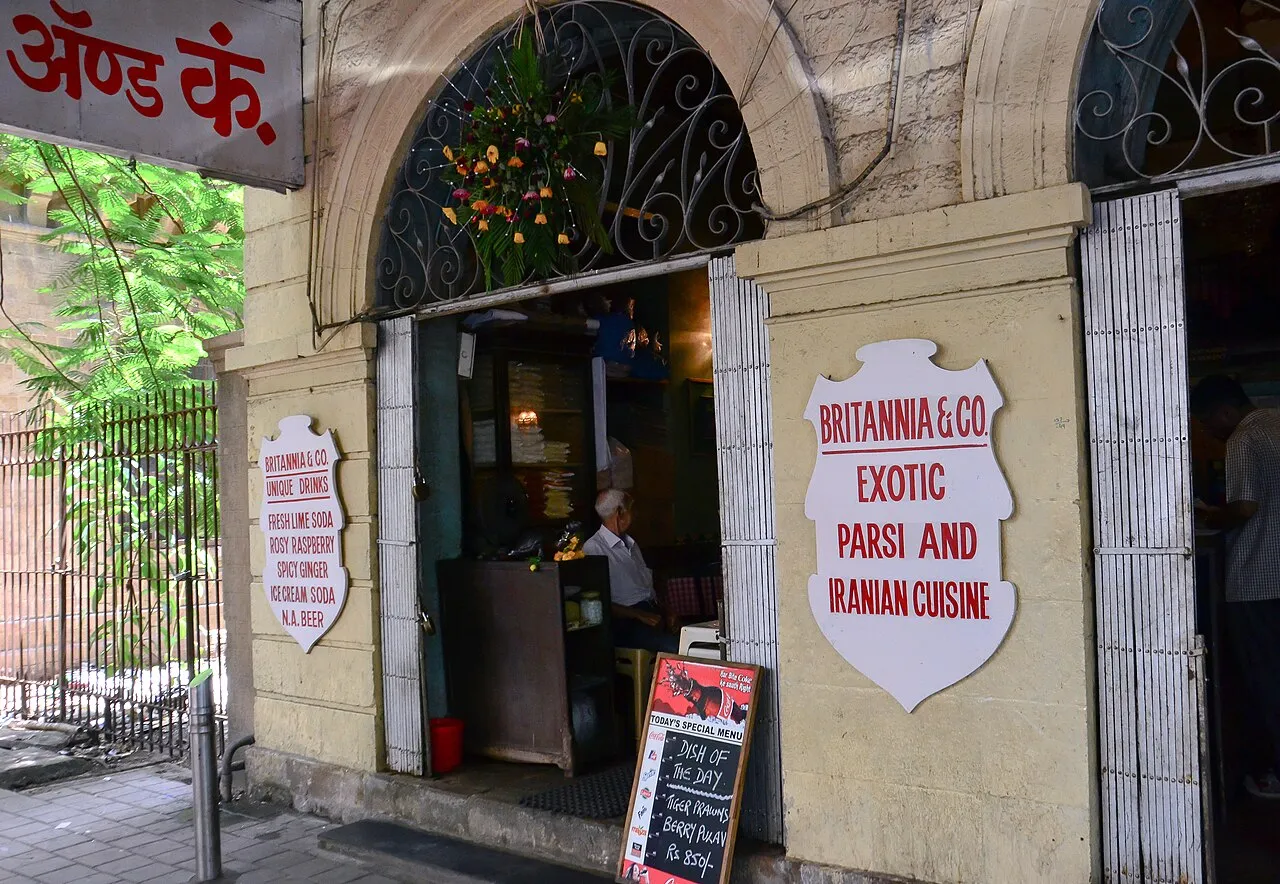
| Britannia & Co. | Ballard Estate, Fort | Berry pulao, sali boti, dhansak, caramel custard | Opened 1923; weekday lunch hours in 2021 |
| Ideal Corner | Fort | Sali boti, sali chicken, dhansak, lagan nu custard | Menu rotates by day |
| Café Military | Nagindas Master Road, Fort | Dhansak, sali boti, keema pav, caramel custard | An Irani cafe with Parsi dishes |
| Ripon Club | Wadia Building, near Kala Ghoda | Wednesday dhansak | A Parsi club, not a public restaurant |
| Ratan Tata Institute (RTI) | Hughes Road and other outlets | Pulav dal, lagan nu stew, daal poli | Packed meals to take home |
Britannia & Co., Ballard Estate
Britannia & Co. was founded in 1923 by Rashid Kohinoor, a Zoroastrian from Yazd in Iran, according to The Tribune and The Better India. Afshin Kohinoor told The Tribune that a British municipal official made a British name the condition for a quick licence, which is how it became Britannia. Both papers credit the berry pulao, topped with barberries, to Boman Kohinoor's wife, and The Better India adds that she had been posted in Iran for several years. Order it with sali boti or dhansak and finish with caramel custard. Homegrown's 2021 guide listed lunch hours only, 12 to 4 pm, Monday to Friday. Check that before you go.
Ideal Corner, Fort
Ideal Corner is an office-lunch favourite in Fort. Free Press Journal noted in 2019 that its menu rotates every month, with different dishes each day from Tuesday to Sunday, and Outlook Traveller's Shabnam Minwalla wrote in 2015 that dhansak appeared on Wednesdays and Fridays while sali boti and sali chicken were daily items. In 2023 The Better India wrote that guests recommend its lagan nu custard.
Café Military, Fort
Café Military is an Irani cafe that serves Parsi food alongside its keema pav and bun maska. The Better India reported in 2016 that it opened in 1933, when Khodaram B. Golabi, father of owner Behram K. Khosravi, bought the place. Outlook Traveller's November 2025 guide placed it on Nagindas Master Road and listed dhansak, sali boti, masoor gosht and caramel custard among its dishes.
Ripon Club, near Kala Ghoda
The Ripon Club is a Parsi club on the third floor of the Wadia Building, and Wednesday is its dhansak day. Outlook Traveller recommended its Wednesday dhansak lunch in 2015, and a Free Press Journal visit in December 2025 found the same, with akuri on toast on Mondays and salli par edu on Tuesdays. The paper calls the club an exclusive preserve of Parsis. It is a club, not a public restaurant.
Where can you buy Parsi snacks, sweets and takeaway meals?
The Ratan Tata Institute, usually called RTI (Outlook Traveller names it the Lady Ratan Tata Institute), is the easiest place to take Parsi food home. Outlook Traveller described its outlets in 2015 as stocking packed Parsi meals and snacks such as daal poli, and Free Press Journal's 2019 list named its Hughes Road outlet for pulav dal, lagan nu stew, cutlets and patties. For sweets, the same 2015 Outlook guide pointed to Parsi Dairy Farm on Princess Street for malai khaja and mava ni machhi.
Is an Irani cafe the same as a Parsi restaurant?
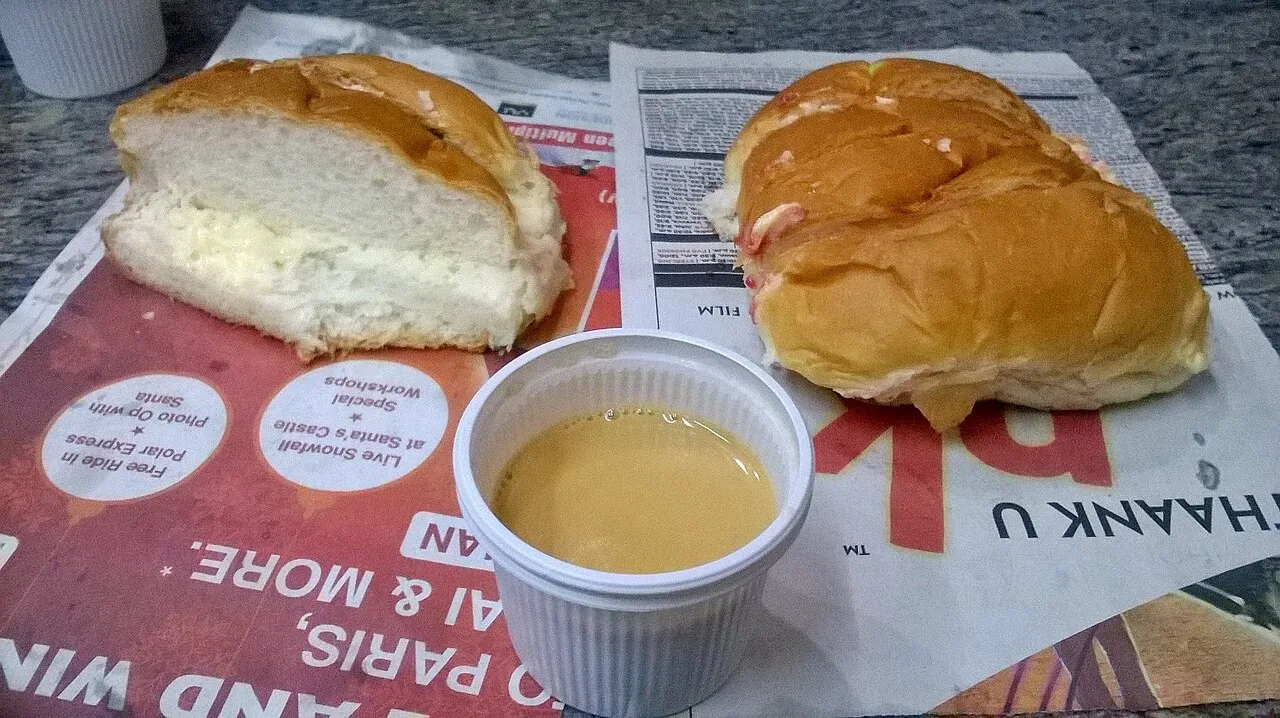
No. An Irani cafe is a tea shop started by later migrants from Iran, and its everyday menu is chai, bun maska, keema pav and omelettes. Encyclopaedia Iranica notes that Zoroastrians who came from Iran became famous for these tea shops. Some, like Britannia and Café Military, also cook Parsi dishes, which is why the two get mixed up. For the cafe experience, go to Kyani & Co. at Dhobi Talao near Marine Lines, dated to 1904 by The Better India and described as 120 years old by Outlook Traveller in 2025. Yazdani Bakery in Fort, set up in the early 1950s according to Outlook Traveller, is another.
Which well-known Parsi and Irani eateries have closed?
Jimmy Boy near Horniman Circle stopped serving in its Fort building on 20 June 2025, after the municipal corporation declared the structure unsafe. Free Press Journal and Outlook Traveller both reported the closure, three months short of its 100th year. The owners called it a temporary pause and hoped to reopen in the same premises or nearby. In August 2026 Free Press Journal reported that the Bombay High Court had allowed the building to be repaired instead of demolished, with occupants kept out until the work is done. We could not confirm that Jimmy Boy has reopened, so check before you go. B. Merwan & Co., opposite Grant Road station and dated to 1914 by Outlook Traveller, has had a closure notice at its entrance since 1 January 2026, the same magazine reported.
Where do Mumbai Parsis eat the wedding feast?
The fullest Parsi meal in Mumbai is the wedding or navjote feast, and you eat it as a guest. Outlook Traveller explains that the Parsi wedding feast is called a patra because it comes on a banana leaf, with dishes such as patra ni machhi, saas ni machhi, sali murgi and mutton pulao. The cooks are Parsi caterers. Outlook called Tanaz Godiwalla legendary in 2015, and Homegrown's 2021 guide noted she caters seasonally, from December to February, during the navjote and lagan season.
For what each of these dishes is, see our list of Classic Parsi dishes. To cook them at home, our Parsi recipes collection is the place to start.
Frequently asked questions
Which is the most famous Parsi restaurant in Mumbai?
Britannia & Co. at Ballard Estate appears in every Mumbai guide we checked, from 2015 to 2025. Rashid Kohinoor, a Zoroastrian from Yazd, opened it in 1923, and it is best known for berry pulao, sali boti and dhansak. Homegrown's 2021 guide listed weekday lunch hours only, so check timings before you plan a visit.
Where can I eat dhansak in Mumbai?
Britannia & Co., Ideal Corner and Café Military in Fort all serve dhansak, and the Ripon Club, a Parsi club near Kala Ghoda, serves it on Wednesdays. In 2015 Ideal Corner served dhansak only on Wednesdays and Fridays, so ask before you go if dhansak is the reason for your trip.
Is Jimmy Boy in Mumbai closed?
Jimmy Boy stopped dine-in service at its Fort building near Horniman Circle on 20 June 2025, after the municipal corporation declared the building unsafe. The owners described it as a temporary pause and spoke of reopening nearby. In August 2026 the Bombay High Court allowed repairs to the building. We could not confirm a reopening as of November 2026.
Where can I buy packed Parsi food in Mumbai?
The Ratan Tata Institute, or RTI, sells packed Parsi meals and snacks from its outlets, including the one on Hughes Road. Pulav dal, lagan nu stew, daal poli, cutlets and patties have all been on its counters. For Parsi sweets like malai khaja and mava ni machhi, Outlook Traveller's 2015 guide pointed to Parsi Dairy Farm on Princess Street.
Why is Mumbai the home of Parsi cuisine?
Parsis moved from Surat, and later from rural communities, to Bombay as business shifted there from the 19th century on. By 1981, Encyclopaedia Iranica reports, 73 percent of India's Zoroastrians lived in Bombay. Dawn and Homegrown both date dhansak's popularity to the late 19th century, when cafes sold it to the city's workers.


