PalV's Kasti
On this page
- Who was Jnanadanandini Devi?
- When and where did she first see the Parsi sari?
- Why didn't the Bengali sari of the time work outside the home?
- What did Jnanadanandini Devi change in the Parsi drape?
- What is the Brahmika sari, and what else was the drape called?
- How did the new drape spread through Bengal?
- Did the Bengal drape become today's nivi sari?
- Did Parsi women change their own drape?
- Frequently asked questions
The Parsi way of wearing the sari reached Bengal through Jnanadanandini Devi, wife of Satyendranath Tagore. Banglapedia dates her journey to western India with her husband to 1864. In Bombay she saw Parsi women wearing the sari with a blouse and a petticoat, the pallu laid over the right shoulder. She adapted the style, moved the pallu to the left shoulder so her right hand stayed free, and then taught it to other women in Calcutta, where it became known as the "Bombay Dastur". Later writers have called the same look the Thakurbari sari and the Brahmika sari. Parsi women themselves kept their pallu on the right.
શહેરેવર રોજ
Shehrevar Roj, Tir Mah · 1396 Y.Z.
Who was Jnanadanandini Devi?
Jnanadanandini Devi was the wife of Satyendranath Tagore, an elder brother of the poet Rabindranath Tagore. She was married as a child. Banglapedia's entry, written by the historian Ghulam Murshid, says she was eight. A March 2025 PTI report on a new book about the Tagore family says seven.

As a married woman in the Tagore household she lived in the zenana, the inner rooms "reserved for female family members of the household", as Aashnai Syeda put it in The Daily Star in July 2022. Harper's Bazaar India wrote in August 2024 that she played "a pivotal role in shaping the sartorial identity" of Bengal in the 19th century.
When and where did she first see the Parsi sari?
Banglapedia gives the year: Satyendranath came back to India in 1864 as an officer of the Indian Civil Service and took her to his posting in Ahmedabad. The Impart Encyclopedia of Art, published by the Art & Photography Foundation, says she moved to Bombay and saw Parsi women there.

The sources differ on the details of the journey:
- Banglapedia: on the way to Ahmedabad the couple spent three months as houseguests at a Parsi house in Bombay.
- Impart: she lived in Bombay and noticed the way Parsi women there wore the sari.
- The Daily Star (2022): Satyendranath took his young wife across India to Bombay, where she mixed with Parsi and European women.
- Department of Posts, Government of India (2019): she improvised on the sari worn by Parsi women "during a tour of Gujarat with her husband".
All four place the encounter in western India, and all four name Parsi women as the model.
What she saw is described in similar terms. Banglapedia says the women in the house wore saris "along with bodices, petticoats, blouses and shoes". Impart says Parsi women in Bombay wore the sari with a blouse and petticoat, with the pallu over the right shoulder.
Why didn't the Bengali sari of the time work outside the home?
In Bengal, Impart notes, saris were traditionally worn without a blouse or a petticoat, and in Bombay that style was thought unsuitable for public use. Banglapedia describes Bengali women's dress of the period as "just a sari and, sometimes, a shawl", which was not enough for going out of the home. The Daily Star adds that the zenana sari was "not intended for public wear".
The social setting mattered too. The Department of Posts' 2019 press note says that in Bombay she moved in European circles, which meant dressing differently, and the traditional Bengali way of wearing the sari "appeared unwieldy".
What did Jnanadanandini Devi change in the Parsi drape?
She kept the Parsi pieces and changed the shoulder. Impart says she moved the pallu from the right shoulder to the left so she could use her right arm freely. The Department of Posts gives the same reason: her right hand "remained free for courtesies".
| Feature | Parsi women in Bombay, as the sources describe it | Jnanadanandini Devi's version |
|---|---|---|
| Pallu | Over the right shoulder (Impart, Department of Posts) | Over the left shoulder, right arm free (Impart, Department of Posts, The Daily Star) |
| Blouse and petticoat | Worn with the sari (Impart, Banglapedia) | Kept, with pleats in the front (PTI) |
| Pleats | Not described in the sources we read | Frontal pleats (The Daily Star) |
| Accessories | Shoes, noted by Banglapedia | Brooches (The Daily Star) |
| Length | Not stated | Lengthened from five yards to almost six (Impart) |
Impart adds that almost six yards is still the standard sari length today.
What is the Brahmika sari, and what else was the drape called?
The drape has gone by three names, each from a different source:
- Bombay Dastur. Impart says this was the name the style took in Calcutta.
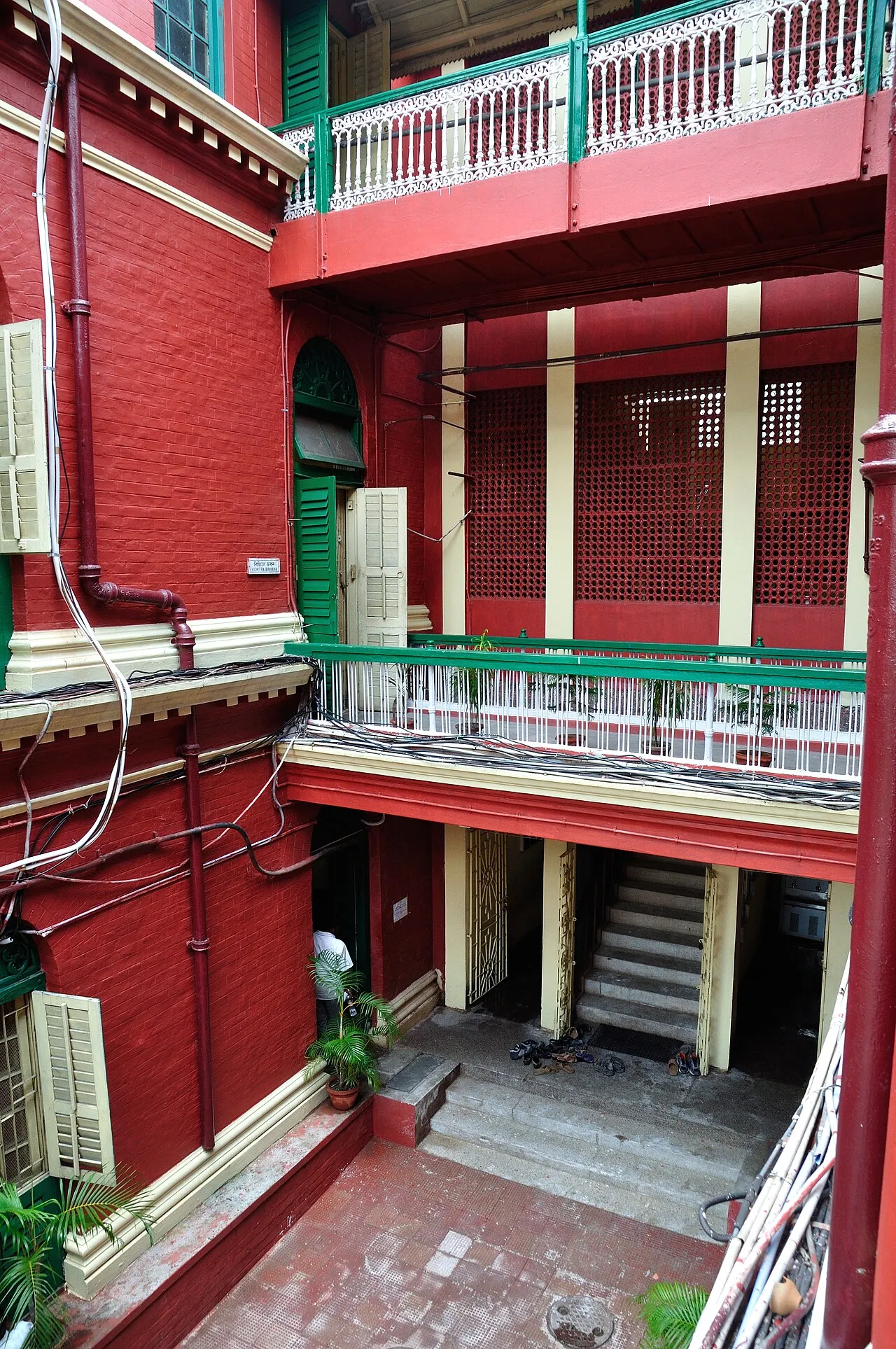
- Thakurbari sari. The Daily Star says the style "became to be known as the Thakurbari Sari". Thakurbari is the Tagore family's ancestral home in Kolkata.
- Brahmika sari. Harper's Bazaar India, in an August 2024 shoot in which the actor Swastika Mukherjee recreated looks from the Tagore household, wrote that the Brahmika sari "was originally popularised by Jnanadanandini Devi".
Harper's Bazaar India also says the drape took its inspiration from "the Parsi Gara sari", which it says Gujarati and Parsi women wore. The reference works speak of the Parsi way of wearing the sari in general, not the gara in particular. We couldn't find a source that explains where the name Brahmika comes from, so we haven't guessed. For what a gara is, see our guide to the Parsi gara saree.
How did the new drape spread through Bengal?
It met resistance first. Banglapedia records that "the family people were outraged by her dress". The PTI report on journalist Animesh Mukherjee's Hindi book, Thakurbari: Gurudev Rabindranath Tagore ka Kutumb Vritant (Penguin), says the style "was called uncultured, obscene and bad".
She wore it anyway. Banglapedia says she wore the same dress to a dinner party given by the Viceroy. She then wrote an article in the women's monthly Bamabodhini Patrika and offered a set of the dress free to anyone who wanted one. The Daily Star says she trained other women through advertisements in the same magazine, and the Department of Posts says she "even offered to train other women".
Then it caught on. Impart credits her willingness to teach the drape for its spread across Calcutta. According to the PTI report, Mukherjee's book says Bengali women "made a beeline" to her house for the "controversial" blouse. Banglapedia says it was not long before other upper-class women "followed her style".
The actor Sharmila Tagore, quoted in The Pioneer, said Jnanadanandini "introduced the Parsi way of draping the sari", and credited her with the freedom women now have to drape saris "with pleats or around shoulders" in their own ways.
Did the Bengal drape become today's nivi sari?
Scholars don't agree. Impart notes that some scholars credit Jnanadanandini Devi with inventing the contemporary nivi drape. Other theories, it says, trace the nivi to the Dravidas, because it resembles the veshti of South India, and others place its origin in Andhra Pradesh. Mukherjee's book, as PTI reports it, goes further and says her style became the "default way of draping a saree across India". We set out the positions and leave the question open. The wider story of Parsi influence on the sari is in how Parsi women shaped the modern sari.
Did Parsi women change their own drape?
No source we read says they did. The Department of Posts' 2019 press note says Parsi women have always worn the palla on the right shoulder, never the left. The step-by-step method is in our guide to the Parsi saree drape, and a girl's first sari is covered in sari perawanu, a Parsi girl's first sari.
Frequently asked questions
Who brought the Parsi sari drape to Bengal?
Jnanadanandini Devi, wife of Satyendranath Tagore. Banglapedia says she went to western India with him in 1864. In Bombay she saw Parsi women wearing the sari with a blouse and petticoat, and adapted the style. Back in Calcutta she taught it to other women, and Impart says the city called it the Bombay Dastur.
Why is the pallu on the left in the Bengali version?
Jnanadanandini Devi moved it there. The Parsi women she copied wore the pallu over the right shoulder. Impart says she shifted it to the left shoulder so she could use her right arm freely, and India's Department of Posts says the change kept her right hand free for courtesies when she met people.
What is the Brahmika sari?
Brahmika sari is one of the names given to the drape Jnanadanandini Devi popularised in Bengal. Harper's Bazaar India used it in 2024, The Daily Star calls the same style the Thakurbari sari, and Impart records that Calcutta knew it as the Bombay Dastur. All three link it to the way Parsi women wore the sari.
What did Bengali women wear before the new drape?
Banglapedia says Bengali women's dress of the period was just a sari and sometimes a shawl. Impart notes that saris in Bengal were traditionally worn without a blouse or a petticoat. That style was thought unsuitable for public use in Bombay, which is why Jnanadanandini Devi looked for an alternative while she lived there.
Is the Parsi drape the same as the nivi drape?
No. Both use a blouse and petticoat, but the Parsi drape lays the pallu over the right shoulder, while the nivi takes it over the left. Some scholars, Impart notes, credit Jnanadanandini Devi's left-shoulder adaptation as the start of the contemporary nivi, while other theories trace the nivi to South India.