PalV's Kasti
On this page
In India the Parsi priesthood is hereditary and open only to the sons of priests. Membership follows the father: a Parsi man who marries out can raise his children as Parsis, while the children of a Parsi woman who marries out are generally not accepted. Some women who marry out have been kept out of Agiaries and their parents' last rites, and that question was argued before a nine-judge Supreme Court bench in 2026. Parsi girls also went to school early and in large numbers. Below is what the records say, and how each side argues.
શહેરેવર રોજ
Shehrevar Roj, Tir Mah · 1396 Y.Z.
Who can become a Parsi priest?
The Bombay High Court put it plainly in its 1908 judgment in Petit v. Jeejeebhoy: "A Mobed must be the son of a Mobed", and a layman, a Behdin, can never become one. National Geographic's April 2024 report on Zoroastrians says the same of Parsi tradition today. A caption there adds that women are taking on priestly roles outside India, without details. We found no second source on that.
Practice varies between families and Agiaries; your family priest's guidance comes first.
Why does it matter whether the Parsi parent is the mother or the father?
Because the courts and trusts have counted the father's line. In the 1908 case, the defendants, who controlled the community's funds and institutions, named the children of Parsi fathers by non-Parsi mothers among those entitled to them, provided those children were admitted into the religion. In 1925, in Saklat v. Bella, the Privy Council said that for the racial claim "maternity is of no importance". A 2011 paper in Demographic Research sums up the result: a child needs a Parsi father to be counted as Parsi, so a Parsi woman's children by a non-Parsi husband are not. Our guide to Women in Zoroastrianism covers women's place in the religion itself.
Practice varies between families and Agiaries; your family priest's guidance comes first.
What happens when a Parsi woman marries outside the community?
Goolrokh Gupta, born Parsi, married a Hindu man under the Special Marriage Act, 1954. According to the Supreme Court Observer, the Parsi trust in her hometown of Valsad barred her from Parsi institutions, which would have kept her from her parents' last rites. On 7 December 2017 the Supreme Court disagreed with the doctrine that a woman's religion merges into her husband's. Scroll reported Chief Justice Dipak Misra asking, "Who can take away the religious identity of a woman?" A man who marries out keeps his identity, the bench noted, so why not a woman? It asked the Valsad trust whether she could attend her parents' last rites, Scroll and Parsi Times reported.
Where do the court cases stand in 2026?
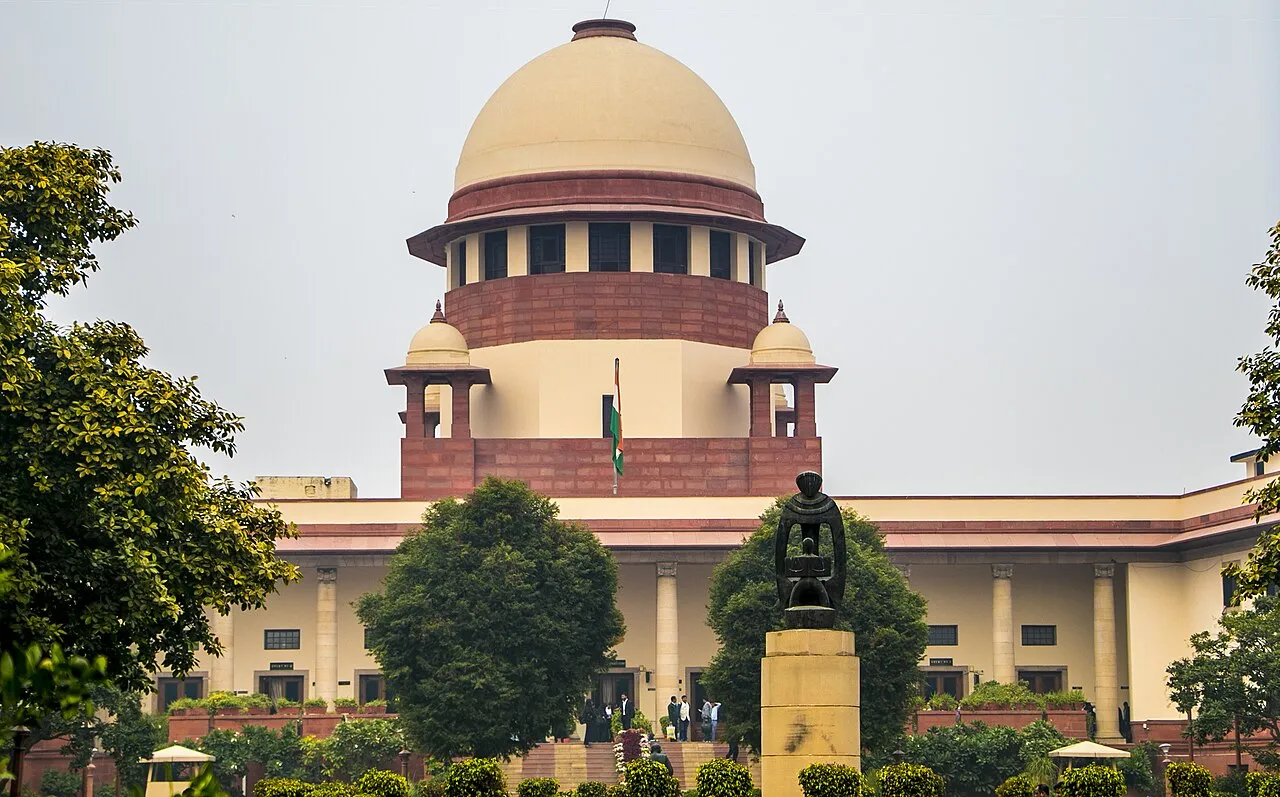
Her case is now part of the Sabarimala reference before a nine-judge bench, which, SCC Online reported, covers the excommunication of Parsi women who marry out. The bench reserved its verdict on 14 May 2026, as IANS and Kerala Kaumudi reported. On 2 October 2026, Kerala Kaumudi said the verdict was expected that month. It was pending as of that report, and LiveLaw's page on the reference listed no verdict when we checked on 16 November 2026.
Two related petitions were pending at the dates reported. One, heard on 10 February 2026, asks the court to declare the 1908 ruling bad law (LawBeat). The other, heard on 25 May 2026, challenges a Nagpur Parsi Panchayat rule under which a Parsi woman who marries a non-Parsi man and has children by him is not accepted as a Parsi Zoroastrian, and nor are her children (LiveLaw).
This is general information, not legal advice; for a specific case, speak to a lawyer.
How do the two sides put their case?
Those seeking change argue from equality. Senior Advocate Percival Billimoria told the Supreme Court in February 2026 that the 1908 judgment was "blatantly discriminatory to women", LawBeat reported. Vispy Wadia, president of the Association of Intermarried Parsis, told ThePrint in August 2023 that such women are no longer socially ostracised, "But there's religious othering of women."
Those defending the rules argue from identity. A Bombay Parsi Punchayet trustee, unnamed in ThePrint's 2023 report, said: "Everyone may embrace the faith, but everyone cannot become a Parsi." When author Prochy N. Mehta went to the Calcutta High Court in 2017 after her grandchildren were refused entry to the city's only fire temple, the Federation of Parsi Zoroastrian Anjumans of India intervened to keep non-Parsis out, ThePrint reported.
The argument reaches family planning too. Writing in Scroll in November 2014, Simin Patel, who runs the Bombaywalla blog on Mumbai's past, said the Jiyo Parsi campaign reduced women "to baby-bearing machines". She also recalled the iron chair Parsi women were once made to sit on during their periods. We found no scriptural source on what the faith requires during menstruation, so we state none.
Practice varies between families and Agiaries; your family priest's guidance comes first.
How did education change things for Parsi women?
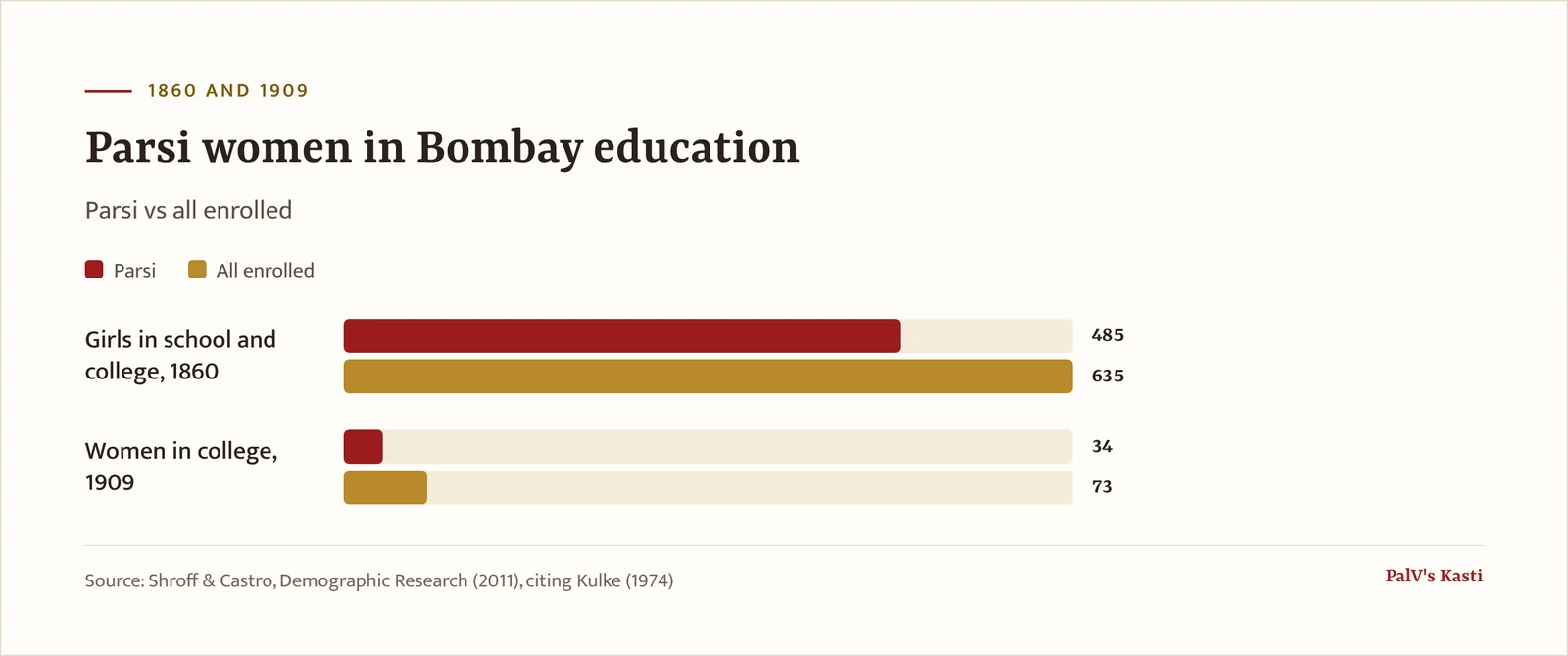
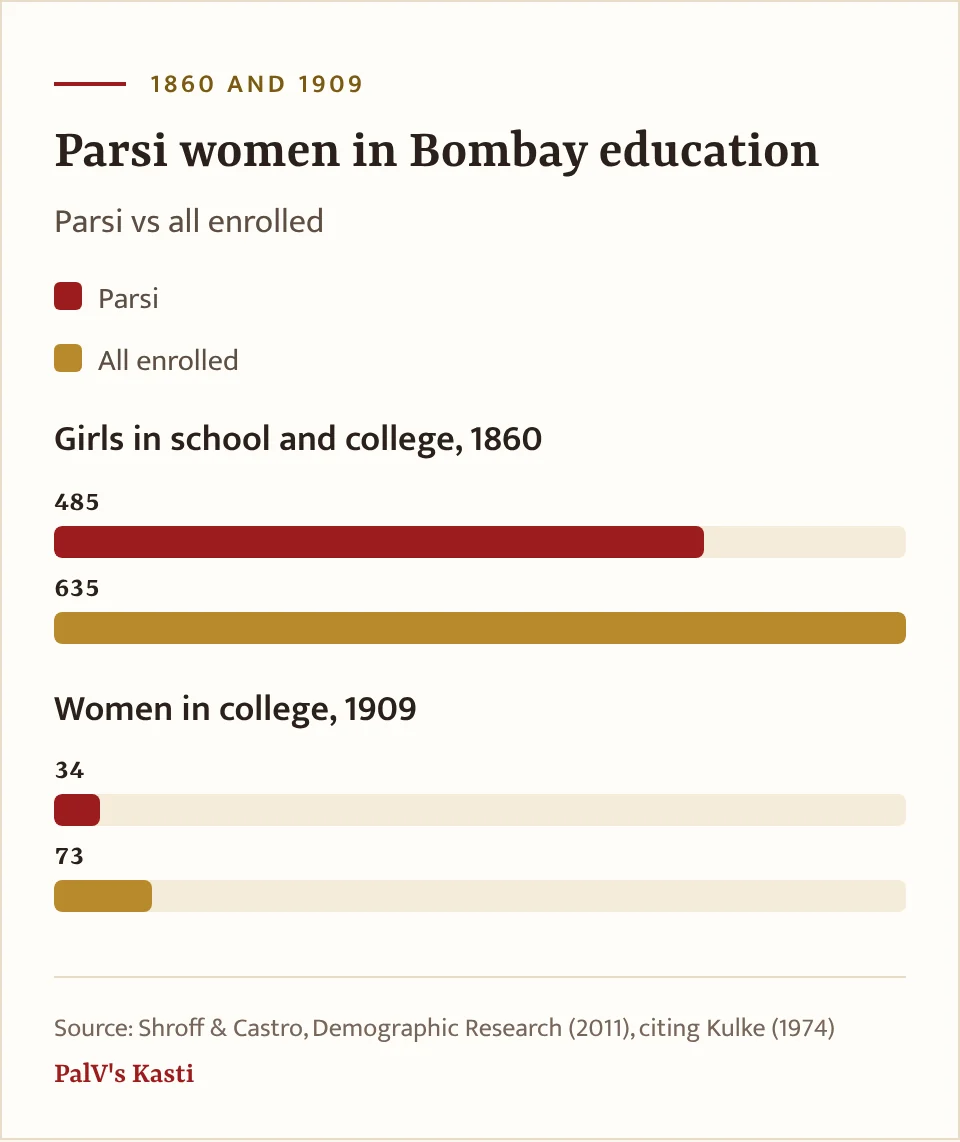
Early and fast. A 2011 paper in Demographic Research by Zubin C. Shroff and Marcia C. Castro, citing a 1974 book by E. Kulke, notes that in 1860, 485 of the 635 girls in Bombay's schools and colleges were Parsi, when Parsis were under 10% of the city. By 1909, 34 of the 73 women in college were Parsi. Drawing on earlier studies, the paper links the first fall in Parsi fertility, late in the 19th century, to women's education after 1870. The share of women never married by the end of their reproductive years rose from under 1% in 1881 to 17% in 1971. The women behind those numbers are in our piece on Parsi women pioneers.
Frequently asked questions
Can Parsi women become priests?
Not in Parsi practice in India. The 1908 Bombay High Court judgment records that a Mobed must be the son of a Mobed, and National Geographic reported in 2024 that in Parsi tradition only sons of priests become priests. A caption in the same report says women are taking on priestly roles outside India, without giving details.
Why are children of Parsi fathers accepted but not children of Parsi mothers?
The courts recorded it as community usage. In the 1908 Petit case, the trusts' side listed children of Parsi fathers by non-Parsi mothers as entitled to community institutions if admitted into the religion, and the Privy Council said in 1925 that maternity is of no importance to the racial claim. A petition heard in February 2026 challenges this.
Can a Parsi woman who marries outside still go to an Agiary?
It depends on the Agiary and the Anjuman running it. Some have barred such women, which is what the Goolrokh Gupta and Nagpur cases are about. LiveLaw reported in May 2026 that the Nagpur petitioner's counsel told the Supreme Court that similar women already have such arrangements in Mumbai, Delhi, Kolkata and Pune.
Has the Supreme Court decided the Parsi women's case?
It was pending as of 2 October 2026, the latest report we found, and LiveLaw's page on the reference listed no verdict when we checked on 16 November 2026. The nine-judge bench hearing the Sabarimala reference, which includes the excommunication of Parsi women who marry out, reserved its verdict on 14 May 2026.