 PalV's Kasti
On this page
The rich Parsi foods in this piece are built on milk, butter, ghee, sugar and eggs. Mawa cake, the khoya-rich teatime cake, is the one a Dawn writer called a "guilty pleasure" outright in 2025. Close behind come lagan nu custard, the baked wedding custard; egg dishes made with four, or even sixteen, eggs, such as akuri and poro; and the sweets of a festive morning, from ravo topped with butter-fried nuts to malido made with startling amounts of ghee. FEZANA's 2012 cookbook Eat, Live, Pray describes the Zarathushti community as better known for its sensual enjoyment of food, while pointing to patmaan, the Sassanian path of moderation, as its golden rule for health.
શહેરેવર રોજ
Shehrevar Roj, Tir Mah · 1396 Y.Z.
Why is mawa cake called a Parsi guilty pleasure?
In a November 2025 piece for Dawn, Shazia Hasan called mawa cake a teatime guilty pleasure of Pakistan's Zoroastrians, most of whom now live in Karachi. Her reason: the cake is rich in flavour and heavy in texture even though it is wholesome. She noted that Pakistani bakeries don't sell it, whereas many Mumbai bakeries make several kinds, including cashew and chocolate mawa cakes. The Karachi baker she spoke to, Natalia Karanjia, first ate one in India in 2015, from an Iranian bakery, and it was completely plain. Mawa, also called khoya, is full-fat milk simmered for hours until only caramelised milk solids remain, as FEZANA's cookbook explains it.
In Mumbai, one name was tied to mawa cake for generations: B. Merwan & Co., the Irani café opposite Grant Road station. Writing in the Free Press Journal in January 2026, S. Balakrishnan recalled that the cakes sold so fast the counter was empty by 11 a.m. The café shut that month after 112 years, as both the Free Press Journal and Outlook Traveller reported. It had closed once before, in 2014, for repairs. Outlook Traveller gives its founding year as 1914 and its founder as Boman Merwan Nazarabadi, a migrant from Iran. Because B. Merwan was an Irani café rather than a Parsi kitchen, our piece on Parsi vs Irani food explains where the two traditions meet.
How do you make a Parsi mawa cake at home?
There is no single authentic version. Some bakers leave out the eggs and some use barely any cardamom. The method below is the one Natalia Karanjia shared with Dawn; she says she learnt it in 2019 in an online class run by the chef and cookbook writer Niloufer Mavalvala. It makes one two-pound cake. The recipe doesn't give a measure for the icing sugar.
- 300 to 350 g khoya (mawa)
- 200 g unsalted butter, browned
- 2 cups maida
- 150 ml milk
- Icing sugar
- 4 eggs
- ½ tsp cardamom powder and 1 tsp baking powder
- Pistachios, almonds and cashews for the top
- Brown the butter in a pan and let it cool. You can do this a day ahead and keep it in the fridge.
- Beat the butter with the sugar, whisk in the eggs, then add the khoya and whisk again.
- Fold in the flour, baking powder and cardamom gently, then add the milk a little at a time.
- Pour into a tin lined with butter paper. Toss the nuts in a little dry flour and scatter them over the batter.
- Bake in an oven preheated to 180°C for about 40 minutes, until a skewer comes out clean. Once cool, dried rose petals are an optional finish.
What is lagan nu custard, and why is it so rich?
Lagan nu custard is a baked milk-and-egg pudding with nuts that closes the meal at most Parsi weddings, according to Durri Bhalla in The Telegraph. Niloufer Mavalvala writes on The Cook's Cook that the dish was adopted from British custard (which Parsis call "custer") and that it earned the name "wedding custard" by being good enough for a wedding feast. Bhalla also repeats the saying that it is the first dish a Parsi bride must learn.
Look at the ingredients and the richness makes sense. Mavalvala's recipe, which makes 12 squares, uses 1.4 litres of whole milk, then adds 325 ml of evaporated milk and 200 ml of condensed milk. Six eggs, ground almonds and pistachios go in too, along with cardamom and vanilla, and the custard bakes in a water bath for about half an hour. Homegrown's description adds a layer of date and tamarind chutney at the bottom. Bhalla compares it to caramel custard without the caramel. That cousin was a favourite of the Raj years, and a note by F. M. Dinshaw in FEZANA's Eat, Live, Pray argues it stuck because the subcontinent's palate preferred sweeter things than British cakes and pies, and because Indian sweets were already milk-based.
Which Parsi egg dishes count as an indulgence?
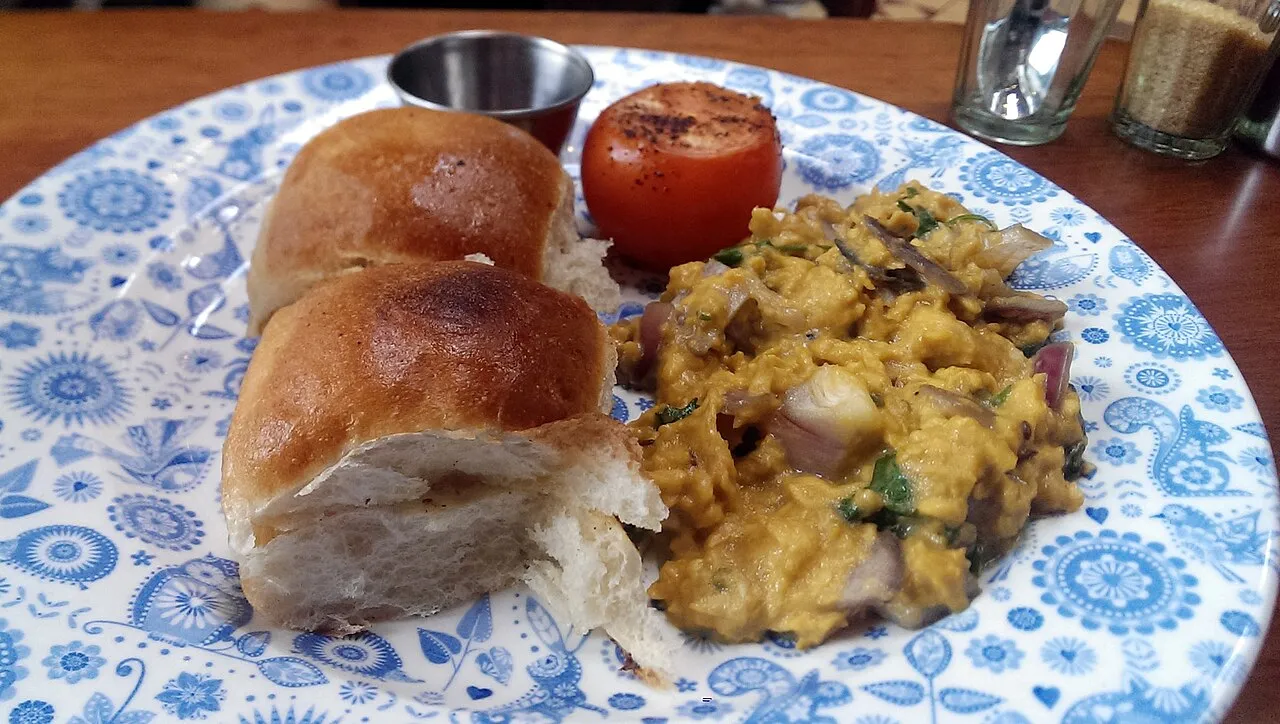
The ones made with a lot of eggs. A Food52 essay on kasa par eeda (literally "eggs cooked on something", where the something can be anything from okra to potato chips) says eggs are deep in Parsi DNA. The same essay remembers a grandfather who marked every weekend with a four-egg akuri and an uncle who would eat a whole pan of eggs coddled in cream. It also recalls the businessman Russi Mody's reputation for a 16-egg poro at breakfast.
Which sweets turn up on Parsi festive mornings?
Writing for Saveur in 2021, Meher Mirza listed her Navroz breakfast. It starts with malai pao, named for the layer of cream that forms on top of heavy milk. Then come ravo, a creamy semolina pudding with raisins, pistachios, almonds and charoli fried in butter; sev flavoured with cardamom and nutmeg; and mithu dahi, lightly sweetened curd. She calls them sugared omens for the year ahead. Homegrown explains that ravo is semolina slow-cooked in milk and ghee, then sweetened and spiced with cardamom, and served warm on happy occasions.
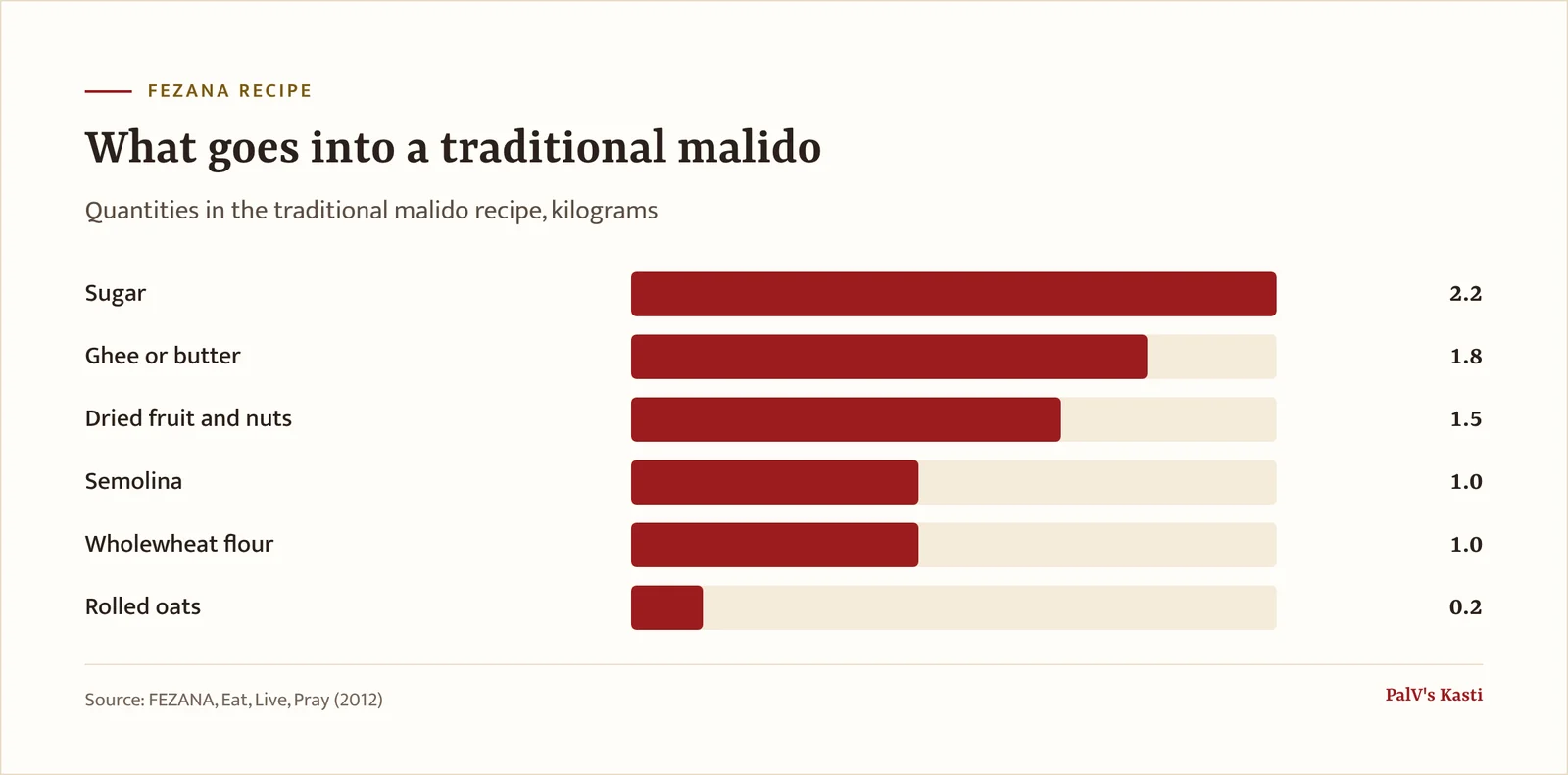
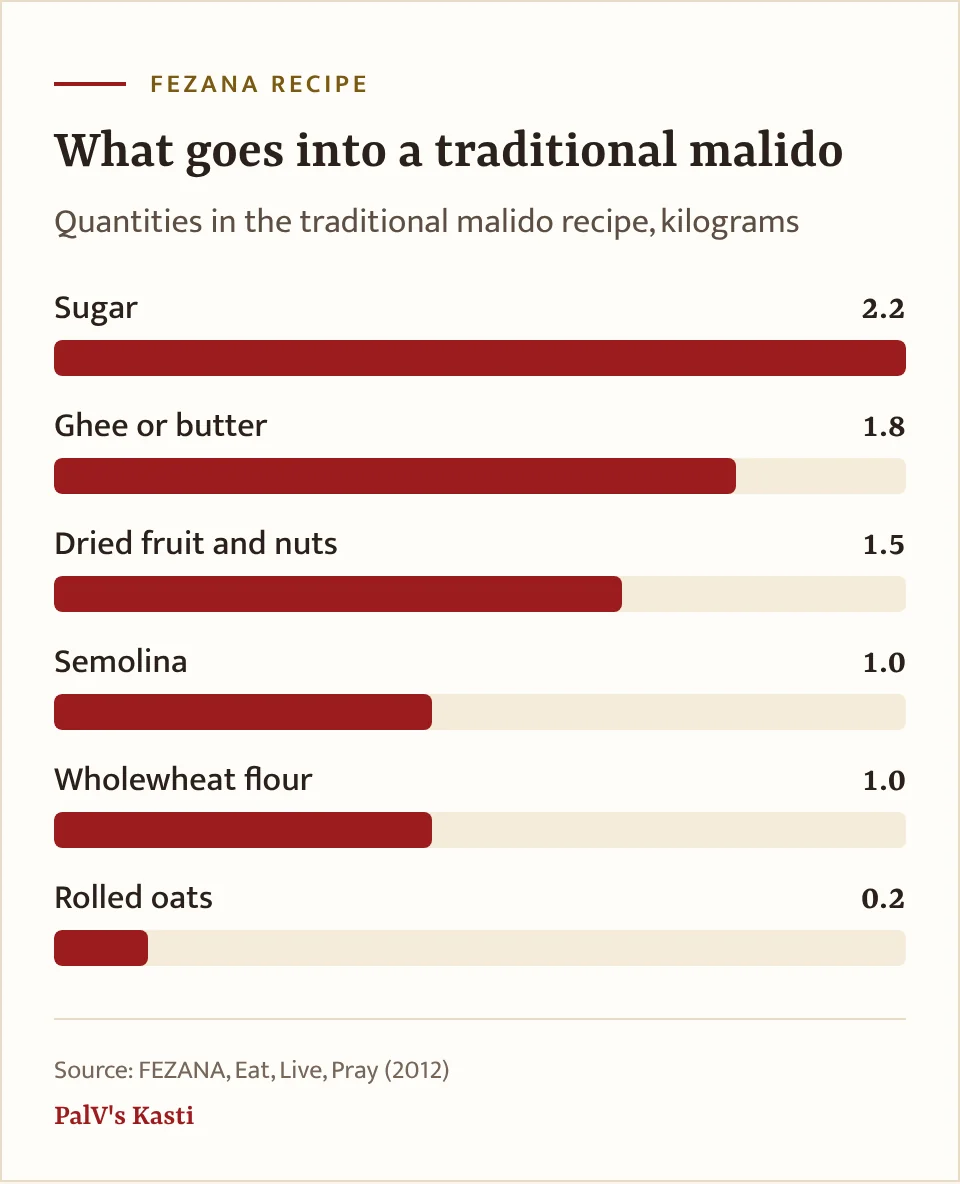
Mawa ni boi is a sweet moulded in the shape of a fish. Saveur ties it to the new year, as a way of drawing sweetness and blessings, while FEZANA's book says it is handed out at weddings. Malido, a confection of grains and nuts, shows how much fat these sweets can carry. The traditional malido recipe in Eat, Live, Pray calls for 1 kg of semolina, 1 kg of wholewheat flour, 250 g of rolled oats, 2.25 kg of sugar, a dozen eggs, 1.8 kg of ghee or butter and 1.5 kg of dried fruit and nuts. The same book notes that Hyderabad, Afghanistan and the Bene Israel community each have a malida of their own. For the dishes cooked for jashans and gahambars, see our piece on food, faith and community.
Practice varies between families and Agiaries; your family priest's guidance comes first.
What milk sweets does Parsi Dairy Farm make?
Business Standard and The Better India both date Parsi Dairy Farm to 1916, when Nariman Ardeshir started delivering milk around Kalbadevi. According to The Better India, its sweets include kulfi, sutarfeni, basundi, pedas and butter cups. Business Standard adds that the family opened Princess Kulfi House in the 1980s.
Do Parsis worry about eating so richly?
Some say so plainly. In 2010, Dinshaw Cawasji, then president of the Bangalore Parsee Zoroastrian Anjuman, told Citizen Matters that the community eats plenty of rich food and so is prone to heart disease. FEZANA's book offers patmaan, the middle path, as the answer. For the wider story of how these dishes fit into the cuisine, start with our guide to Parsi food, and for more dishes to cook, see our Parsi recipes.
Frequently asked questions
What is a Parsi mawa cake?
A Parsi mawa cake is a dense butter cake made with mawa (khoya), which is milk cooked down to caramelised solids. Karachi baker Natalia Karanjia's version, published by Dawn, adds cardamom and a topping of nuts. Mumbai bakeries sell several kinds, including cashew and chocolate ones, but Karanjia said the one she first ate there in 2015 was completely plain.
Is there one authentic Parsi mawa cake recipe?
No. Bakers make it with or without eggs, and with more or less cardamom. One well-documented version, from Karachi baker Natalia Karanjia via Dawn, uses 300 to 350 g khoya, 200 g browned butter, two cups of maida, four eggs, 150 ml milk and icing sugar, and bakes at 180°C for about 40 minutes.
Which Parsi desserts are the richest?
Among the sweets covered here, lagan nu custard and mawa cake are built on milk, butter and eggs. Malido goes further: FEZANA's traditional recipe uses 1.8 kg of ghee or butter and 2.25 kg of sugar. Ravo, sev and mithu dahi belong to the festive morning, and Saveur writer Meher Mirza lists them on her Navroz breakfast table.
What is ravo in Parsi food?
Ravo, also spelled rawo, is a sweet semolina pudding. The semolina is cooked slowly in milk and ghee, sweetened and flavoured with cardamom, then topped with raisins and nuts fried in butter. Homegrown says it is served warm to mark happy occasions, and Saveur writer Meher Mirza lists it on her Navroz breakfast table.
What is malido made of?
Malido is a sweet made from grains and nuts. The traditional recipe in FEZANA's 2012 cookbook Eat, Live, Pray uses semolina, wholewheat flour, rolled oats, sugar, eggs, a large quantity of ghee or butter, and a mix of dried fruit and nuts. The same book notes that Hyderabad, Afghanistan and the Bene Israel community each have their own malida.


