 PalV's Kasti
On this page
- How many Parsis live in Mumbai today?
- What did the 1864 census of Bombay find?
- How did Bombay's Parsi population change from 1881 to 2001?
- When did Bombay's Parsi population peak?
- What did the 1931 Bombay census say about Parsis?
- Why do the census figures need care when you compare them?
- Frequently asked questions
The Census of the Island of Bombay, taken on the night of 1 February 1864, counted 49,201 Parsis out of 816,562 people, or about six in every hundred. Later counts of the city's Parsi population rose to a peak of 70,065 in 1961 and then fell to 46,557 in 2001. That 2001 figure is the most recent census count of the Parsi population in Mumbai that we could find. The 2011 Census table for India's smaller religions, as published on the census website, has rows for the country and each state but none for districts, so Maharashtra's 44,854 is the closest official figure for 2011. Below we set out each count, where it comes from, and why the numbers have to be compared with some care.
શહેરેવર રોજ
Shehrevar Roj, Tir Mah · 1396 Y.Z.
How many Parsis live in Mumbai today?
The last district-level count is from Census 2001. Its table of smaller religions for Maharashtra lists 35,209 Parsis in Mumbai district and 11,348 in Mumbai (Suburban) district. Together that makes 46,557, the same total that demographers Zubin Shroff and Marcia Castro use for the city in their 2011 study in the journal Demographic Research. By our calculation, that was 66.9% of the 69,601 Parsis counted across India in 2001. Women outnumbered men: 24,194 against 22,363.
For 2011 the published census table has a single row for the whole state. It records 44,854 Parsis in Maharashtra, against 54,739 in the state in 2001, a fall of 18.1% by our calculation. Newer numbers for the city itself are estimates, not counts. In 2012 The Telegraph put Mumbai's Parsis at "between 40,000 and 45,000". The state-by-state 2011 figures, and the 2001 counts for other districts, are on our page on the Parsi population in India.
What did the 1864 census of Bombay find?
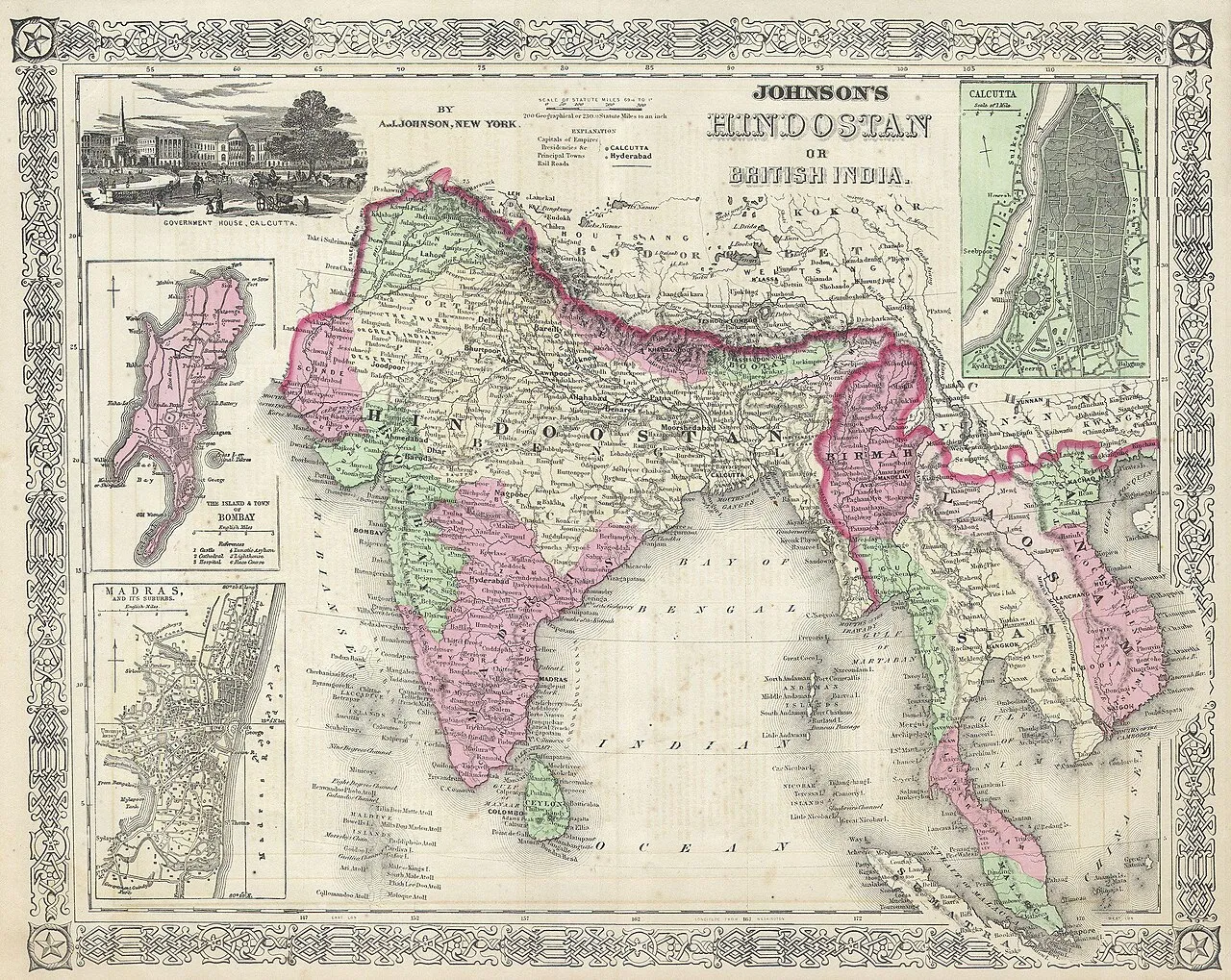
The 1864 report, printed for the Government at the Education Society's Press in Byculla, covers everyone present on the island on the night of 1 February. Of the 816,562 people enumerated, it lists 49,201 as "Parsee", a ratio of 6.03 per hundred. Our own check of the arithmetic gives the same 6.03%.
The report also tabulates what people did for a living. It counts 7,180 Parsis, about a seventh, as writers and accountants, 6,149 as merchants and bankers and 3,580 as priests. The report adds, "to their great praise", that there was "not one beggar" among them.
The 1864 report looks back at an older count too. It quotes Hamilton's Gazetteer for a census of 1814-15, "of which the record is imperfect", that gave the whole island 221,550 people and the Parsis 13,130. Because the report itself calls that record imperfect, the 1814-15 figure is best read as a rough marker rather than a firm count.
How did Bombay's Parsi population change from 1881 to 2001?
Shroff and Castro give a city series for every census from 1881 to 2001, drawn from Eckehard Kulke's 1974 book The Parsees in India and from the Registrar General's 2001 data. The 1931 census report for the cities of the Bombay Presidency adds the Zoroastrian share of the city's population for six censuses. We have put the two side by side, with 1864 from its own report.
| Census year | Parsis in Bombay/Mumbai | Zoroastrian share of the city (1931 report) |
|---|---|---|
| 1864 | 49,201 | 6.03% (1864 report) |
| 1881 | 48,597 | 6.2% |
| 1891 | 47,458 | 5.8% |
| 1901 | 46,231 | 6.0% |
| 1911 | 50,931 | 5.2% |
| 1921 | 52,234 | 4.5% |
| 1931 | 57,765 | 5.0% |
| 1941 | 59,813 | not given |
| 1951 | 68,660 | not given |
| 1961 | 70,065 | not given |
| 1971 | 64,667 | not given |
| 1981 | 50,053 | not given |
| 1991 | 53,794 | not given |
| 2001 | 46,557 | not given |
Two points from the shares stand out. From 1864 to 1901, Parsis stayed close to six in every hundred of the city's people. After 1911 the share dropped, and the 1931 report remarks that it had "not recovered" its pre-1911 level, even though the number of Parsis kept rising. Put together, the two series show the city as a whole growing faster than its Parsi population (our reading).
When did Bombay's Parsi population peak?
The peak came in 1961, at 70,065. Shroff and Castro write that the Parsi population of India grew until 1941 and has fallen since, while Bombay's kept growing until 1961. They cite Kulke's observation that the city's gain between 1941 and 1951 corresponded to the community's decrease in other parts of India.
From 1961 to 2001 the city's count shrank by close to 34%, from 70,065 to 46,557, according to the same study. Over those forty years the all-India figure fell by about 31%. Shroff and Castro name very low fertility as the main driver, with a total fertility rate of 0.89 children per woman among Mumbai's Parsis in 2001.
What did the 1931 Bombay census say about Parsis?
The 1931 volume on the cities of the Bombay Presidency, by H. T. Sorley, uses the label "Zoroastrian". It counts 57,765 in Bombay City, 30,595 men and 27,170 women, an increase of 5,531 over 1921. Its commentary on the community includes these points.
- One person in every 21 in the city was Parsi, but among people over 65 the ratio was one Parsi to every two or three. The report warns that this does not on its own measure Parsi longevity, because Parsis were mostly settled town dwellers while a large share of the city's Hindu population migrated back to where it came from.
- Nearly two-thirds of the Presidency's Zoroastrians (63.71%) lived in Bombay City.
- Zoroastrians had the highest proportion of unmarried people of any community. The report says that among them "early marriage is practically unknown".
- On housing, the report finds Zoroastrians in roomier, more comfortable accommodation than any other community.
The same report says the civil disobedience movement led many Hindus and Jains to evade the 1931 enumeration or make false returns, which is worth keeping in mind when reading the city's totals and shares for that year.
Why do the census figures need care when you compare them?
The counts span more than 130 years, and the census changed how it asked and what it covered. Four things matter when you read the series.
- The label changes. The 1864 report says "Parsee", the 1931 report "Zoroastrian", the 2001 table "Parsi/Zoroastrian" and the 2011 table "Parsi/Zorastrian", spelt that way. The figures above are given as each source labels them.
- 1981 counted differently. The 1981 religion data were tabulated by the religion of the head of the household. The 1991 religion paper notes that 1961, 1971 and 1991 were based on each individual's own religion, so the 1981 figure of 50,053 is not strictly like-for-like.
- The area changes. 1864 covers the Island of Bombay. The 2001 figure is two districts, Mumbai and Mumbai (Suburban), added together.
- Figures for India change after 1947. From 1951 the all-India totals exclude the areas that became Pakistan, which Shroff and Castro estimate cost the Indian count about 5,000 Parsis.
For the baugs, Agiaries, schools and hospitals behind these numbers, see our guide to Parsis in Mumbai.
Frequently asked questions
How many Parsis live in Mumbai?
The last census count for the city, from 2001, is 46,557 Parsis across Mumbai and Mumbai (Suburban) districts. Census 2011 published only a state figure for this community, 44,854 in Maharashtra. A 2012 report in The Telegraph estimated Mumbai's Parsis at between 40,000 and 45,000, but that is an estimate, not a count.
How many Parsis lived in Bombay in 1864?
The Census of the Island of Bombay, taken on the night of 1 February 1864, counted 49,201 Parsis out of a total of 816,562 people present. The report gives their ratio as 6.03 per hundred. It lists writers and accountants, merchants and bankers, and priests among their main occupations, and notes not one Parsi beggar.
When did Bombay's Parsi population peak?
The city's Parsi count peaked at 70,065 in the 1961 census, according to the series in Shroff and Castro's 2011 study. The all-India Parsi population had already begun falling after 1941. Between 1961 and 2001 the Bombay figure fell by close to 34%, to 46,557, which the study puts down mainly to very low fertility.
What share of Bombay's population was Parsi?
The 1864 census put Parsis at 6.03% of the island's people. The 1931 census report gives the Zoroastrian share of Bombay City as 6.2% in 1881, 5.8% in 1891, 6.0% in 1901, 5.2% in 1911, 4.5% in 1921 and 5.0% in 1931. In 1931 that worked out to one Parsi in every 21 residents.
Why is there no 2011 census figure for Parsis in Mumbai?
In 2011, Parsis were tabulated under "Other religions and persuasions" in an appendix table. The version published on the census website has rows for India and each state but none for districts. That table records 57,264 Parsis in India and 44,854 in Maharashtra. The 2001 equivalent did go down to districts, which is why 2001 remains the latest Mumbai count.


