 PalV's Kasti
On this page
The published Parsi sources name four kinds of things a family buys or gathers before a wedding. First, new clothes, exchanged between the two families at the engagement and the Divo Adarni, plus the bride's and groom's own wedding dress. Second, a large Ses tray with its auspicious items; UNESCO Parzor says that by Parsi tradition a woman carries a silver Ses from her father into her married home. Third, the gifts the bride's side sends to the groom's house, which Ervad Dr Ramiyar Karanjia calls rit; an 1899 government gazetteer lists a bedstead, vessels and clothes among them. Fourth, the small items each ritual needs: a mango twig with gold and silver tilis for Madav Saro, four new supras and turmeric for the Supra ni reet, and a ghee-and-jaggery cup with rice and coconut for the wedding stage. Below is what each source actually lists.
અસપંદામેદ રોજ
Asfandarmad Roj, Tir Mah · 1396 Y.Z.
Which clothes are bought before a Parsi wedding?
Clothes are the gift that runs through every custom. Karanjia, writing in 2019, describes the engagement (Adravanu) as an exchange of clothes and gifts in which the women of each house visit the other. J.J. Modi, recording Parsi customs in 1922, says the Divo day mattered more than the betrothal because formal presents of clothes and rings were made on it.
Modi also records a custom that's easy to forget when making lists. At a wedding, the mothers of the bride and groom expected new clothes from their own parents. If the parents had died, he writes, the duty passed to the mother's brother or brothers.
Dosabhai Framji Karaka, in his History of the Parsis (1884), adds jewellery. He wrote that the parents and kin of the couple exchanged ornaments, rich dresses or both, and that the bride received valuable ornaments from her father-in-law. Karaka was blunt about the cost: poorer families, he said, often ruined themselves trying to match richer neighbours, sometimes by borrowing at a heavy premium.
What do the bride and groom wear?
Karanjia describes the groom in a dagli with a pagdi or feta, holding a shawl, and the bride in a white sari with her head covered. A groom who is a priest wears the jama and pichhori instead. Modi, in 1922, gives the jama-pichhori as the groom's usual ceremonial dress, always white, with a shawl in hand. Both sources mention a red kumkum mark on the forehead.
What goes in a Parsi wedding Ses?
Karanjia's note on the Ses says a small tray serves ordinary occasions and a big one is used for weddings and Navjotes. On it go a paro (a metal cone holding sweets), a pigani for kumkum, a gulabaz of rose water, and a set of auspicious foods:
- coconut, betel leaves and betel nut
- almonds in the shell and dried dates (kharak)
- rice, curd and fish, either fresh or a sweet shaped like a fish
- other dry fruits
He adds that metal replicas now often stand in for the real foods. UNESCO Parzor's page on traditional crafts says that by Parsi tradition a woman takes a silver Ses, given by her father and inscribed with his name, with her when she moves into her married home. For families who keep that custom, the Ses is one of the larger purchases before a wedding.
What household items did the bride's family send?
Karanjia says the engagement exchange between the two families once included furniture and utensils. He calls the gifts the bride's family takes to the groom's home at the Divo Adarni rit, and describes them as "a sort of voluntary dowry". Modi, writing almost a century earlier, also calls the Adarni the occasion when the dowry given by the bride's father is presented to the groom's family.
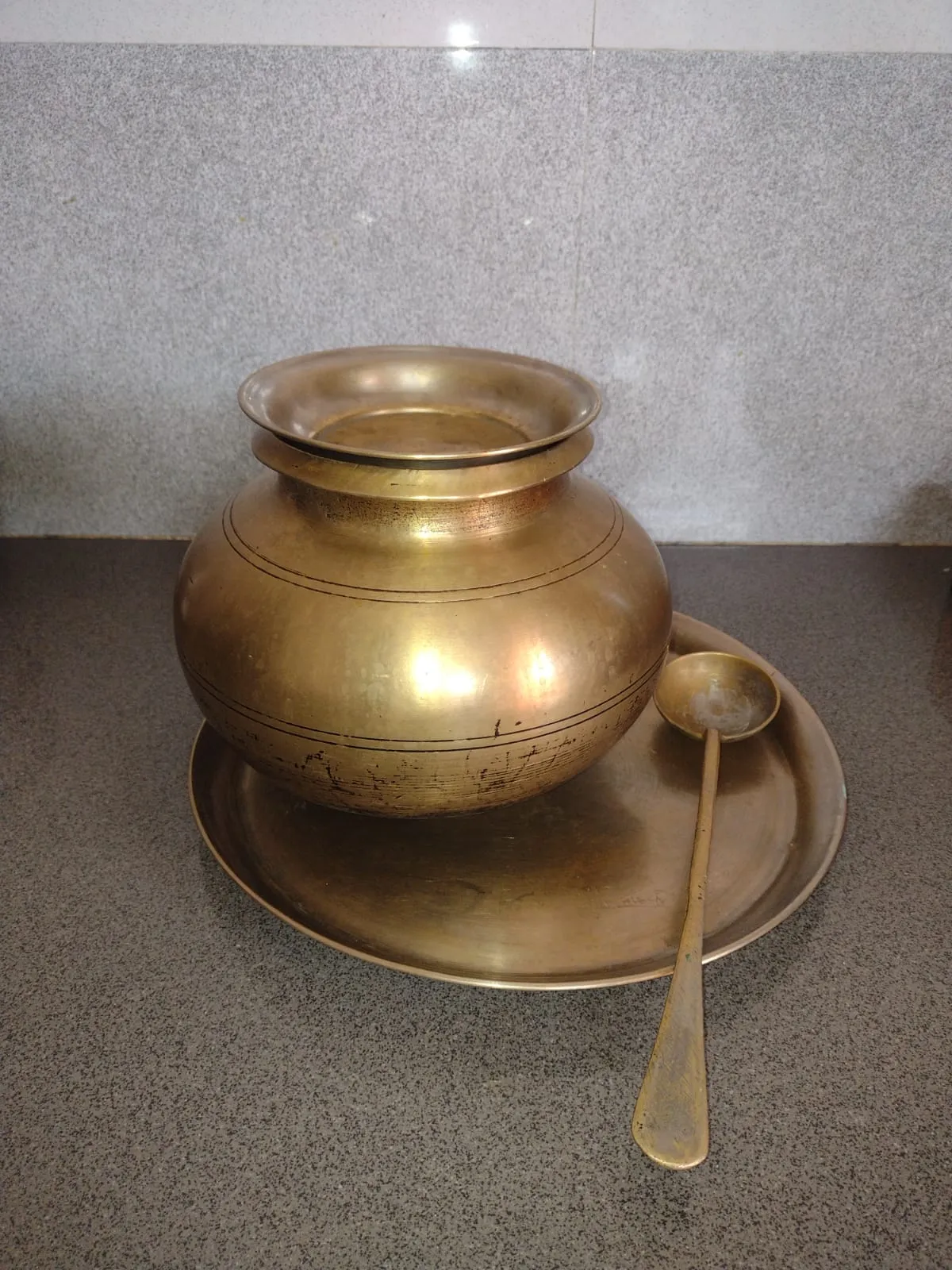
The fullest list comes from the Gazetteer of the Bombay Presidency, published by the Government of Bombay in 1899, in its account of Parsi customs in Gujarat. It says the girl's portion of the presents included:
- a bedstead
- a box or press, and a cane basket
- cooking and water vessels, filled with wheat or rice
- a pot of raw sugar and a tray of sugar cakes
- a thin green bamboo
- a suit of clothes for the groom and his parents
Modi names one vessel in particular, the var-behendoo, a water pot given to the groom as part of the dowry. He describes the women of the bride's family offering it to the groom in the evening, and the groom dropping a silver coin into it in return. These lists are historical. We found no source from 2024 to 2026 describing what families send today, so read them as a record, not a checklist.
Which items do the pre-wedding rituals need?
Two of the customs on the first of the four festive days need things bought in advance. For Madav Saro, Karanjia lists a fresh mango twig, planted in the garden or in a flower-pot near the door, and two or three gold- and silver-plated tilis placed in the soil. The 1899 Gazetteer and Noshir Dadrawala's 2023 Parsi Times account also put silver (and, in the Gazetteer, gold) into the soil. For the Supra ni reet and Haldi, Karanjia lists four new supras (winnowing trays) holding rice, wheat, turmeric pieces, betel nut, dates, rock sugar and a piece of coconut, plus a mortar for pounding the turmeric. Dadrawala's tray is much the same: paan, supari, haldi, dates and a piece of coconut.
For the engagement, Karanjia describes a special Ses called the dahi machli ni ses, holding curd, fish (fresh, or a sweet or chocolate in fish shape) and rock sugar. More on the engagement itself is in our post on the Parsi engagement ceremony.
What is kept on the wedding stage?
Karanjia and Modi agree on a small metal cup holding ghee and jaggery (Modi says molasses), which Karanjia calls the ghia pia kasyo. Karanjia adds a Ses with new clothes, and akhyanu, rice and coconut. Both write that the cup and the rice go to the priest after the ceremony.
Practice varies between families and Agiaries; your family priest's guidance comes first.
A few planning steps need no custom behind them. Ask your priest and both families' elders which items your two households keep, since the lists above come from different times and places. Buy the clothing gifts early, because they are needed from the engagement onwards. And keep a note of presents received: the 1899 Gazetteer records families doing this so that suitable return presents could be made on like occasions. The full sequence of ceremonies is in our guide to Parsi pre-wedding ceremonies.
Frequently asked questions
What do Parsis buy for a wedding?
The sources name new clothes for exchange between the families, the bride's white sari and the groom's dagli or jama-pichhori, a large Ses tray, and the items each ritual needs: a mango twig and gold and silver tilis for Madav Saro, four supras and turmeric for the Supra ni reet, and a ghee-and-jaggery cup with rice and coconut.
What is in a Parsi wedding Ses?
Ervad Dr Ramiyar Karanjia lists a paro of sweets, a pigani of kumkum and a gulabaz of rose water, with coconut, betel leaves and nut, almonds, dried dates, rice, curd and fish or a fish-shaped sweet. He says weddings and Navjotes use a big Ses, and that metal replicas often replace the real foods today.
What is rit in a Parsi wedding?
Rit is the Gujarati name Karanjia gives to the gifts the bride's family takes to the groom's home at the Divo Adarni. He calls it a sort of voluntary dowry. The 1899 Bombay Gazetteer lists the girl's portion of presents as including a bedstead, vessels filled with grain and a suit of clothes for the groom and his parents.
What does a Parsi groom wear?
Karanjia describes the groom in a dagli with a pagdi or feta, a shawl in his hand and a red kumkum mark on his forehead. A groom who is a priest wears the jama and pichhori, which J.J. Modi in 1922 described as the groom's usual ceremonial dress, always white in colour.


