 PalV's Kasti
On this page
Pug laroo (also written pag ladoo or Pag Laddu) is a Parsi family custom that celebrates a baby's first steps with sweets. A student-contributed page in the October–December 2019 issue of Young INTACH, the heritage education magazine of INTACH, describes it simply: after the child has taken its first steps, the family makes special ladoos of coconut and rice flour, and two of them are shaped like feet. The sweet-maker Parsi Dairy Farm sells pairs of foot-shaped sweets that, it says, are traditionally gifted at a baby's Pag Laddu ceremony. Published sources say little more than this, so this page sticks to what they do say.
શહેરેવર રોજ
Shehrevar Roj, Tir Mah · 1396 Y.Z.
What is Pug laroo?
Pug laroo is the name of the first-steps occasion and of the sweets made for it. Young INTACH calls it the "pag ladoo ceremony" and places it alongside Besna, the custom for a baby who has started to sit up, as the two Parsi childhood occasions that involve ladoos. Parsi Dairy Farm also uses the name for the ceremony and for its foot-shaped sweets.
When is Pug laroo done?
Young INTACH says it is done after the child has taken its first steps. It gives no age.
The custom does not appear in the older records. The Gazetteer of the Bombay Presidency (1899) describes Parsi childhood customs in some detail, yet moves straight from Besna in the seventh month to the first birthday with no mention of first steps. J.J. Modi's The Religious Ceremonies and Customs of the Parsees (1922) and Dosabhai Framji Karaka's History of the Parsis (1884) do not mention it either. We cannot say from these sources when the custom began.
What ladoos are made for Pug laroo?
Young INTACH describes ladoos made of coconut and rice flour, with two shaped like a pair of feet. Parsi Dairy Farm lists two foot-shaped versions on its website, each sold as a pair:
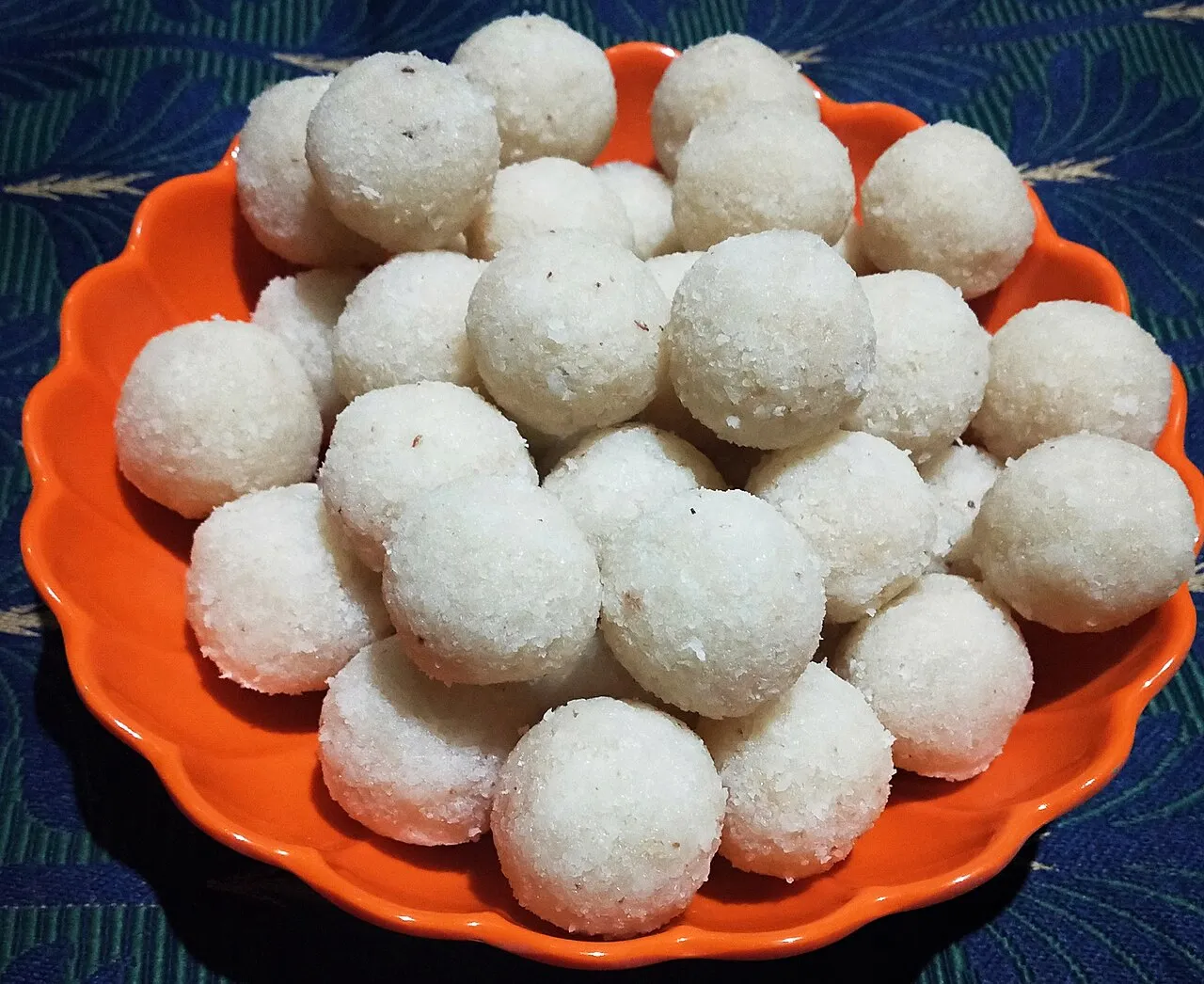
- Mawa Pag Laddu: made of sweet mawa and covered in silver leaf. Listed at ₹530 for two pieces on 16 November 2026.
- Khaman Pag Laddu: mawa with jaggery, raisins and fresh coconut, also covered in silver leaf. Listed at ₹750 for two pieces on the same date.
Prices change, so check the shop before you order. Neither source explains why the sweets take the shape of feet, and we have not found one that does.
How is Pug laroo performed?
We found no published historical, scholarly or priestly account that sets out the steps of Pug laroo, says whether the baby is made to step on the ladoos, names a prayer for it or says who must attend. Instead of passing on unsourced instructions, we suggest the practical part only. Fix a day once the baby is walking, decide whether the ladoos will be made at home or ordered, and order early if you are buying them. Ask the elders in your family how they kept the day.
Practice varies between families and Agiaries; your family priest's guidance comes first.
How does Pug laroo fit with other Parsi childhood customs?
Pug laroo is one of a short run of family occasions in a Parsi baby's early life. The one before it is the Besna ceremony, when the baby is seated on a stool for the first time. The customs that come earlier still, from pregnancy to the days after birth, are covered in our guide to Parsi pregnancy and birth ceremonies.
Frequently asked questions
What is pag ladoo in Parsi?
Pag ladoo, also written Pug laroo or Pag Laddu, is a Parsi family custom for a baby's first steps. According to a 2019 Young INTACH magazine page, special coconut and rice-flour ladoos are made, two of them shaped like feet. Parsi Dairy Farm sells foot-shaped pairs it describes as traditional gifts for the occasion.
When is pag ladoo done?
Pag ladoo is done after a baby takes its first steps, according to Young INTACH (2019), which gives no fixed age. The 1899 Bombay Gazetteer, which describes other Parsi childhood customs such as Besna and the first birthday, does not mention a first-steps custom at all, so the records do not show when it began.
What ladoos are made for Pug laroo?
Young INTACH describes ladoos of coconut and rice flour, two of them shaped like feet. Parsi Dairy Farm sells two foot-shaped versions: a Mawa Pag Laddu of sweet mawa, and a Khaman Pag Laddu of mawa, jaggery, raisins and fresh coconut. Both are covered in silver leaf and sold in pairs.
Why are the ladoos shaped like feet?
The sources we found describe the foot shape but do not explain it. Young INTACH simply says two of the ladoos are shaped like feet, and Parsi Dairy Farm calls its pair baby-foot-shaped. We have not found a published explanation of the shape, so we do not offer one here.
Is there a prayer for Pug laroo?
We found no published source that names a prayer for Pug laroo. The main accounts of Parsi birth and childhood customs, by the Bombay Gazetteer (1899), J.J. Modi (1922) and Karaka (1884), do not mention the custom. If you would like prayers said on the day, ask your family priest.


