 PalV's Kasti
On this page
Achoo Michoo (also written Achu Michu or Acchu Michu) is the Parsi welcome in which a senior woman of the family passes a tray of auspicious things, and in older accounts an egg and a coconut, round a person's head and then breaks or throws them away. Ervad Dr Ramiyar Karanjia, a Zoroastrian priest and scholar, says it is meant to ward off the evil eye and negative energies. At a wedding the bride's mother, or another senior lady of her family, does it for the groom just before he steps onto the stage, and a lady from the groom's side then does it for the bride. Karanjia also describes it before a child steps onto the mat at a Navjote.
શહેરેવર રોજ
Shehrevar Roj, Tir Mah · 1396 Y.Z.
What is Achoo Michoo, and why is it done?
It is a protective welcome, done at a doorway or the edge of a stage before something important begins. Karanjia, in his 2019 Jame Jamshed column on wedding customs, says its purpose is to ward off the evil eye and negative energies. Writing about the Navjote, he puts it a little differently: a precaution to avert anything untoward in the child's life before the ritual starts.
J.J. Modi, in The Religious Ceremonies and Customs of the Parsees (1922), explains the egg in particular. If any evil is fated for the person, he writes, it is meant to pass into the egg and be destroyed when the egg breaks. Modi also offers his own view that the egg is a remnant of old animal sacrifice. That is his interpretation, and Karanjia does not repeat it.
In Modi's account the same threshold welcome also includes a red kunkun mark on the groom's forehead with rice stuck to it and thrown over his head. For that side of the custom, see our post on the Sagan ceremony.
How is Achu Michu performed?
The published accounts agree on the shape of it, round the head and then away, but differ on the details. Here is what each one records.
Modi, 1922
- The bride's mother receives the groom at the door of her house and has him stand at the threshold.
- An egg is passed round his head three times, thrown on the ground and broken.
- A coconut is passed round three times in the same way and broken.
- A little water is poured into a tray, the tray is passed round his head three times, and the water is thrown at his feet.
- He crosses the threshold with his right foot, which Modi says is always thought auspicious.
The Bombay Gazetteer, 1899
The government's Gazetteer of the Bombay Presidency describes the bride's mother waving a plate of rice and water round the groom's head seven times, throwing the contents under his feet, breaking an egg and a coconut, and asking him to step in right foot first. It also records the same water, egg and coconut welcome being given to the women of the bride's party when they bring presents to the groom's house, and a coconut waved round the groom's head and broken at street corners on his way to the bride's, which the Gazetteer says was done to appease evil spirits.
Parsi Times, 2016
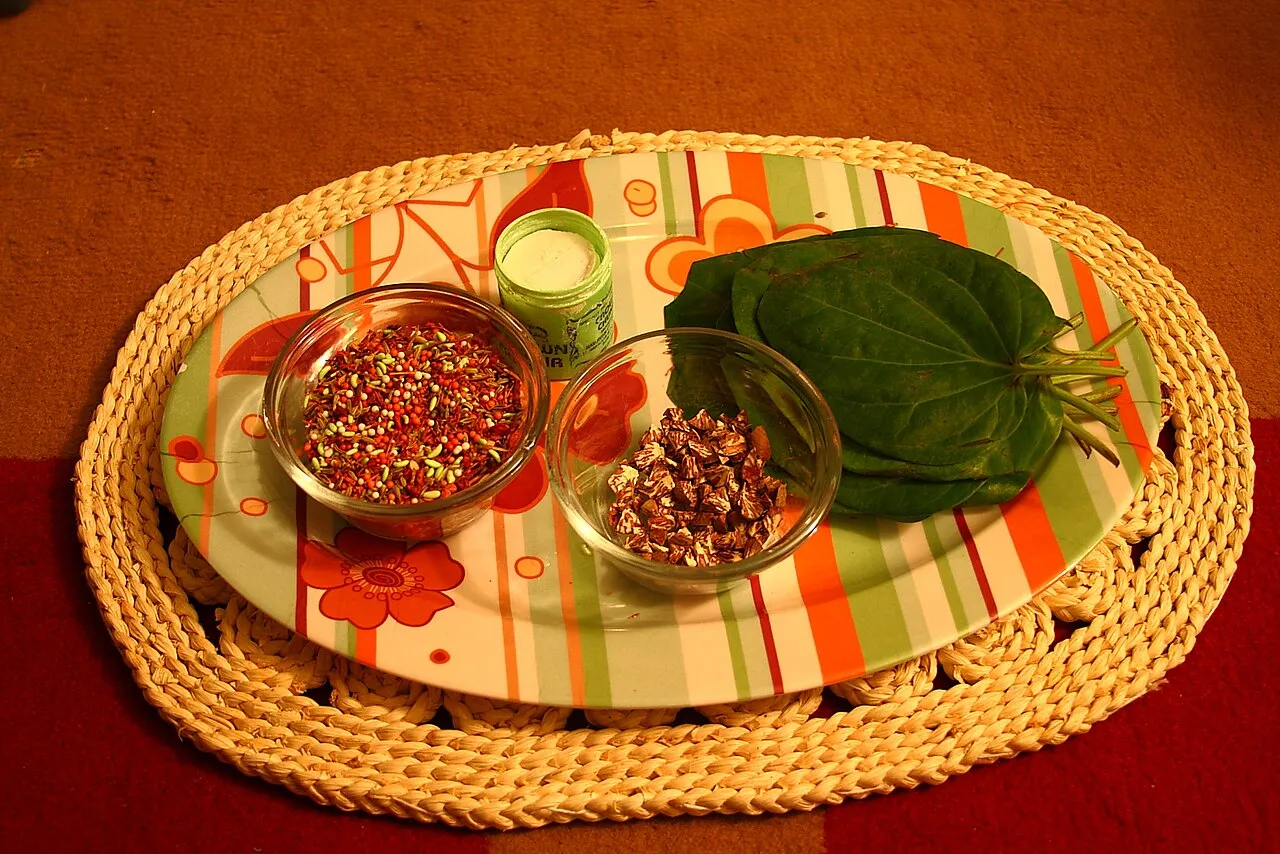
A 2016 Parsi Times round-up of wedding rituals describes a more recent version, set on the stage at a baug or fire temple. The bride's mother circles a tray of coconut, rice, water, betel nut, kharek and dates round the groom seven times, and the water is thrown to one side before he steps on stage. The groom's side then does the same for the bride.
So the number of rounds is three in Modi and seven in the Gazetteer and Parsi Times, and the egg appears in the older accounts but not in the 2016 one. Ask the elders of both families which version they keep, and have the tray ready before the groom arrives.
Practice varies between families and Agiaries; your family priest's guidance comes first.
When is Achoo Michoo done?
- For the groom at the wedding: before he goes up onto the stage. Karanjia's 2019 column names the bride's mother or another senior lady of her family.
- For the bride at the wedding: next. Karanjia and Parsi Times both say a lady from the groom's side does it, and Karanjia adds that she then leads the bride to her seat opposite the groom.
- At the Navjote: Karanjia's 2020 account places it before the child steps onto the mat and sits on the patlo facing east, done by the child's mother or another senior lady.
- After the reception: Parsi Times (2016) says the groom's mother does Achu Michu to welcome the newly married couple into their home.
Karanjia uses a related word, ovarna, in his short guide to marriage customs where his 2019 column has Achoo Michoo: an elder lady from the groom's family takes the ovarna of the bride.
What goes on the Achoo Michoo tray?
Only the 2016 Parsi Times piece lists a full tray: coconut, rice, water, betel nut, kharek and dates. Modi and the Gazetteer name the egg, the coconut, and a tray with water (with rice in the Gazetteer's version). Neither older account lists betel nut, kharek or dates. Our post on Sagan ni machhi covers another of the good-luck customs around a Parsi wedding.
Practice varies between families and Agiaries; your family priest's guidance comes first.
Frequently asked questions
What is Achu Michu in a Parsi wedding?
It is the welcome done just before the groom, and then the bride, goes up onto the wedding stage. A senior lady passes a tray of auspicious things round the person's head and throws away the water. Ervad Ramiyar Karanjia says it is meant to ward off the evil eye and negative energies before the marriage ritual.
Why is an egg broken during Achoo Michoo?
J.J. Modi wrote in 1922 that an egg was passed three times round the groom's head and broken so that any evil fated for him would pass into the egg and be destroyed with it. The 1899 Bombay Gazetteer also mentions an egg being broken, but the 2016 Parsi Times account of the custom as practised then does not.
Who performs Achoo Michoo?
Women of the family. For the groom it is the bride's mother or another senior lady from the bride's side, and for the bride an elder lady from the groom's side. At a Navjote, Ervad Ramiyar Karanjia says the child's mother or another senior lady of the family does it before the child steps onto the mat.
Is Achu Michu done at a Navjote?
Yes. In his account of the Navjote steps, Ervad Ramiyar Karanjia describes the child's mother or a senior lady doing Achu Michu before the child steps onto the mat and sits on the patlo facing east. He describes it as a precaution to avert anything untoward in the child's life before the ritual.
How many times is the tray circled?
Sources differ. J.J. Modi (1922) describes the egg, the coconut and a tray of water each passed round the groom's head three times. The 1899 Bombay Gazetteer and a 2016 Parsi Times article both say seven times. Ask your family's elders which count they keep well before the day.


