 PalV's Kasti
On this page
Sagan ni machhi is the fish a Parsi family cooks for a sagan, or auspicious, day: a birthday, the New Year, a Navjote or a wedding. On birthdays and at New Year it usually comes as a sour, chilli-hot fish or prawn patio, or as fried fish, eaten with dal and rice. At weddings and Navjotes the fish course is usually patra ni machhi or saas ni machhi. The reasons given are symbolic. FEZANA's 2012 book Eat, Live, Pray calls the fish an auspicious symbol of protection, good luck and prosperity in Zarathushti tradition, and the Bahram Yasht praises the Kara fish for its sharp sight. The community writer Noshir H. Dadrawala adds his own reading: fish stands for dispelling darkness.
શહેરેવર રોજ
Shehrevar Roj, Tir Mah · 1396 Y.Z.
What does "sagan" mean in sagan ni machhi?
Sagan is the word Parsis use for an auspicious occasion and the customs kept on it. You hear it all over a Parsi celebration. There's the sagan ni ses, the ceremonial tray. There's sagan ni sev, the sweet vermicelli that brand consultant Delzeen Watcha Mistry told the Deccan Chronicle in 2019 she starts her New Year with. In the same article, fitness expert Nawaz Modi Singhania described "doing the sagan" at home as applying the red dot and rice on the forehead. We've written about that rite separately in our piece on the Sagan ceremony.
One thing to be clear about. "Sagan ni machhi" is not the name of a single fixed recipe. The phrase is used in Dadrawala's August 2017 Parsi Times essay, "The 'Sagan Ni Macchi' Syndrome", for the fish served on an auspicious day. Other writers simply describe the dish itself, most often a fish or prawn patio.
On which occasions do Parsis cook sagan fish?
Birthdays and the New Year come first. "Be it New Year or birthdays," Dadrawala wrote, the usual partner for dhan dar is machhi no patio or tareli machhi (fried fish). Food writer Meher Mirza, writing in Saveur in 2021, describes a Navroze lunch of plain dal and rice with prawn or fish patio alongside, and calls it "cardinal festive eating" in a Parsi home, made for new years, birthdays and anniversaries. Roshni Mithaiwalla Siddique, who runs a Parsi restaurant in Dubai with her brother, said in a 2021 Gulf News feature that a Parsi birthday or wedding anniversary always means dhandaar kolmi no patiyo with fried fish.
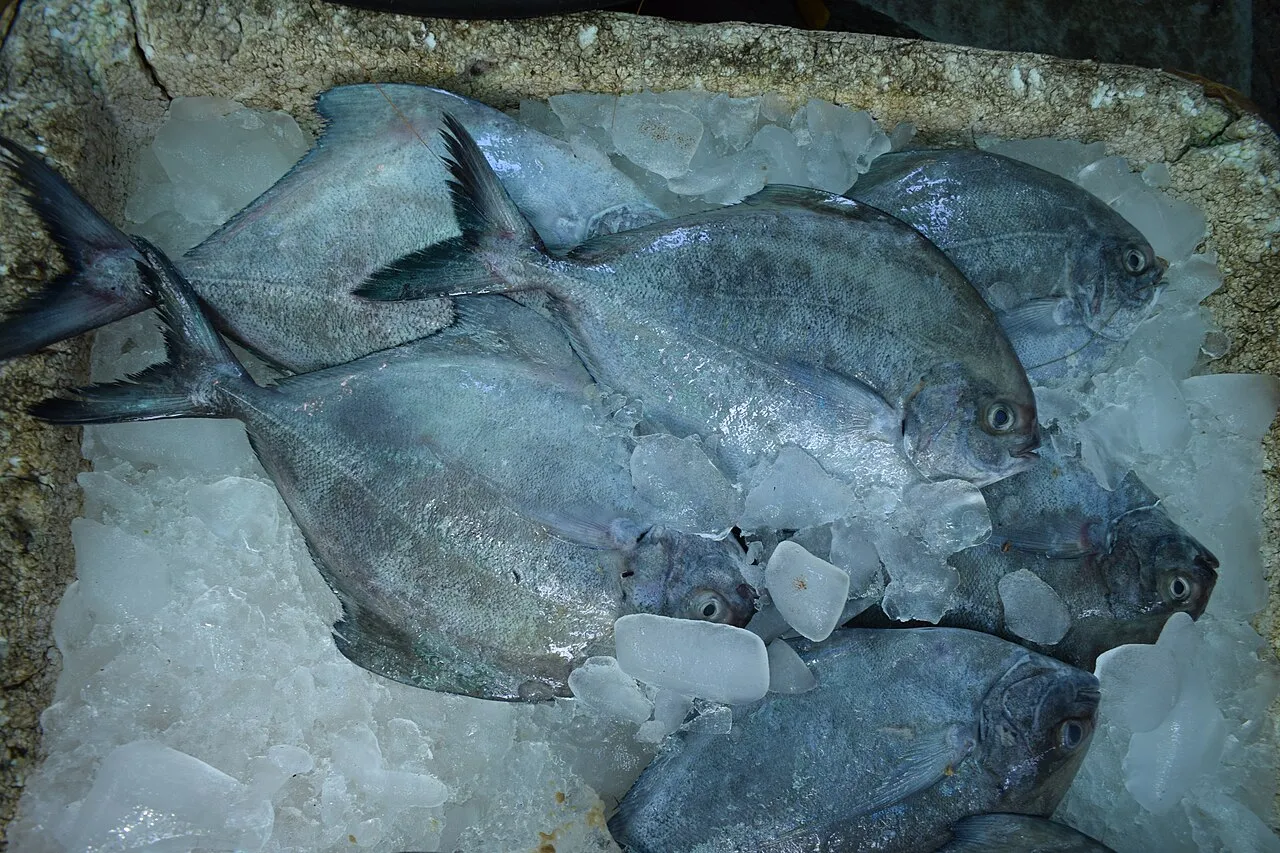
Weddings and Navjotes get their fish too, but in a grander form. FEZANA's book says a Parsi wedding feast is not complete without fish. Soli Dastur, in his Weekly Zoroastrian Scripture Extract on avesta.org, writes that at birthday, Navjote and wedding receptions one course has to be fish, and that it's invariably patra ni machhi or machhi no saas. Dadrawala notes that guests split into saas fans and patra fans. If you're planning one of these, our guide to the Parsi wedding covers the day itself.
Pilgrimage counts as well. Dadrawala says a trip to Udvada isn't deemed complete unless boi is served at lunch or dinner.
Which fish, and how it's cooked, varies by family. FEZANA's village patio recipe uses pomfret, Udvada meals feature boi (mullet), and we found no source that sets a rule. The cooking and the way the plate is laid out are covered step by step in Sagan ni machhi preparation.
Why is fish auspicious for Parsis?
The sources give several reasons. They sit side by side rather than forming one official teaching.
The Kara fish of the Avesta
FEZANA's book describes the Kara, a fish that lives in the legendary sea Vourukasha and guards the White Haoma tree, the tree of life. It credits the Kara with penetrating vision and insight. Soli Dastur's extract quotes Ervad Jivanji Jamshedji Modi on the Bahram Yasht (14.29): Bahram Yazad grants Zarathushtra eyesight like the Kara fish's, keen enough to make out a single hair in deep water.
Kings, crowns and the fish of Iran
FEZANA retells a legend in which King Jamshed, fleeing the tyrant Zohak, had his crown swallowed by a guardian fish, Kar Mahig, which kept it safe until Faridun took the throne. FEZANA also points to a relief of Cyrus the Great at Pasargadae with a fish on his crown, and Dadrawala likewise describes fish motifs on the king's headgear at the ruins of his palace.
Fish that see in the dark
Dadrawala reads the fish (mahi) as a symbol of dispelling darkness. He links it to the Parsi name Mahiyaar, which he translates as "friend of the fish that can see in the dark". So, he argues, on happy days Parsis drive away darkness the way they enjoy most: with fish in a pungent patio, then a sweet mawa ni boi.
An Iranian symbol on a Gujarati coast
FEZANA's book adds a local layer to the Iranian lore. A note in it says the fish is an incarnation of Vishnu, honoured by the fisher folk of the coastal Gujarat villages where the Parsis settled, and that Parsis took up many of their customs because those customs echoed their own. On FEZANA's telling, then, the Parsi fish custom draws on both: symbols carried from Iran, and the habits of the coast where the community made its home.
Practice varies between families and Agiaries; your family priest's guidance comes first.
Where else does the fish appear on a sagan day?
The cooked fish is only one part of it. The same shape turns up across the house.
- Mawa ni boi. A sweet of reduced milk moulded like a fish. FEZANA says it is handed out at weddings, and Dadrawala says the mawa sweet placed in the sagan ni ses takes the shape of a boi. Mirza writes that it is meant to draw sweetness and blessings into the new year.
- The ses tray. According to FEZANA, a fresh uncooked fish was once part of the wedding ses, and mawa ni boi has since taken its place. FEZANA also mentions a fish made of silver placed in the tray.
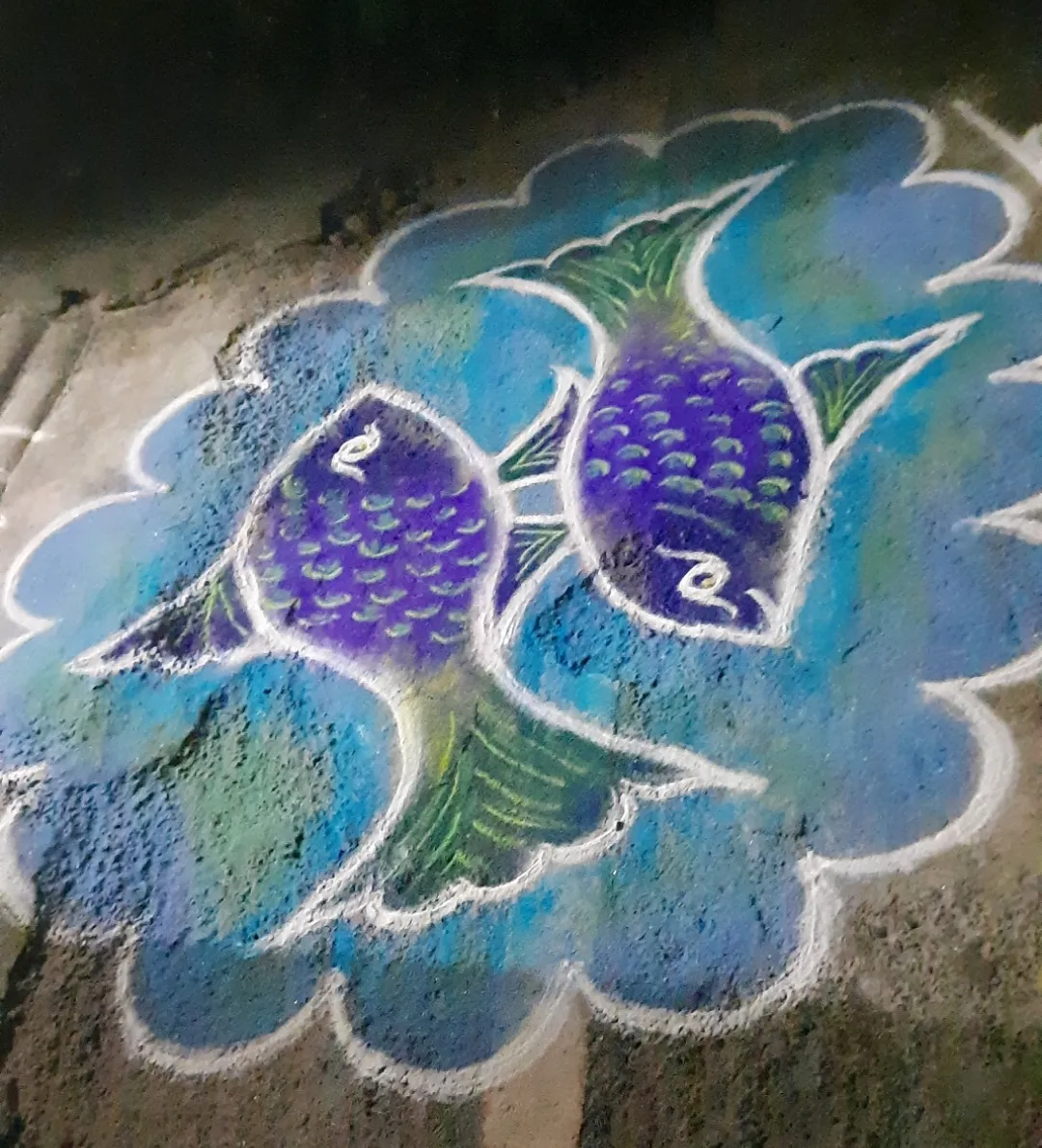
- Chalk designs. FEZANA notes that fish patterns appear in the lime chalk designs drawn at Parsi doorsteps on festive days.
- In Iran. FEZANA says brides in Yazd have a fish embroidered on their wedding trousers for prosperity. Dadrawala notes that Iranian Zoroastrians, and Iranian Muslims, put a bowl of live goldfish on the Navroz table, and Shazia Hasan, writing in Dawn in 2021, explains that the goldfish stands for wealth.
Why boi in particular? FEZANA describes it as a fish caught off the Gujarat coast that Parsis especially love. Soli Dastur, remembering his childhood in Tarapur, calls the boi (mullet) the "King of the fish".
What else goes on the table on an auspicious day?
The day usually opens sweet. Mistry told the Deccan Chronicle that her New Year starts with sagan ni sev, mitthu dahi or ravo. In FEZANA's book, one contributor remembers her mother making sev or ravo on the morning of her Parsi calendar birthday, then sending a plate of it to the neighbours. Lunch or dinner is the dal and rice with fish, and in Mirza's account the mawa ni boi comes out once the dinner plates are cleared.
Frequently asked questions
What does sagan mean for Parsis?
Sagan is the word Parsis use for an auspicious occasion and the customs that go with it. You hear it in the sagan ni ses tray, in sagan ni sev eaten on New Year morning, and in "doing the sagan" at home, which fitness expert Nawaz Modi Singhania described as applying the red dot and rice on the forehead.
Why is fish considered lucky by Parsis?
FEZANA's 2012 book Eat, Live, Pray calls the fish a symbol of protection, good luck and prosperity in Zarathushti tradition. The Bahram Yasht praises the Kara fish for its sight, and a legend tells of a fish guarding King Jamshed's crown. Noshir Dadrawala reads the fish as a sign of dispelling darkness on happy days.
What is eaten on a Parsi birthday?
Writers describe a sweet start and a fish lunch. One FEZANA contributor recalls her mother cooking sev or ravo on her birthday morning and sending a plate to the neighbours. The main meal is commonly dal and rice with fish or prawn patio, or fried fish, which Meher Mirza calls cardinal festive eating.
What is mawa ni boi?
Mawa ni boi is a Parsi sweet of reduced milk moulded in the shape of a boi, or mullet. FEZANA says it is handed out at weddings and has replaced the raw fish once kept in the ses tray. Food writer Meher Mirza says it comes out after dinner to draw sweetness and blessings into the new year.
Is sagan fish the same as patra ni machhi?
Not exactly. "Sagan ni machhi" means whatever fish is cooked for an auspicious day. At home on birthdays and New Year it is often a fish or prawn patio, or fried fish, with dal and rice. At wedding and Navjote receptions the fish course is usually patra ni machhi or machhi no saas.


