PalV's Kasti
On this page
The Sir Ratan Tata Industrial Institute, often called simply RTI, is a Mumbai workplace set up by Lady Navajbai Tata in memory of her husband, Sir Ratan Tata. It was set up to give poor and destitute Parsi women paid work and a trade. The women were trained and employed in cookery, hand embroidery, tailoring and laundry. The Tata Group dates the opening to April 1928. Close to a century later, RTI still runs from Hughes Road, and its own website describes it as giving women training and employment in food, tailoring, embroidery and Montessori teaching.
અસપંદામેદ રોજ
Asfandarmad Roj, Tir Mah · 1396 Y.Z.
What is the Sir Ratan Tata Industrial Institute called today?
Sir Ratan Tata Industrial Institute is one of the names in circulation. The published accounts we read, from the Tata Group, Business Today and the Free Press Journal, call it the Sir Ratan Tata Institute or RTI. We found no reliable record of when, or why, the word "Industrial" came into use, so we leave that question open rather than guess.
Who founded RTI, and when?
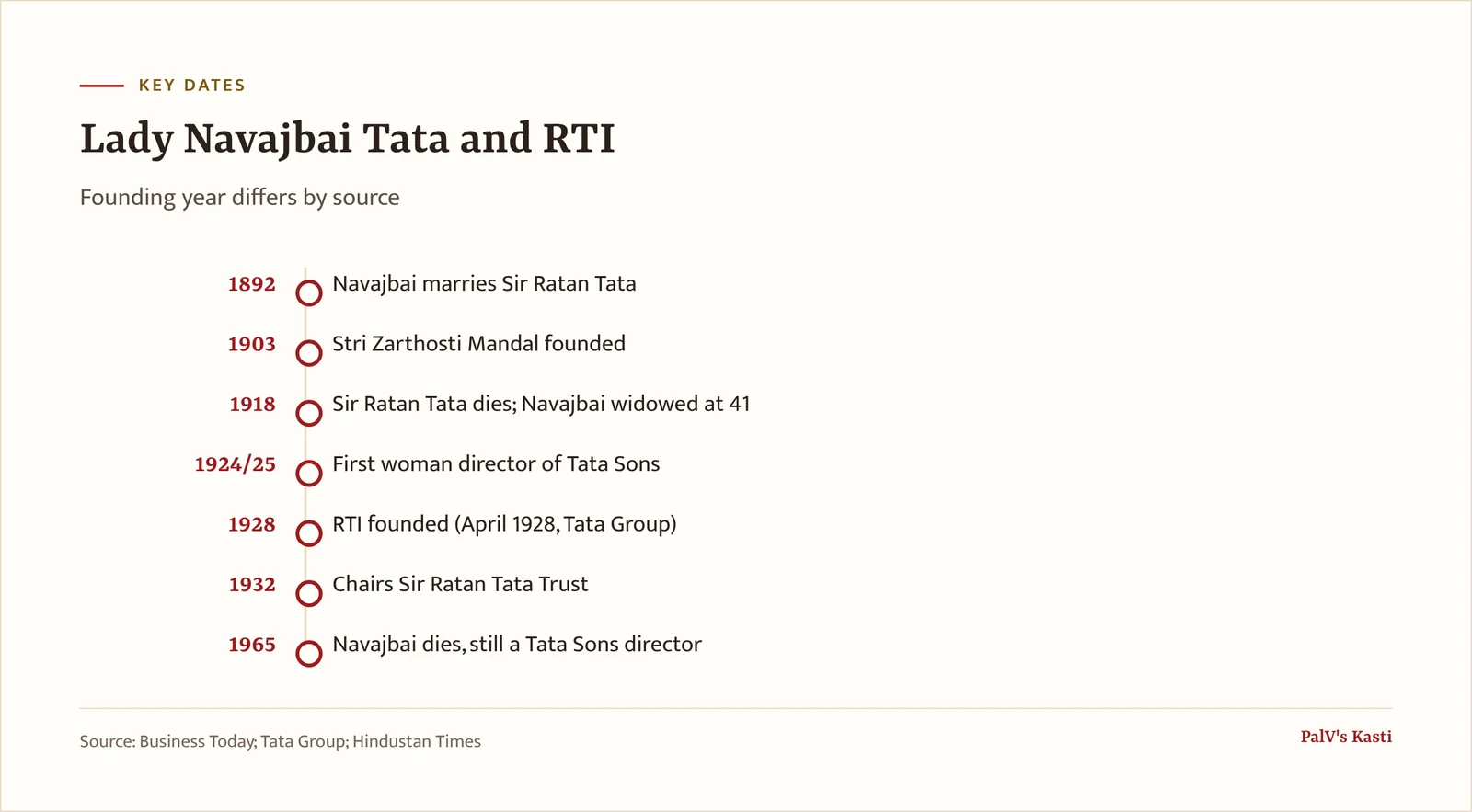
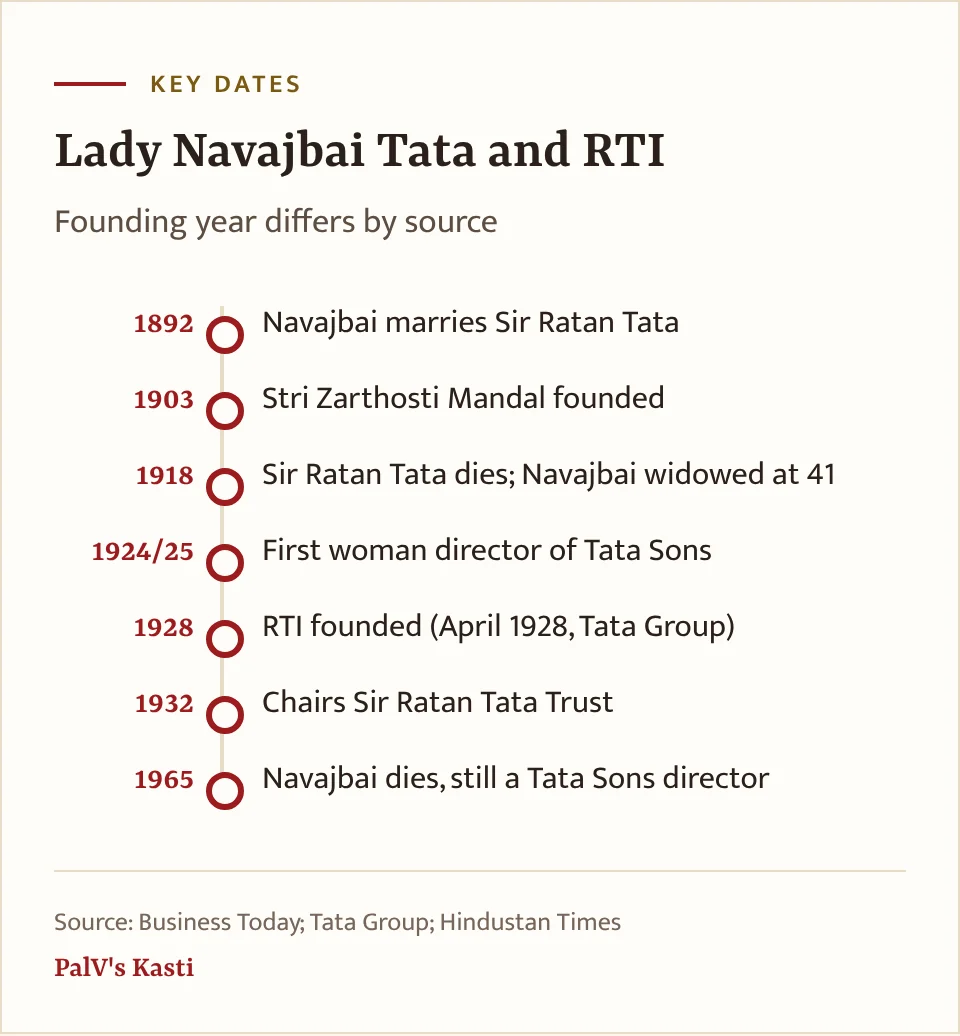
Lady Navajbai Tata founded RTI. A 2018 Tata Group newsroom feature calls RTI her "brainchild" and says it was set up as a tribute to Sir Ratan Tata, the younger son of Jamsetji Tata. Business Today (September 2022) records that she married Sir Ratan in 1892 and was widowed in 1918, at the age of 41.
Why do sources give 1926, 1928 and 1929?
The founding year is not settled in print. The Tata Group's 2018 feature and Business Today both give 1928, and the Tata feature names April 1928. A 2022 Tata Group heritage article gives 1926 in one paragraph and April 1928 in another, without explaining the gap. A Hindustan Times piece from November 2022 calls RTI "a city landmark since 1929". On the weight of these sources, 1928 is the most often cited year, but readers will meet all three.
Who was Lady Navajbai Tata?
The Tata Group's 2022 heritage article says Lady Navajbai came from the Sett family, known for its philanthropy, and that after Sir Ratan's early death she took on the management of his estate. She was the first woman on the board of Tata Sons. Here too the dates differ: Business Today says she was appointed a director in 1925 and stayed on the board until her death in 1965, while the Tata heritage article gives 1924 for the appointment. Business Today also reports that she became chairperson of the Sir Ratan Tata Trust in 1932. The wider story of the family firm is told in our Tata Group history.
Whom did the Ratan Tata Institute train?
RTI trained and employed women from the Parsi community who had little or no income. The Tata Group's 2018 feature describes it as "a dedicated training and production centre for destitute Parsi women". Business Today puts the aim as giving poor and needy women training, work and a livelihood. It was a working centre rather than a school. The Tata Group calls it a training and production centre, where the women learned a trade while employed in its divisions.
Both the Tata Group and Business Today list the same four divisions where the women worked:
- cookery
- hand embroidery
- tailoring
- laundry
According to the Hindustan Times (2022), Parsi women working at RTI were once taught French pastry by Sheramai Tata, who had herself learned from Swiss pastry chefs. For how RTI fits into the longer record of Parsi schools and vocational training, see our piece on Parsis and education.
How is RTI linked to the Stri Zarthosti Mandal?
The Stri Zarthosti Mandal is a body set up in 1903 for destitute Parsi women. The Tata Group's 2022 heritage article says the Mandal needed money to buy a building large enough to take in more women, and that Lady Navajbai met that need by donating a building to it. Both Tata Group articles tie this gift to the founding of RTI. We could not find an independent account of the arrangement, so the detail rests on the Tata Group's own telling.
Is RTI still open, and what does it do now?
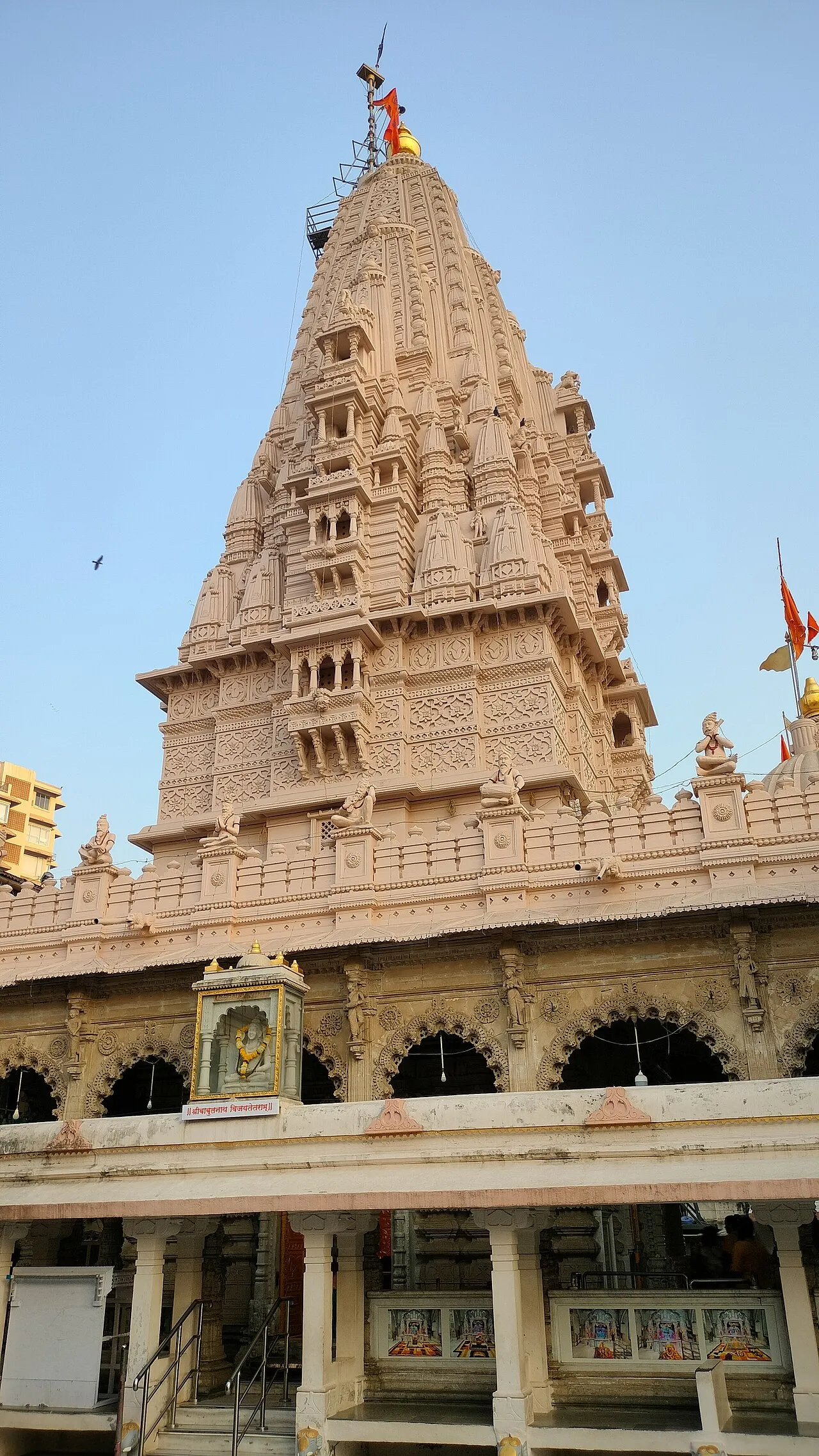
Yes. RTI's official website, srti.in, describes a "legacy of over 90 years" and says the institute gives training and employment to women in its food, tailoring, embroidery and Montessori divisions. The website lists its head office at 35 N. S. Patkar Marg on Hughes Road, close to Babulnath Temple (Mumbai 400007). Food counters are listed at Hughes Road, Fort, Colaba (two), Kemps Corner (in the Parsi General Hospital cafeteria), Dadar Parsi Colony and Bandra. The Hers and Bambino clothing boutiques are at 30, N. S. Patkar Marg.
RTI food and the kitchen's records
The Hindustan Times reported in November 2022 that a team of about 50 people prepares RTI's daily food, that roughly 40 percent of the staff had been there for decades, and that the kitchen keeps antique, handwritten recipe books. The same report described The Landmark, a renovated space at the institute that hosts private events for about 35 guests. On 15 August 2026, the Free Press Journal listed RTI among Mumbai's places for a Navroz meal, with a festive menu and gift hampers at all its outlets, including Patra ni Machhi, Pulao Dar and Lagan Custard.
Montessori training and embroidery
RTI's website advertises an AMI Montessori Teacher Training Diploma Course. In 2018 the Tata Group described the RTI Montessori Training Centre as "one of only four in India". The same 2018 feature said RTI's embroidery unit makes hand-worked garas, each taking from several months to a year, and that its boutiques, Hers for women and Bambino for children, sell hand-stitched clothing.
Frequently asked questions
Who founded the Ratan Tata Institute (RTI)?
Lady Navajbai Tata founded the Sir Ratan Tata Institute in Mumbai in memory of her husband, Sir Ratan Tata, the younger son of Jamsetji Tata, who died in 1918. The Tata Group calls RTI her brainchild. She was also the first woman director of Tata Sons, appointed in 1924 or 1925 depending on the source.
When was RTI founded?
The year most often given is 1928. A 2018 Tata Group feature names April 1928, and Business Today also gives 1928. Other sources differ: a 2022 Tata Group article mentions both 1926 and April 1928, and a 2022 Hindustan Times report calls RTI a Mumbai landmark since 1929. No source we read explains the difference.
What did RTI train women in?
RTI trained poor and destitute Parsi women in four trades: cookery, hand embroidery, tailoring and laundry. The women were employed in these divisions while they trained, so they earned a livelihood as well as a skill. The Tata Group's 2022 article says all four divisions still exist, and RTI's website now lists food, tailoring, embroidery and Montessori divisions.
Is RTI still open, and what does it sell?
Yes. RTI's website lists a head office on Hughes Road, Mumbai, and food counters in Fort, Colaba, Kemps Corner, Dadar Parsi Colony and Bandra. It sells savoury and sweet Parsi food and snacks, clothing through its Hers and Bambino boutiques, and embroidered table and bath linen under Hers at Home. In August 2026 its outlets offered a Navroz menu.
What is the link between RTI and the Stri Zarthosti Mandal?
The Stri Zarthosti Mandal was founded in 1903 for destitute Parsi women. According to the Tata Group, the Mandal needed a larger building to take in more women, and Lady Navajbai Tata donated one. Tata Group articles connect that gift with the setting up of the Sir Ratan Tata Institute.