PalV's Kasti
On this page
- Why did Sir Dorabji Tata want a cancer hospital in India?
- Who carried the plan through after Dorabji's death?
- When and where did Tata Memorial Hospital open?
- How did the hospital pass from the Trust to the Government of India?
- What is the Tata Memorial Centre, and how is it different from the hos…
- How did the hospital grow after 1941?
- Frequently asked questions
Tata Memorial Hospital began with one family's illness. In 1930 Sir Dorabji Tata learnt that his wife, Lady Meherbai, had leukaemia, and he sent her to England for treatment. He saw that very few Indians could pay for that journey and that care, so he set out to build a hospital in India only for cancer. He did not live to see it. The Sir Dorabji Tata Trust funded the project, the Tata Group credits Nowroji Saklatwala and then JRD Tata with pushing it through, and the hospital opened in Parel, Bombay, in 1941 with 80 beds. Tata's own account gives the opening day as 28 February 1941.
અસપંદામેદ રોજ
Asfandarmad Roj, Tir Mah · 1396 Y.Z.
Why did Sir Dorabji Tata want a cancer hospital in India?
The reason was personal. A 1995 profile of the institution by S. Pai and A. Borges in The National Medical Journal of India (NMJI) says Dorabji, on learning of Lady Meherbai's leukaemia in 1930, sent her to England and then realised how few people in India could afford what he had just paid for. His answer was a hospital devoted to diagnosing and treating cancer, at home.
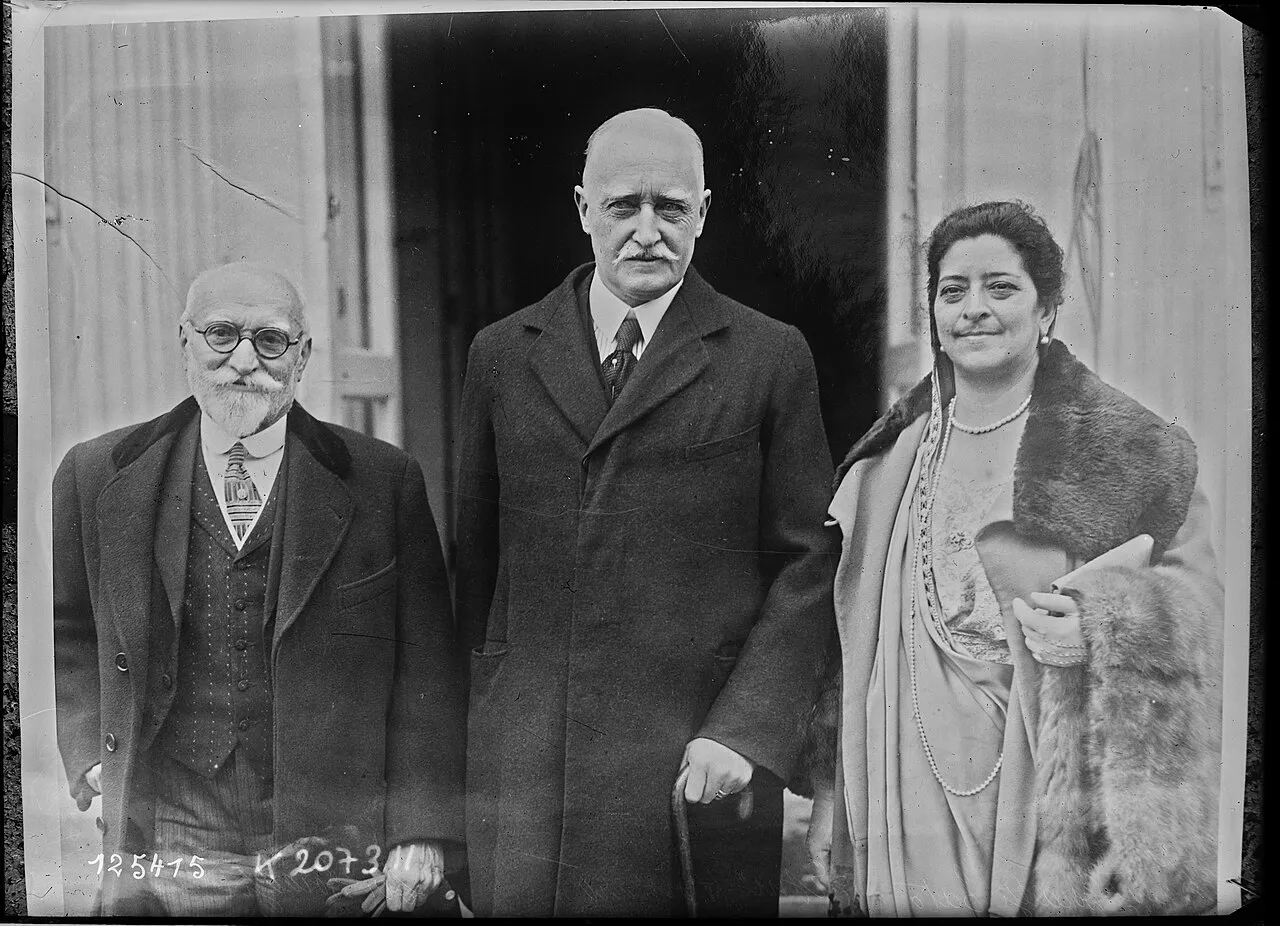
The Tata Group tells the same story from a slightly different side. Its page on the Tata Memorial Centre says Dorabji, then chairman of Tata Sons and the son of founder Jamsetji Tata, wanted India to have a facility like the ones abroad where his wife had been treated. You can read more about his life in our post on Sir Dorabji Tata.
One detail we have left out on purpose: the year Lady Meherbai died. The Tata Group's page gives one, but we could not confirm it in a second independent source, so we are not repeating it here.
Who carried the plan through after Dorabji's death?
According to the NMJI profile, Dorabji died in 1932, while planning was still at an early stage. The hospital was then commissioned with money from the Sir Dorab Tata Trust. The Tata Group credits two men with keeping the idea alive: his successor at Tata Sons, Nowroji Saklatwala, who "pursued this endeavour", and JRD Tata, whose support it says finally got the building open.
Help also came from abroad. The NMJI profile says cancer centres outside India, among them Memorial Hospital in New York, assisted the hospital's doctors in the early years. A 2022 article by Rajendra A. Badwe and Nishu Singh Goel in the Indian Journal of Surgical Oncology also names Memorial Hospital as an early supporter, and later Massachusetts General Hospital as a partner in training and exchange of experts.
When and where did Tata Memorial Hospital open?
It opened in 1941 in Parel, which the Tata Group describes as the heart of working-class Mumbai. Tata's page gives the date as 28 February 1941 and calls the building a seven-storey structure. Badwe and Goel write that Sir Roger Lumley, then Governor of Bombay, spoke at the hospital's inception.
It started small. Both the NMJI profile and the Tata Group give 80 beds at the start. The NMJI piece adds that the hospital saw 1,609 patients in 1941, and Tata's page puts the annual budget in 1941 at Rs 5 lakh.
How did the hospital pass from the Trust to the Government of India?
The Sir Dorab Tata Trust ran the hospital for its first 16 years. The NMJI profile and Tata's Tata Memorial Centre page both say the Ministry of Health took it over in 1957 (Tata calls that takeover temporary), and that in 1962 control moved to the Department of Atomic Energy. The NMJI profile adds that it was placed there as a grants-in-aid institution. One Tata newsroom page dates the Ministry of Health handover to 1962 instead. This post follows the two sources that agree.
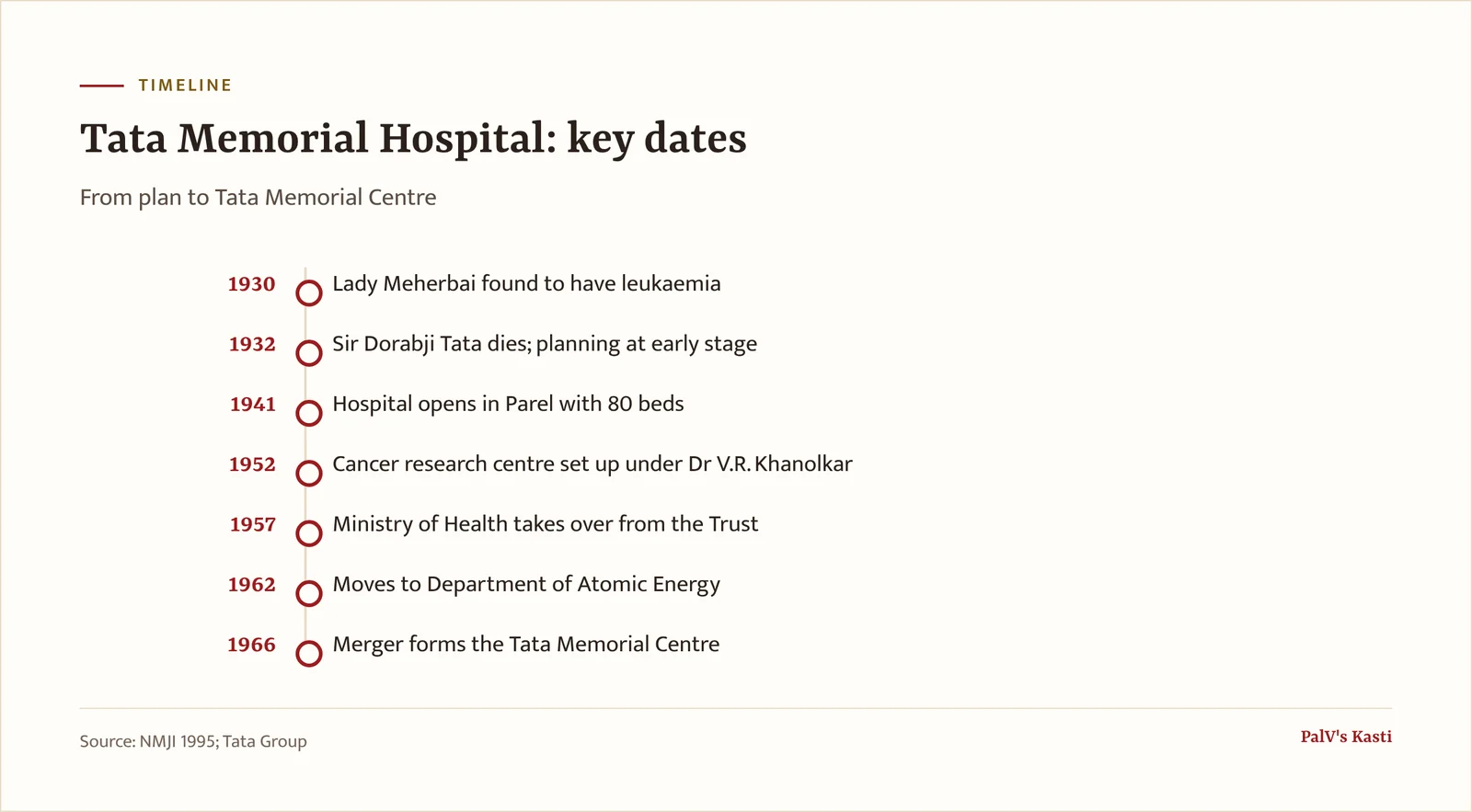
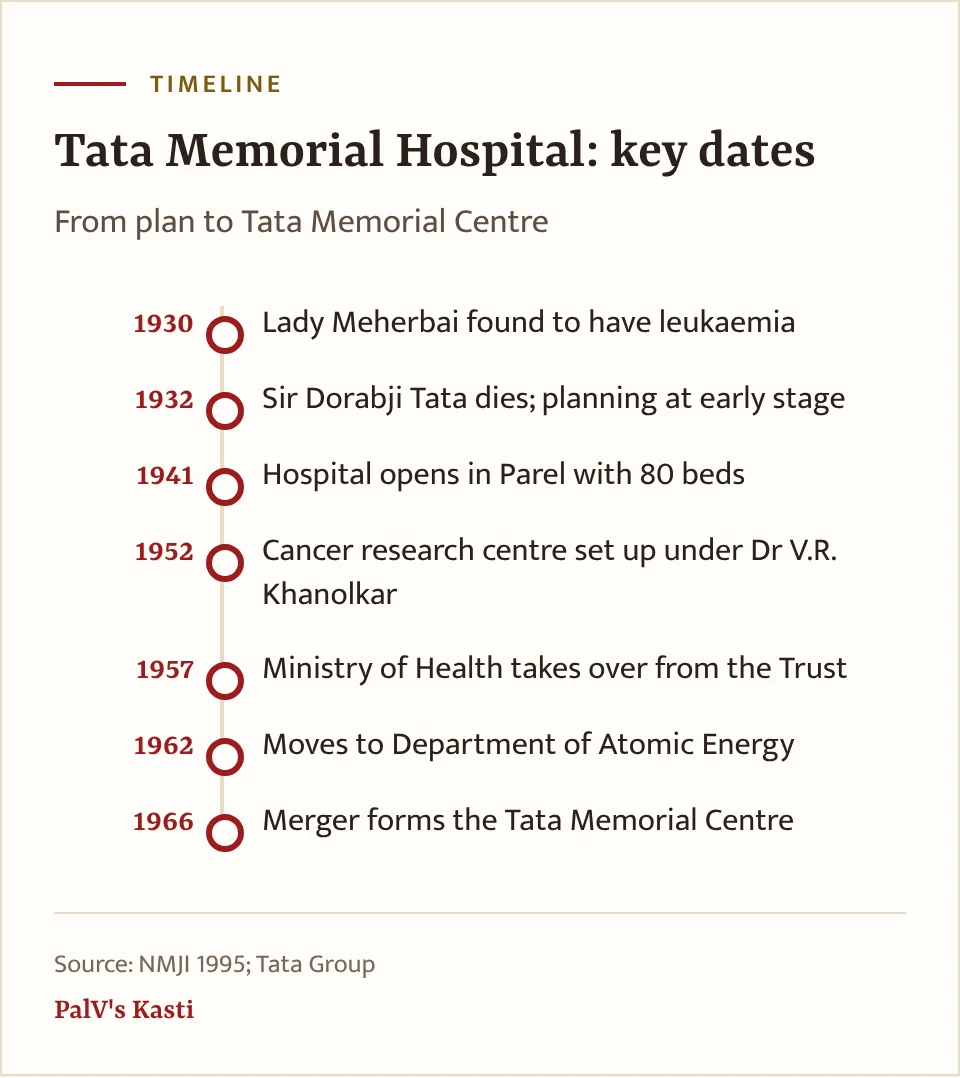
Why atomic energy? The Tata Group's explanation is that JRD Tata and Homi Bhabha, whom it calls the pioneer of India's nuclear energy programme, foresaw how much radiation would matter in cancer care, from imaging and staging to therapy. Dr Ketayun Dinshaw, a former director of the centre, is quoted on the same page saying that the hospital went to the Department of Atomic Energy "because of his involvement and concern", meaning JRD's.
What is the Tata Memorial Centre, and how is it different from the hospital?
The Tata Memorial Centre (TMC) is the larger body that was formed around the hospital in 1966. In 1952 a sister institute for basic cancer research was set up under the pathologist Dr V.R. Khanolkar, called first the Indian Cancer Research Centre and later the Cancer Research Institute. In 1966 the hospital and that institute were merged to form the Tata Memorial Centre. The NMJI profile and the Tata Group both give these dates, and the NMJI piece calls Khanolkar the father of cancer research in India.
Space in Parel ran out over the decades. In 1995 the NMJI profile described a new centre being built on a 60-acre plot in New Bombay. That became ACTREC, the Advanced Centre for Treatment, Research and Education in Cancer at Kharghar, which Tata's page says was set up in 2002.
How did the hospital grow after 1941?
The NMJI profile gives a few markers from its first fifty years:
- Beds rose from 80 in 1941 to 375 in 1993.
- Patients registered went from 1,609 in 1941 to more than 35,000 in 1993.
- In 1983 the hospital carried out what the profile calls the first successful bone marrow transplant in India.
- The golden jubilee, 1941 to 1991, was marked in 1991. Dr Dinshaw remembered JRD Tata visiting for it.
The most recent figure we could check comes from the centre itself. Its 2019-20 annual report says TMC cared for more than 1,25,000 new cancer patients in 2019, and its cover calls TMC a grant-in-aid institute under the Department of Atomic Energy. We did not find a 2025 or 2026 source on bed numbers or services today, so we have not given any.
For the wider story of the companies and trusts behind this gift, see our Tata Group history.
Frequently asked questions
Who founded Tata Memorial Hospital?
Sir Dorabji Tata planned it after his wife, Lady Meherbai, was found to have leukaemia in 1930. He died in 1932, before it was built. The Sir Dorabji Tata Trust funded the hospital, and the Tata Group credits Nowroji Saklatwala and then JRD Tata with seeing the project through to its opening in 1941.
Why was Tata Memorial Hospital founded?
It was founded so that people in India could be diagnosed and treated for cancer without travelling abroad. Sir Dorabji Tata had sent his wife to England for leukaemia treatment and realised that very few Indians could afford that journey and care. He decided to help set up a hospital in India for cancer patients only.
When did Tata Memorial Hospital open?
Tata Memorial Hospital opened in Parel, Bombay, in 1941. The Tata Group gives the exact date as 28 February 1941 and describes the first building as seven storeys tall. It began with 80 beds, and according to a 1995 profile in The National Medical Journal of India it saw 1,609 patients in that first year.
Is Tata Memorial Hospital run by the government now?
It has been under the government since 1957. The Sir Dorab Tata Trust ran it from 1941 until then, when the Ministry of Health took over, and in 1962 it moved to the Department of Atomic Energy. The centre's 2019-20 annual report calls it a grant-in-aid institute of the Department of Atomic Energy.
What is the Tata Memorial Centre?
The Tata Memorial Centre was formed in 1966 by merging Tata Memorial Hospital with the Cancer Research Institute, set up in 1952 under Dr V.R. Khanolkar. According to the Tata Group, it set up ACTREC at Kharghar, Navi Mumbai, in 2002. The centre's own annual report says it cared for more than 1,25,000 new cancer patients in 2019.