PalV's Kasti
On this page
Adopt an Antique was a fundraising drive for the F. D. Alpaiwalla Museum in Mumbai, started by a school student, Zara Heeramaneck, while the museum was shut and short of money. Donors "adopted" a piece of the museum's Chinese export porcelain, and their gift paid for its restoration. The Asian Age reported in December 2016 that she had launched it after a visit to the museum that October. We found no 2025 or 2026 source saying the scheme still runs, so the way to take part today is through the museum's own Donate page, which takes money and gifts of objects.
For the museum itself and how it began, start with our guide to the Alpaiwalla Museum.
અસપંદામેદ રોજ
Asfandarmad Roj, Tir Mah · 1396 Y.Z.
What was the Adopt-An-Antique initiative?
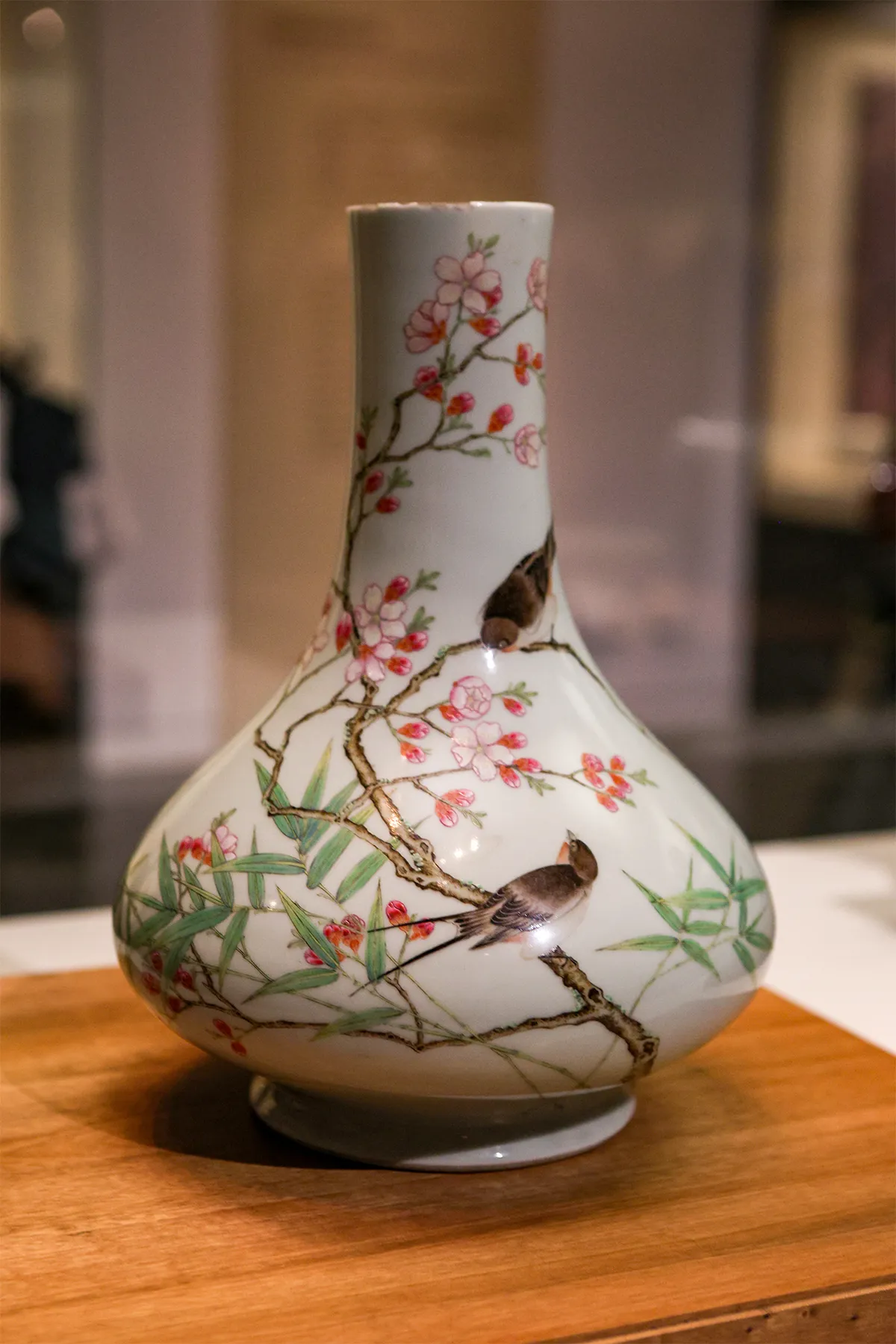
The idea was simple. Each donor took responsibility for one object, and the money went to a conservator who repaired it. Both newspaper reports describe the pieces as Chinese porcelain from the museum's collection. DNA says the porcelain had been made for the export market.
The reports differ on how many pieces were in the scheme. The Asian Age (26 December 2016) said she was looking to restore 20 antiques. DNA, in a story by Marisha Karwa last updated on 5 December 2017, put the number at 25. We give both because neither can be checked against a museum record.
Why porcelain? Parsi Times, reporting on the museum in 2025, notes that traders used porcelain as ship's ballast before selling it in India. Speaking to The Asian Age, she said the relics "bear witness to the trade" between Parsis and the Chinese. Our post on the Alpaiwalla Museum collection covers what is on display now.
Who started Adopt an Antique, and why?
Zara Heeramaneck, then a Mumbai school student, started it. DNA describes her as a Grade 12 student at BD Somani International School. According to The Asian Age, she found on her October 2016 visit that the antiques badly needed repair, and that the museum, which was closed at the time, could not set aside funds for them.
The museum is run by the Bombay Parsi Punchayet, and DNA reports that she sought the Punchayet's approval before starting. Both papers name the museum's caretaker, Nivedita Mehta, and Pheroza Godrej among those who helped.
She chose to raise the money face to face. DNA says she stayed off social media and aimed at people in their 40s to 60s who knew the culture. She told The Asian Age that because the drive asked people for money, she made a point of visiting every donor in person to explain it.
How much did it cost to adopt an antique?
The two reports describe the amounts differently, so here is each one as printed.
- The Asian Age, December 2016: a gift of about Rs 5,000 to Rs 10,000 brought a certificate with details of one antique. Anything above Rs 15,000 brought a certificate and a framed print of the piece. The paper added that some donors had given as much as Rs 40,000.
- DNA (updated December 2017): adoption amounts were capped at Rs 15,000.
We cannot tell from these two stories whether the terms changed between them or whether one paper simply summed them up differently.
Which antiques were restored?
The first piece finished was a porcelain umbrella stand. The Asian Age describes it as a 19th-century Chinese umbrella stand from the Qing dynasty and says its restoration cost Rs 40,000. Both papers name the conservator as Edul Fanibunda (The Asian Age spells it Fannibunda).
The Asian Age also named other pieces in the group, all dated to the late 19th century:
- a Chinese Rose Verte porcelain vase
- a blue-and-white export porcelain jar with its lid
- a vase painted with flowers
Both papers said the restored pieces would be packed and stored until the museum opened again. We have not found any source that says whether these particular pieces are on show today.
How much money did the scheme raise?
The figures do not line up, so we date each one. The Asian Age reported in December 2016 that about Rs 6 lakh had been collected. DNA's story said 25 to 30 donors, Parsi and non-Parsi, had pledged, and that about Rs 4 lakh had come in.
Her stated goal went further than the porcelain. DNA reported that she hoped to raise enough not only for the repairs but to help get the museum open again.
Is Adopt an Antique still running?
We could not confirm that it is. The museum's website today has a general Donate page and does not mention Adopt an Antique by name, and we found no news report from 2025 or 2026 about the scheme. Treat it as a past campaign, reported in 2016 and 2017, unless the museum tells you otherwise.
The wait for a reopening ended on 27 March 2025, when the museum opened its doors again after restoration, as reported by Parsi Times and stated on the museum's own website. Our post on the Alpaiwalla Museum reopening explains what changed.
How can you support the Alpaiwalla Museum today?
The museum's Donate page sets out the current options:
- a monthly gift or a one-time gift, with suggested amounts from ₹1,000 to ₹25,000, or any other amount
- an optional dedication of the gift in honour or memory of someone
- gifts in kind: the page says the museum accepts "objects, antiquities, artefacts and historical documents" that a family may have inherited
The page says money given will support conservation work and outreach programmes. It also says a contribution "may be tax deductible" within legal limits, so check the receipt and the current rules with your tax adviser before you count on a deduction.
If your family holds an inherited object or document of this kind, ask the museum first whether it can take the item.
Frequently asked questions
What is Adopt an Antique at the Alpaiwalla Museum?
Adopt an Antique was a fundraising drive begun in 2016 by Mumbai student Zara Heeramaneck. Donors paid to restore a chosen piece of the museum's Chinese export porcelain while the museum was closed. Newspapers reported 20 or 25 pieces in the scheme, and the restored items were to be stored until the museum reopened.
Who started the Adopt-An-Antique initiative?
Zara Heeramaneck, a Mumbai school student, started it in 2016 after visiting the closed museum that October, according to The Asian Age. DNA reports she got approval from the Bombay Parsi Punchayet, which runs the museum, and was helped by caretaker Nivedita Mehta and Pheroza Godrej, among others.
How much did it cost to adopt an antique?
The Asian Age reported in December 2016 that about Rs 5,000 to Rs 10,000 brought a certificate for one antique, while gifts above Rs 15,000 also brought a framed print. DNA later reported that adoption amounts were capped at Rs 15,000. The two reports describe the terms differently.
Is the Adopt-An-Antique scheme still open?
We found no 2025 or 2026 source saying it is. The museum's website now has a general Donate page that does not name the scheme. The museum reopened on 27 March 2025, so ask the museum directly if you want to fund the care of a particular object.
How else can I support the Alpaiwalla Museum?
The museum's own Donate page offers monthly or one-time gifts, with suggested amounts from ₹1,000 to ₹25,000, and a gift can be dedicated in someone's honour or memory. The museum also says it accepts gifts of objects, antiquities, artefacts and historical documents that families have inherited.