PalV's Kasti
On this page
- What is the F. D. Alpaiwalla Museum?
- Who was Framji Dadabhoy Alpaiwalla?
- Who was Jamshed Unvala, and what did he give the museum?
- When was the Alpaiwalla Museum founded: 1952, 1954 or 1984?
- Who runs the Alpaiwalla Museum today?
- Is it the only Parsi museum in the world?
- Why was the museum closed, and when did it reopen?
- What can you see there?
- Where is the Alpaiwalla Museum, and when is it open?
- Frequently asked questions
The F. D. Alpaiwalla Museum is a small archaeological and ethnographic museum in Mumbai, run by the Bombay Parsi Punchayet (BPP), that tells the story of the Parsis and the Iranian Zoroastrians. It sits on the ground floor of the Khareghat Memorial Building in Khareghat Colony, off Hughes Road. It began with two gifts: the vast private collection of Framji Dadabhoy Alpaiwalla, a Parsi bullion trader who filled his home with antiques, and the finds that the scholar-priest Jamshedji Maneckji Unvala brought back from excavations at Susa in Iran. The BPP gives 1954 as the year it set the museum up, while the museum's own website says 1952. After a restoration, it reopened on 27 March 2025.
અસપંદામેદ રોજ
Asfandarmad Roj, Tir Mah · 1396 Y.Z.
What is the F. D. Alpaiwalla Museum?
The Framji Dadabhoy Alpaiwalla Museum is the Parsi museum of Mumbai. The BPP describes it as "an archaeological and ethnographic museum" whose collection reflects the heritage of the Parsis of India and the Zoroastrians of Iran. Reporting on the reopening in March 2025, the Free Press Journal quoted Dr Shehernaz Nalwala, vice-president of the Asiatic Society of Mumbai, calling it a small museum that matters because it "preserves the memory" of those who came to India from Persia.
Its holdings come from two founding collections. One is Alpaiwalla's own, which Outlook Traveller says takes in portraits, porcelain and glassware. The other is Unvala's material from Susa and Yazd.
Who was Framji Dadabhoy Alpaiwalla?
Framji Dadabhoy Alpaiwalla was a Parsi bullion trader and antique collector, and the museum carries his name. The museum's Founders page says his collecting got so far ahead of him that he ran out of room in his eleven-room home. Parsi Times, in its April 2025 report, adds that he ended up sleeping in the kitchen.
The museum's website quotes its first curator, Nivedita Mehta, on his habits: most collectors set aside a share of their income for art, but "Alpaiwalla exercised no such self-restraint." He gave the whole collection to the Bombay Parsi Punchayet, and the BPP built the museum around it.
Parsi Times says he died in 1951 and that the BPP then gave Unvala the job of curating and setting up the museum.
Who was Jamshed Unvala, and what did he give the museum?
Ervad (Dr) Jamshedji Maneckji Unvala was a scholar-priest and archaeologist whose finds make up the museum's second founding collection. The museum's website gives his dates as 1888 to 1961 and says he was French-speaking. It says the Mission Archéologique de Susiane invited him to dig at Susa under the French archaeologist Roland de Mecquenem, and that he excavated there from 1927 to 1939.
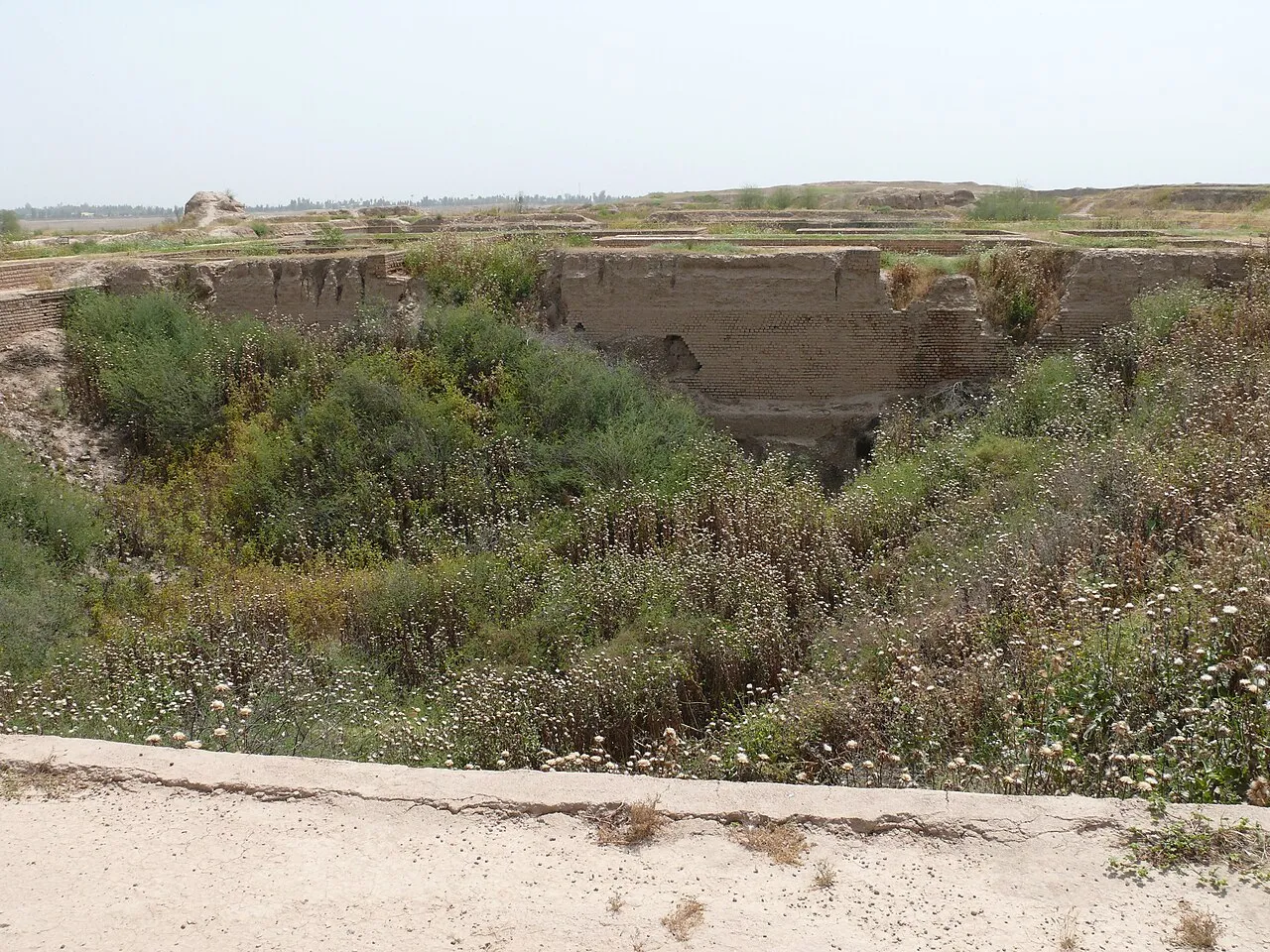
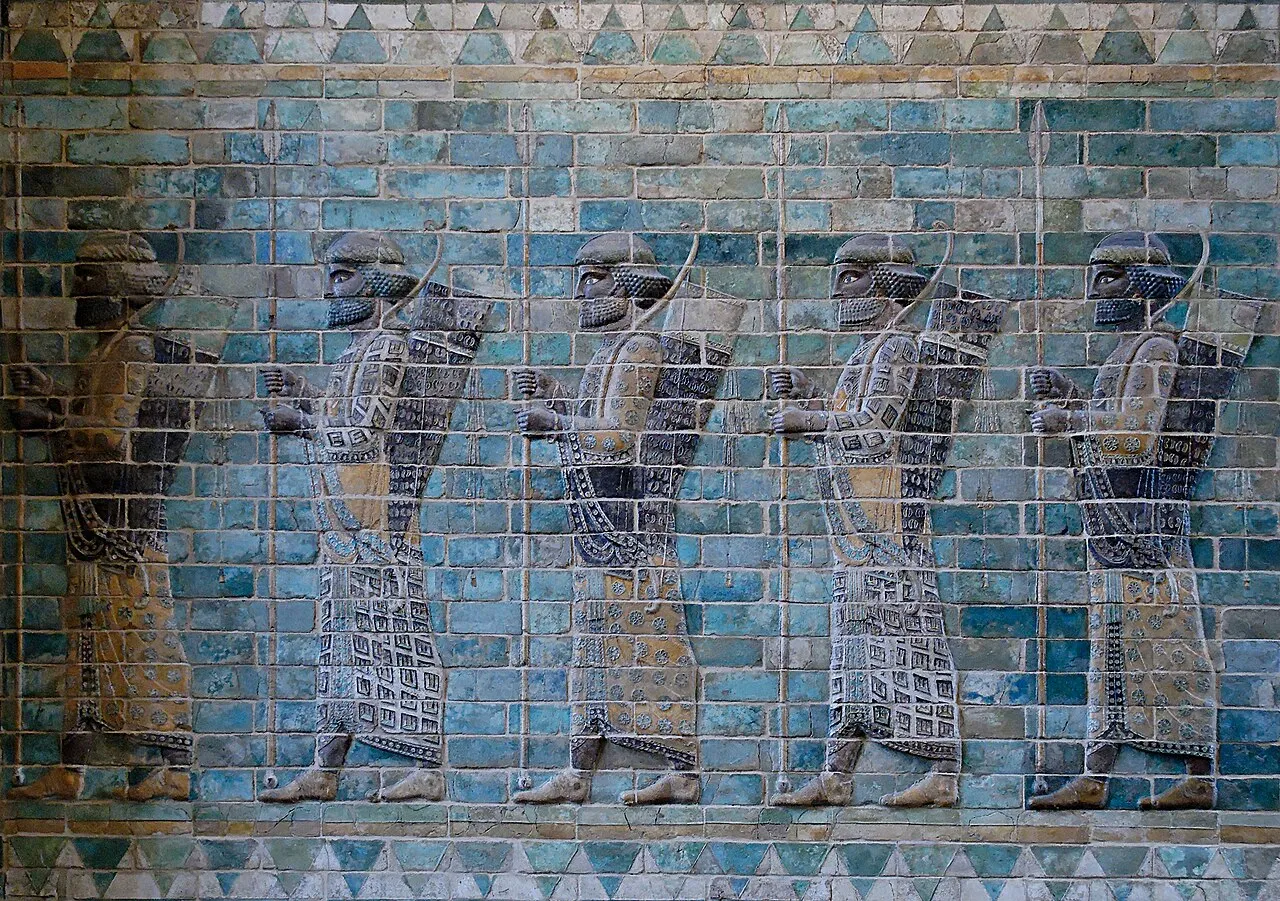
The museum and Parsi Times both say he brought back Proto-Elamite tablets and glazed bricks from the "Archer's Frieze" from Susa, and both say he excavated a Tower of Silence in Yazd, Iran, whose finds went to the Alpaiwalla Museum. The museum's page adds buff-coloured clay vases and pots. The BPP calls his Susa finds one of the museum's "two large distinct collections".
When was the Alpaiwalla Museum founded: 1952, 1954 or 1984?
The sources do not agree. Here is what each one says.
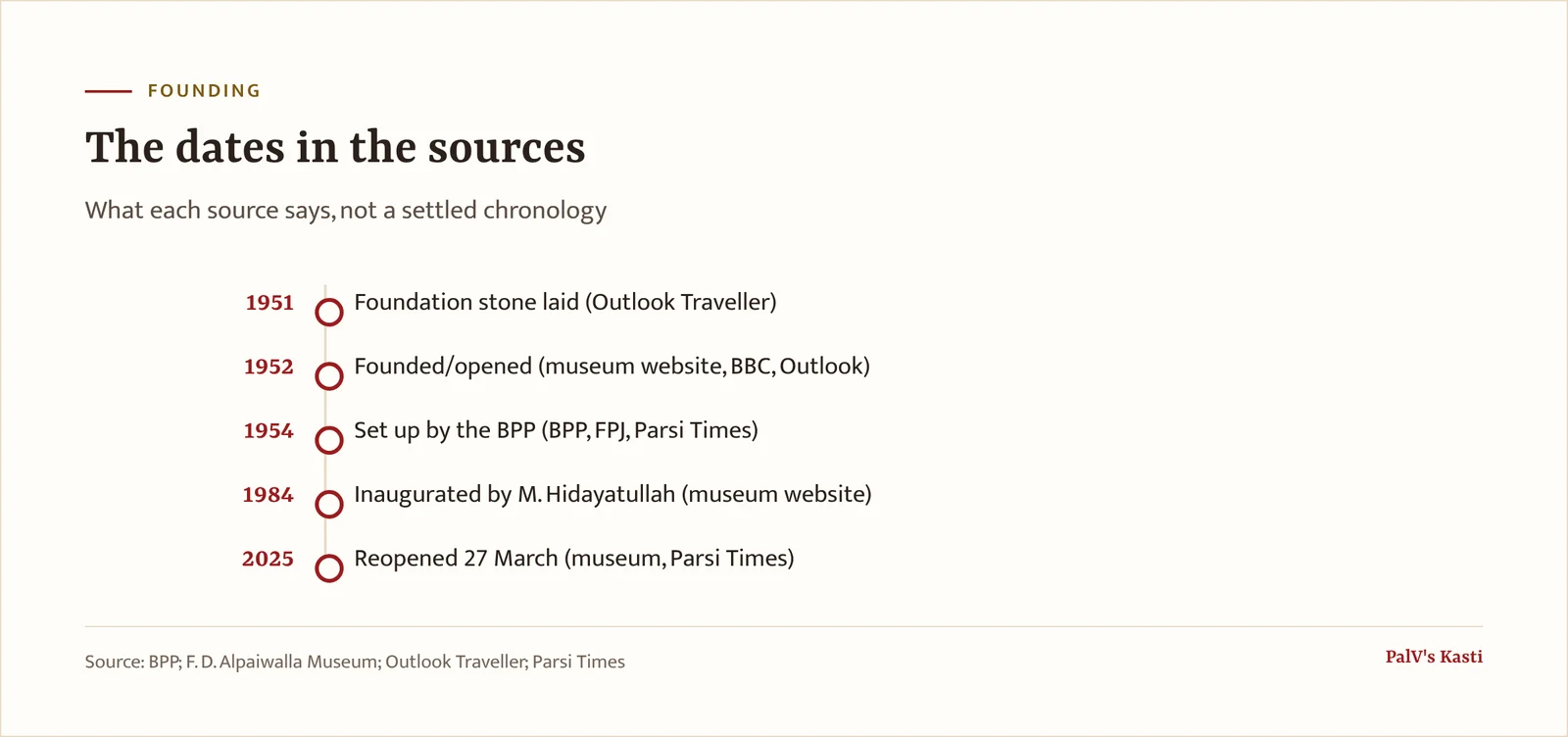
- 1954: the Bombay Parsi Punchayet's own page says the BPP set the museum up in 1954. The Free Press Journal, Parsi Times and the Government of India's Incredible India tourism site all give 1954 too.
- 1952: the museum's website opens its Founders page with "founded in 1952". A BBC News feature on the renovated museum also says "originally founded in 1952".
- 1951 and 1952 together: Outlook Traveller (May 2025) gives 1954 as the year of establishment but also dates the laying of the foundation stone to 1951 and the opening to 1952.
- 1984: the museum's "A BPP Initiative" page says it "was inaugurated in 1984" by Mohammad Hidayatullah, former Vice-President of India.
We have not seen a primary record, such as a BPP minute or a newspaper notice from the time, that settles it. So we give 1954 as the BPP's date and 1952 as the museum's own date, and name the source each time.
Who runs the Alpaiwalla Museum today?
The museum is run by the Bombay Parsi Punchayet. Its own website says it "is administered by the Bombay Parsi Punchayet (BPP)", and the BPP lists the museum among its own services.
The BPP's museum page names Kerman R. Fatakia as curator (the museum's tour page calls him Deputy Curator) and Tennaz K. Vakil as museum administrator. Dr Pheroza J. Godrej and Firoza Punthakey Mistree are the honorary advisors. The museum's Advisors page says the BPP trustees appointed the two of them, and that their role was upgrading and reimagining the museum.
Is it the only Parsi museum in the world?
That is how the BPP describes it: the only museum in the world devoted to "the Parsis and Iranian Zoroastrians". Outlook Traveller and Parsi Times repeat the claim. We have not tested it against every collection worldwide, so read it as the institution's own description. We write about other places separately, such as the Udvada Museum. For Zoroastrian scholarship in Mumbai, see our guide to the K. R. Cama Oriental Institute.
Why was the museum closed, and when did it reopen?
Before it closed, the museum had started lending. The BPP says that in 2013 objects were lent to exhibitions abroad and in India for the first time, including the SOAS exhibition "The Everlasting Flame" at the Brunei Gallery in London. Outlook Traveller also mentions the 2013 loans.
In December 2016 The Asian Age reported that the museum "stands shut today" and could not afford to spend on its antiques. That was when a Mumbai teenager began raising money to restore them, a story we tell in our post on the Adopt-An-Antique initiative.
The restoration was paid for with a grant from the Union Ministry of Culture together with BPP money, and the BPP's page says it funded the first phase of work on the building. The museum reopened on 27 March 2025, according to both its website and Parsi Times. Our Alpaiwalla Museum reopening post covers what changed.
What can you see there?
The galleries hold the Susa and Yazd finds, Zoroastrian manuscripts and Parsi heirlooms, and we walk through them object by object in our post on the Alpaiwalla Museum collection.
Where is the Alpaiwalla Museum, and when is it open?
The museum gives its address as the Khareghat Memorial Building in Khareghat Colony, on N.S. Patkar Marg (Hughes Road), Mumbai 400007. The BPP gives the same building, places the museum on its ground floor and calls the colony Old Khareghat Colony.
The museum's own Timing page says it is open every day except Sunday and certain bank holidays, from 10:30 am to 5:30 pm, and asks visitors to contact it before coming on a public holiday. The BPP page agrees: Monday to Saturday, 10:30 am to 5:30 pm. Other listings differ. Incredible India shows a lunch break and closure on Saturdays as well as Sundays, and Parsi Times wrote "weekdays". Go by the museum's own page, and write to fdalpaiwallamuseum@gmail.com if you are unsure.
The museum's Curator's Tour page says you can ask for a guided tour with the curator by phone or email. Incredible India lists entry as free, but the museum's own site gives no fee, so ask when you book.
Frequently asked questions
Where is the Alpaiwalla Museum in Mumbai?
The F. D. Alpaiwalla Museum is on the ground floor of the Khareghat Memorial Building in Khareghat Colony, on N.S. Patkar Marg (Hughes Road), Mumbai 400007. Both the museum's website and the Bombay Parsi Punchayet give this address. The Asian Age places Khareghat Parsi Colony at Kemps Corner in south Mumbai.
Who runs the F. D. Alpaiwalla Museum?
The Bombay Parsi Punchayet runs the museum. Its website says it "is administered by the Bombay Parsi Punchayet (BPP)". The BPP names Kerman R. Fatakia as curator, with Dr Pheroza J. Godrej and Firoza Punthakey Mistree as honorary advisors. The trustees appointed both advisors, whose role was upgrading and reimagining the museum.
When was the Alpaiwalla Museum founded?
The sources give different years. The Bombay Parsi Punchayet says it set the museum up in 1954. The museum's website and the BBC say it was founded in 1952. Another page on the museum's site says it was inaugurated in 1984 by Mohammad Hidayatullah. We have not found a primary record that settles which date is right.
Who was Framji Dadabhoy Alpaiwalla?
Framji Dadabhoy Alpaiwalla was a Parsi bullion trader whose antique collection filled his eleven-room home, according to the museum. He gave the collection to the Bombay Parsi Punchayet, which set up the museum that carries his name. Parsi Times reports that he died in 1951, after which the BPP asked Unvala to set it up.
What are the Alpaiwalla Museum's opening hours?
According to the museum's own website, the museum opens from 10:30 am to 5:30 pm every day except Sunday and certain bank holidays. The Bombay Parsi Punchayet gives the same hours, Monday to Saturday. The museum asks visitors to check before coming on a public holiday, because it may be closed on some of them.