 PalV's Kasti
On this page
The traditional vegetarian Parsi dishes you can cook at home are lagan nu stew (laganshala), the fried-vegetable stew of the wedding feast; bhaji dana, four greens cooked together; raviya, stuffed brinjal in gravy; vengna no patiyo, brinjal made the way prawn patio is made; paaprie, hyacinth beans layered with yam and potato; vegetable dhansak; Parsi dahi ni kadhi; and dals such as channa ni dar. Below we describe each one, give a full laganshala recipe from FEZANA's community cookbook, and flag the Parsi vegetable dishes that come with eggs on top. For the wider list of dishes, see our guide to Parsi recipes.
અસપંદામેદ રોજ
Asfandarmad Roj, Tir Mah · 1396 Y.Z.
Do Parsis really cook vegetarian food?
They do, far more than restaurant menus let on, and our guide to Parsi food covers the cuisine as a whole. Speaking to the Free Press Journal in June 2024, Dr Kurush Dalal, an archaeologist who also studies food culture, said Parsis eat a lot of okra, brinjal and dals like chana and masoor. The cookbook author Niloufer Mavalvala, who was born in Karachi and now lives in Canada, told Slurrp in 2022 that a vegetable dish opened the meal at her family table when she was growing up, all year round.
When do Parsi families cook meat-free?
The best-known time is Bahman mahino, the month dedicated to Bahman (Vohu Manah), guardian of the animal creation. Noshir H. Dadrawala writes in FEZANA's 2012 cookbook Eat, Live, Pray that devout Parsis give up meat for the whole of that month. The Free Press Journal also describes Bahman as the month when the faithful are asked to eat vegetarian food. Mavalvala places it around mid-June.
Practice varies between families and Agiaries; your family priest's guidance comes first.
Which vegetarian Parsi dishes can you cook at home?
These are the dishes named by the Free Press Journal, by Mavalvala in her Slurrp interview and in FEZANA's cookbook.
Lagan nu stew (laganshala)
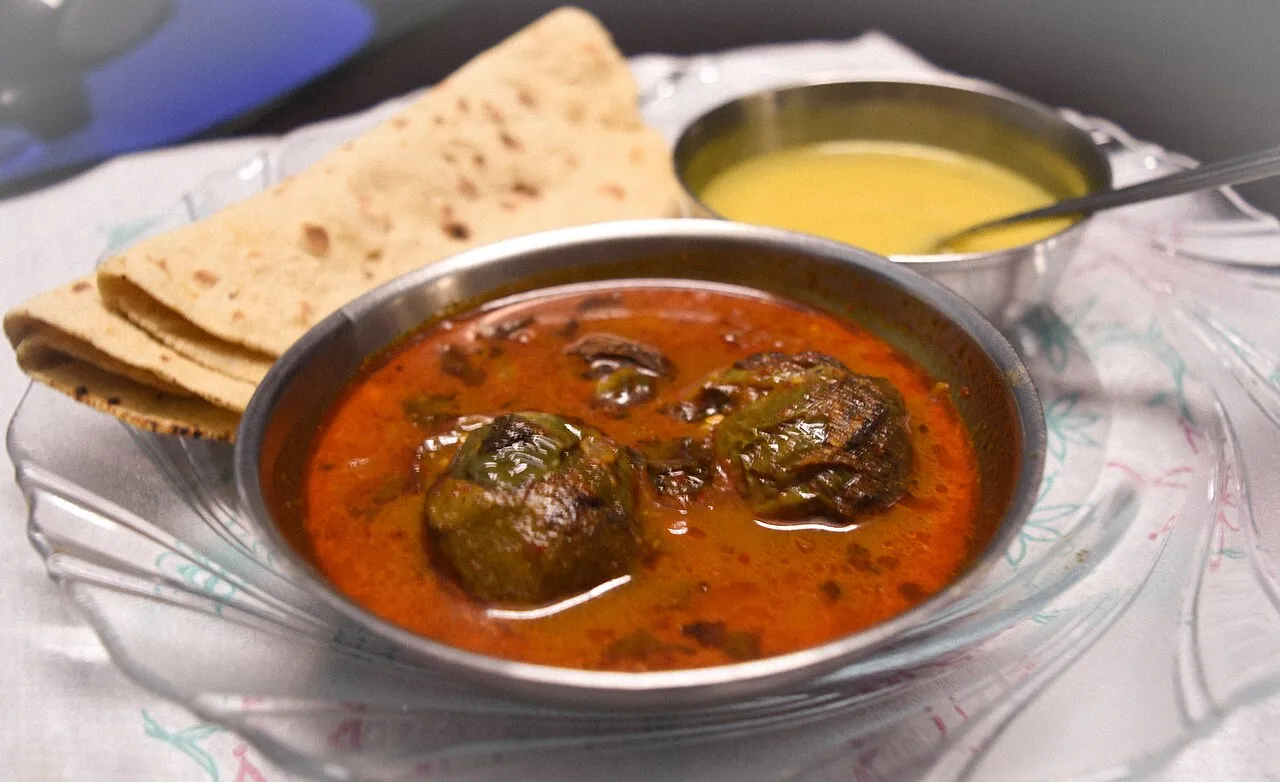
Diced vegetables such as potato, yam, sweet potato and carrot, fried first and then cooked with tomato. A wedding banquet menu printed in Eat, Live, Pray puts laganshala in the first course, with lagan nu achaar (carrot and raisin pickle) and rotli. In Mavalvala's words, lagan nu stew is served at every wedding feast, and she adds dried fruit like apricots for sweetness. The full recipe is further down.
Bhaji dana
The Free Press Journal describes it as a mix of four leafy greens: spinach, fenugreek, amaranth and dill.
Raviya, vengna no patiyo and dahi na vengna
Brinjal turns up three ways. Raviya, in the Free Press Journal's list, is stuffed brinjal in gravy. Vengna no patiyo, Mavalvala explains, is cooked exactly like jhinga no patiyo, in an onion and tomato chutney, only with brinjal where the prawns would go. Her third is brinjal pan-fried in masala with yoghurt, the dish her book calls dahi na vengna.
Paaprie
Green hyacinth beans in layers with yam, potato, onion, tomato, baby brinjal and garlic. Paaprie is Mavalvala's own favourite to cook and to eat. She calls it one of the simplest one-pot dishes there is.
Vegetable dhansak and dahi ni kadhi
Dhansak, as Dalal puts it, is rice, dal and vegetables cooked with meat. Leave out the meat and you have vegetable dhansak: puréed dal and vegetables, served with rice. It was on the menu, with a vegetable stew, when more than 750 people gathered at Cama Baug in June 2024 for the Parsi Vegetarian and Temperance Society's annual celebration, the Free Press Journal reported. Shabnam Minwalla, in Outlook Traveller, notes that Parsi hosts may feel obliged to make vegetarian dhansak for guests who don't eat meat.
Parsi dahi ni kadhi is a yoghurt curry. The Free Press Journal says it is close to Gujarati kadhi but thicker.
Dals, potatoes and the rest
- Channa ni dar: soaked chana dal cooked in a ground masala of red chillies, cumin, coriander, ginger and garlic, then finished with fried onions. This is Tanaz Divecha's recipe in Eat, Live, Pray.
- Papeta ne sekhta ni seengh: potato and drumsticks in a coconut-milk and tomato gravy, eaten with white rice (Nergish Karanjia, same book).
- Khatti mitthi guar, French beans, and keri kanda, which is cooked sweet ripe mango. All three are Mavalvala favourites.
- Potatoes, in more forms than we can list. Mavalvala calls papeta dishes the better known of the lot.
How do you make lagan nu stew?
This method follows Julie Daruvalla's recipe for laganshala, the Parsi wedding stew, in FEZANA's Eat, Live, Pray (2012). It serves four. What sets it apart is that each vegetable is fried on its own before anything is combined, so leave yourself time at the stove.
Ingredients
- 1 yam, in small cubes
- 2 sweet potatoes (or ordinary potatoes), in small cubes
- 115 g French beans, cut small
- 200 g shelled green peas
- 2 capsicums, cut small
- 4 carrots, in small cubes
- 2 onions, chopped
- 2 tomatoes, diced
- 1 tsp cumin powder and 1 tsp coriander powder
- 2 tsp ginger-garlic paste, plus a ½-inch piece of ginger
- 1 tbsp vinegar
- 1 tbsp Worcestershire sauce
- A handful of chopped coriander leaves
- Salt, and oil for frying
Method
- Fry the yam, sweet potato, beans, peas, capsicum and carrot one at a time. Set each batch aside separately.
- In fresh oil, fry the onions until soft.
- Stir in the cumin and coriander powders, turmeric and the ginger-garlic paste. Fry for a few minutes.
- Add all the fried vegetables and the tomatoes, mix, and season with salt.
- Cook until the mixture is dry.
- Stir in the vinegar and Worcestershire sauce.
- Serve hot, scattered with coriander.
Two notes on the printed recipe. Turmeric appears in the method but not in the ingredient list, so add a pinch to taste. And if you keep a strictly vegetarian kitchen, read the label on your Worcestershire sauce before using it.
Which Parsi vegetable dishes come with eggs?
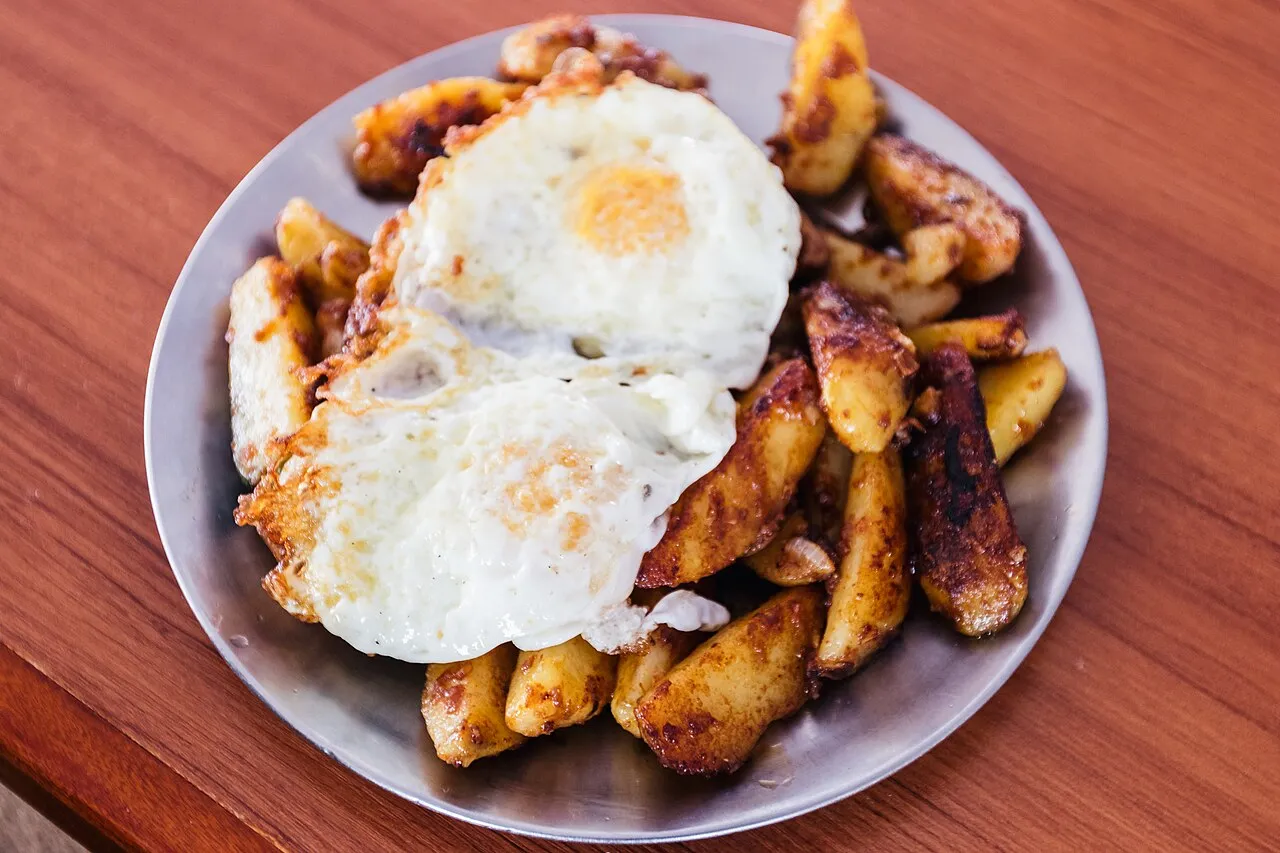
Quite a few, so check before you cook for someone who avoids eggs. The Free Press Journal points out that even Parsi dishes built around a vegetable often carry an egg, as in eggs cooked on potatoes, with tomato, okra, ridge gourd or raw banana used in other versions. For an egg-free table, stay with the stews, dals, greens and brinjal dishes above.
Is there a Parsi vegetarian cookbook?
Niloufer Mavalvala's The Vegetarian Parsi: Inspired by Tradition, which Slurrp covered as a new book in November 2022, is the one dedicated title we found. In her own description, the book has five chapters, running from teatime snacks such as bhakras, batasas and khatai to tarkari ni tokri (the vegetable basket) and a chapter on rice and lentils. Mavalvala writes that it won a Gourmand World Cookbook Award among books published in 2022. FEZANA's Eat, Live, Pray also labels its vegetarian recipes in the contents, the laganshala above among them.
Older family recipes are the subject of our post on the Bhonu to Pick project. And for something sweet after a vegetarian meal, our Parsi falooda post covers the rose-milk dessert drink.
Frequently asked questions
Which Parsi dishes are vegetarian?
The traditional ones include lagan nu stew (laganshala), bhaji dana, raviya, vengna no patiyo, dahi na vengna, paaprie, vegetable dhansak, Parsi dahi ni kadhi and channa ni dar. Potato dishes are common too. Check before serving any vegetable dish to someone who avoids eggs, since Parsi cooks often set eggs on top of cooked vegetables.
Is there a vegetarian dhansak?
Yes. Vegetable dhansak keeps the puréed dal and vegetables and leaves out the meat, and it is served with rice like the original. It was on the menu at the Parsi Vegetarian and Temperance Society's June 2024 celebration in Mumbai, and Outlook Traveller notes that Parsi hosts make it for guests who don't eat meat.
What is paaprie?
Paaprie is a Parsi vegetable dish of green hyacinth beans cooked in layers with yam, potato, onion, tomato, baby brinjal and garlic. Cookbook author Niloufer Mavalvala calls it her favourite dish to cook and to eat, and one of the simplest one-pot recipes she knows.
Are Parsi vegetable dishes egg-free?
Not always. Parsi cooks often finish a vegetable dish with eggs, as in eggs cooked on potatoes, and the same is done with tomato, okra, ridge gourd and raw banana. For an egg-free meal, choose lagan nu stew, bhaji dana, channa ni dar, vegetable dhansak or the brinjal dishes, and check the recipe first.


