PalV's Kasti
On this page
- Who practises Zoroastrianism today?
- Where is Zoroastrianism practised today?
- Is Zoroastrianism still practised in Iran?
- How many Zoroastrians are there today?
- What does Zoroastrian practice look like today?
- Who can become a Zoroastrian today?
- What does the future hold for Zoroastrians?
- Frequently asked questions
Yes. Zoroastrianism still exists and is practised today, though by a small number of people. Its followers are the Parsis and Iranis of India, the Zoroastrians of Iran, and a diaspora that is growing in North America, Britain, Australia and New Zealand. India has more Zoroastrians than any other country, and the Ministry of Minority Affairs puts its Parsi population at 57,264 in Census 2011. Iran's constitution names Zoroastrians as a recognised religious minority with one elected seat in parliament. A 2022 Associated Press report put the worldwide total at "perhaps 125,000". The rites go on too. National Geographic followed a child's Navjote at Udvada in 2024, and the Bombay Parsi Punchayet still buys and sells Kustis and runs Doongerwadi.
શહેરેવર રોજ
Shehrevar Roj, Tir Mah · 1396 Y.Z.
Who practises Zoroastrianism today?
Modern Zoroastrianism is carried by three groups.
Parsis and Iranis in India
The Parsis descend from Zoroastrians who settled on the Gujarat coast. National Geographic, reporting from Udvada in 2024, gives the community tradition that they arrived 1,300 years ago to escape religious persecution. The Bombay Parsi Punchayet (BPP) speaks of both together when it describes Doongerwadi as the final resting place of "Parsi / Irani Zoroastrians". India's government counts Parsis (Zoroastrians) as a notified minority under the National Commission for Minorities Act, 1992. For the faith itself, its prophet and its scripture, see our guide to Zoroastrianism.
Zoroastrians in Iran
Zoroastrianism was the original pre-Islamic religion of ancient Persia, and a community remains in Iran today. The EU Agency for Asylum (EUAA), in a May 2025 report, says Zoroastrians have lived historically in the provinces of Yazd and Kerman and have also moved to cities such as Tehran.
The diaspora
Outside India and Iran, the largest community we could put a number on is in the United States and Canada. National Geographic reports that the Federation of Zoroastrian Associations of North America (FEZANA) was set up in 1987 as an umbrella for about two dozen local groups. The AP report names North America, Britain, Australia and New Zealand as places where Zoroastrian numbers are rising.
Where is Zoroastrianism practised today?
The main Zoroastrian countries today are India, Iran, the United States and Canada, with smaller communities elsewhere. These are the figures we could trace to a named source. Each was counted or estimated differently, so don't add them together.

- India: 57,264 Parsis in Census 2011, according to the Ministry of Minority Affairs. National Geographic says they live mostly around Mumbai and in Gujarat.
- Iran: no precise count. The EUAA cites estimates of 11,000 to 25,000, or up to 50,000. National Geographic says "possibly 15,000 to 25,000".
- United States and Canada: more than 25,000, according to National Geographic (2024). Professor Jamsheed Choksy of Indiana University estimated more than 30,000 when he spoke to AP in 2022.
- Pakistan: "less than a thousand", according to National Geographic.
- Britain, Australia and New Zealand: growing communities, according to AP. We found no sourced figure for these countries.
Is Zoroastrianism still practised in Iran?
Yes. Zoroastrianism has legal standing in the Islamic Republic of Iran. Article 13 of the constitution says Zoroastrian, Jewish and Christian Iranians are the only recognised religious minorities and may perform their rites within the limits of the law. Article 64 says Zoroastrians and Jews will each elect one representative to parliament. The EUAA report confirms that Zoroastrians hold one seat in the 290-seat parliament.
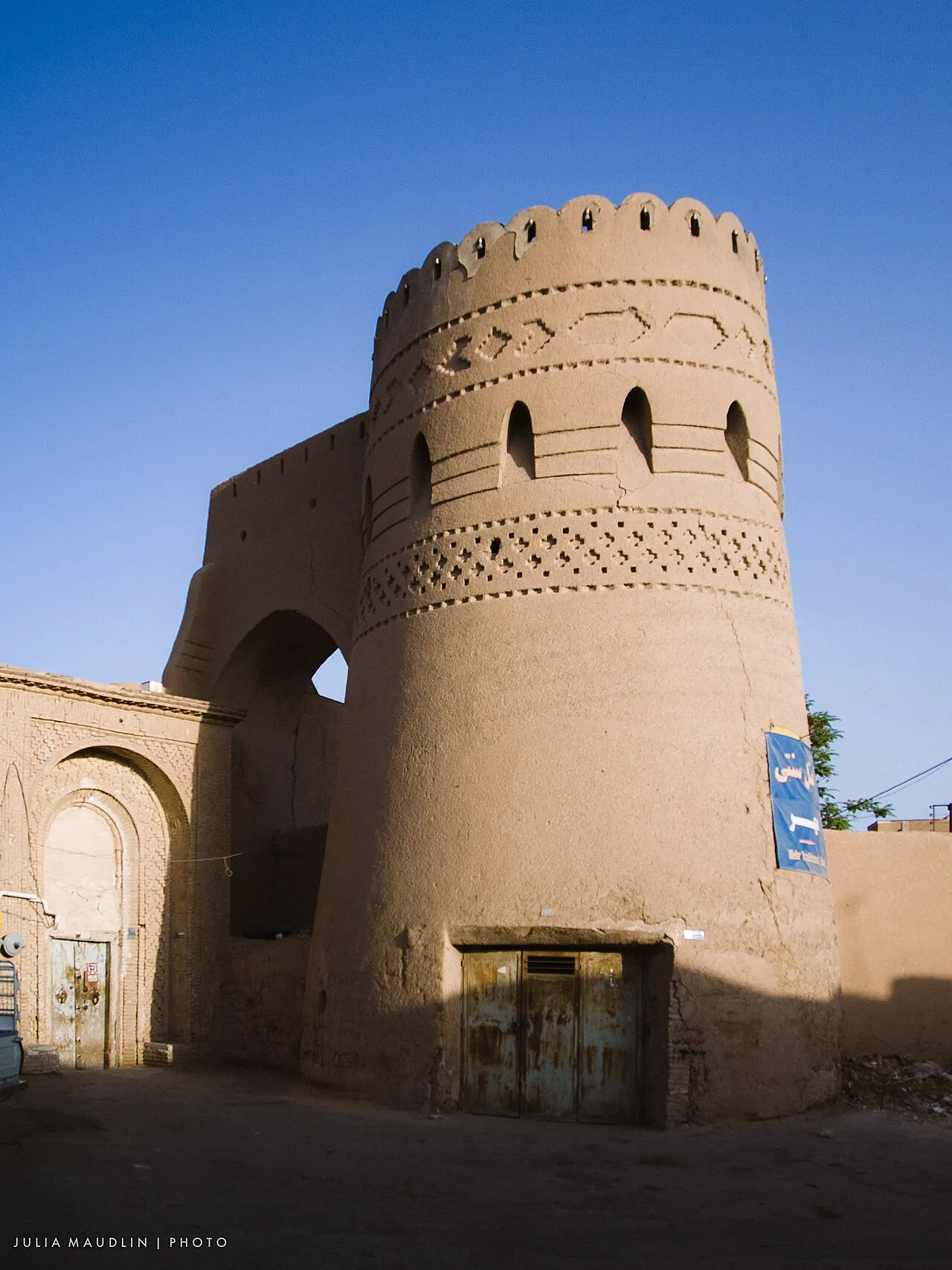
How many Zoroastrians live in Iran is uncertain. The EUAA says there are "no precise figures" and gives the range of 11,000 to 25,000, or up to 50,000. National Geographic, writing in 2024, says Zoroastrians in Iran have been persecuted and have taken many of their practices underground.
Joining the faith is another matter. According to the EUAA, the Iranian state does not recognise conversion from Islam to Zoroastrianism, and converting from Islam to another religion is punishable by law.
How many Zoroastrians are there today?
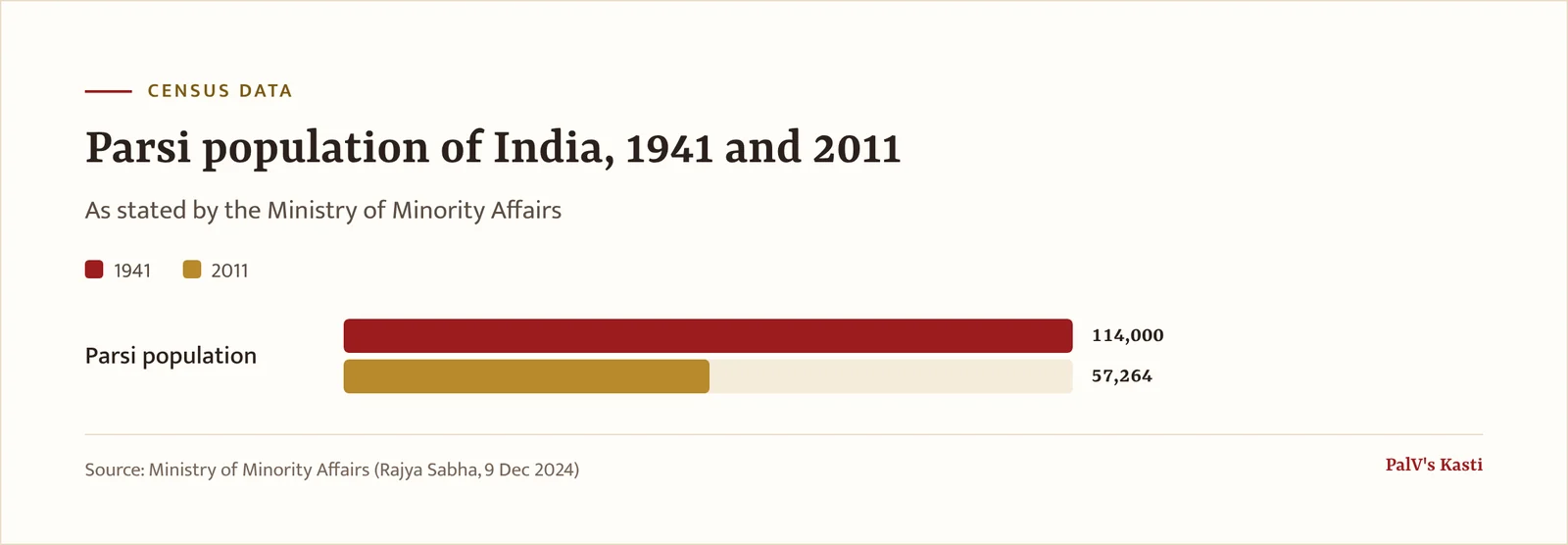
Perhaps 125,000 worldwide, according to the 2022 AP report. That is an estimate, not a count. In India, the Ministry of Minority Affairs told the Rajya Sabha on 9 December 2024 that census data show the Parsi population falling from 1,14,000 in 1941 to 57,264 in 2011. The Press Information Bureau repeated the same figures on 17 December 2025. We go through the state and city numbers in Parsi population in India.

What does Zoroastrian practice look like today?
These are the signs of living practice we could confirm in the sources we opened.
- Navjote. National Geographic's 2024 report follows a seven-year-old girl's Navjote at Udvada, the ceremony that formally brings a child into the faith.
- The Iranshah fire at Udvada. National Geographic writes that the fire at the Iranshah Atash Behram "has burned continuously ever since" the arrival described in community tradition, tended by mobeds.
- Kusti weaving. According to its website, the BPP buys Kustis from Navsari, sells them at cost, and supplies wool imported from Australia at subsidised rates to those who weave them.
- Funerals at Doongerwadi. The BPP describes Doongerwadi, at Gibbs Road, Malabar Hill in Mumbai, as the final resting place for Parsi and Irani Zoroastrians of Mumbai and nearby districts and states. Its dokhmas are still in use.
- Religious learning. The BPP manages Avesta classes under the Sir Jamshedji Jeejeebhoy Zarthoshty and Mulla Firoze Institute. Its website says the institution was founded in the early 1860s by Lady Avabai to teach Avesta, Pahlavi and other old Zoroastrian languages to priests' sons and lay students.
Who can become a Zoroastrian today?
There is no single answer. Encyclopaedia Iranica (Pargol Saati, 1993, updated 2011) notes that the councils and high priests who lead Zoroastrian communities have authority that is "only local". In India, the same entry says, Parsi councils have since the 18th century generally refused to accept as Zoroastrians anyone other than the children of Parsi parents. National Geographic draws the same contrast: India's Parsis "don't seek or accept converts", while most Zoroastrian groups in North America "are open to all". The EUAA notes that there is no single unified view among Zoroastrians on whether conversion is allowed. We set out the arguments on admission, priesthood and funerals in Religious challenges Parsis face.
Practice varies between families and Agiaries; your family priest's guidance comes first.
What does the future hold for Zoroastrians?
Scholars quoted by AP in 2022 gave two readings. Almut Hintze, professor of Zoroastrianism at SOAS University, said: "Zoroastrians are doing well in the global diaspora," adding that numbers could stabilise, "although secularisation and the marriage laws pose threats." Jamsheed Choksy told AP: "North America is where there's hope."
In India, the government launched the Jiyo Parsi scheme in 2013-14 to arrest the fall in population and reverse the trend, according to the Press Information Bureau. A 2025 evaluation by the International Institute for Population Sciences, the PIB says, found the scheme "largely successful in reaching its intended population".
Frequently asked questions
Does Zoroastrianism still exist?
Yes. Zoroastrianism is still practised by Parsis and Iranis in India, by Zoroastrians in Iran, and by diaspora communities in North America, Britain, Australia and New Zealand. India's Ministry of Minority Affairs gives a Parsi population of 57,264 in Census 2011, and Iran's constitution recognises Zoroastrians as a religious minority with one seat in parliament.
Is Zoroastrianism still practised in Iran?
Yes. Article 13 of Iran's constitution lists Zoroastrians among the country's only recognised religious minorities, and Article 64 gives them one elected representative in parliament. Their number is uncertain: the EU Agency for Asylum cites estimates from 11,000 to 25,000, or up to 50,000. Iran does not recognise conversion from Islam to Zoroastrianism.
Where is Zoroastrianism practised today?
Mainly in India, Iran, the United States and Canada. India has the largest population, concentrated around Mumbai and in Gujarat. Iran's community lives historically in Yazd and Kerman and now also in Tehran. National Geographic counts more than 25,000 in North America, and AP reports growing communities in Britain, Australia and New Zealand.
How many Zoroastrians are there in the world?
There is no exact worldwide figure, only estimates. A 2022 Associated Press report estimated "perhaps 125,000". India's Ministry of Minority Affairs gives 57,264 Parsis for Census 2011, down from 1,14,000 in 1941. Iran's figure is uncertain, and estimates for the United States and Canada range from more than 25,000 to more than 30,000.
Can you convert to Zoroastrianism?
It depends on the community. Encyclopaedia Iranica says Indian Parsi councils have generally accepted only the children of Parsi parents since the 18th century. National Geographic reports that most North American groups are open to all. In Iran, the state does not recognise conversion from Islam. Your family priest's guidance comes first.