 PalV's Kasti
On this page
The dron, also written darun or daran, is the small, round, unleavened wheat bread consecrated in the Baj ritual. Some drons are marked with nine shallow cuts in three rows of three, made while saying humata, hukhta, hvarshta (good thoughts, good words, good deeds). Others are left plain and are called farshast. In the Baj, the priest places ghee and fruit on the breads, recites chapters 3 to 8 of the Yasna over them and then tastes them. That tasting is the chashni. The ritual's power, according to the scholars Mary Boyce and Dastur Firoze Kotwal, comes from the baj itself: a fixed sacred formula that frames the act and lends it ritual power. The priest-scholar Ervad Ramiyar Karanjia adds that the whole of creation is present in the offering, and that performing this ritual gives a priest the ritual power needed for the higher ceremonies.
શહેરેવર રોજ
Shehrevar Roj, Tir Mah · 1396 Y.Z.
What is a dron (darun)?
The word comes from the Avestan draonah, which first meant a "portion" offered to the divine beings. Both Encyclopaedia Iranica's entry on the Dron and the ritual notes published on avesta.org give this original meaning. In later Zoroastrian books and in Parsi practice, the word came to mean only the bread itself: flat, round, made of wheat flour and water, and unleavened.
The avesta.org notes describe the breads as flexible and about the size of the palm of the hand. Iranica's entry adds that Zoroastrians in Iran now make their dron from leavened dough.
The bread is required in many services besides the Baj. Iranica lists the Yasna, the Visperad, the Vendidad and the Afringan among them. The Baj itself, and why families arrange it for the departed, is explained in our main guide to the Baj ceremony.
Why does the dron have nine marks?
The nine marks are made in three rows of three before the bread is cooked. As each cut is made, the maker says one of the three words humata, hukhta, hvarshta, so the set of three is said three times over. The avesta.org notes and Encyclopaedia Iranica both describe the marks this way, and J.J. Modi's 1922 account of the Baj calls these breads "nam padela", meaning named or marked.
The unmarked breads are called farshast (frasast in Iranica's spelling). In every Baj, Modi writes, half the breads are marked and half are plain. Modi also passes on a rule from the Rivayats on weight: a marked bread should weigh about 31 tanks and a plain one about 33 tanks, 72 tanks making one seer.
Practice varies between families and Agiaries; your family priest's guidance comes first.
Who may prepare the dron?
Here the sources disagree, and we give both views.
- Encyclopaedia Iranica, citing the Nerangestan, says the dough was to be kneaded only by priests or their wives.
- Ervad Ramiyar Karanjia writes that the dron can be prepared by any Parsi or Irani Zoroastrian who is in a state of ritual purity, in a ritually pure place.
Practice varies between families and Agiaries; your family priest's guidance comes first.
How many drons are used in a Baj?
Four for most Bajs, six for the Baj of Sraosh. Modi gives this rule, and Ervad Pervez Karanjia of the Sodawaterwalla Agiary repeated it in a 2016 Parsi Times interview. Iranica counts the same breads as two marked and two plain, or three of each for Sraosha.
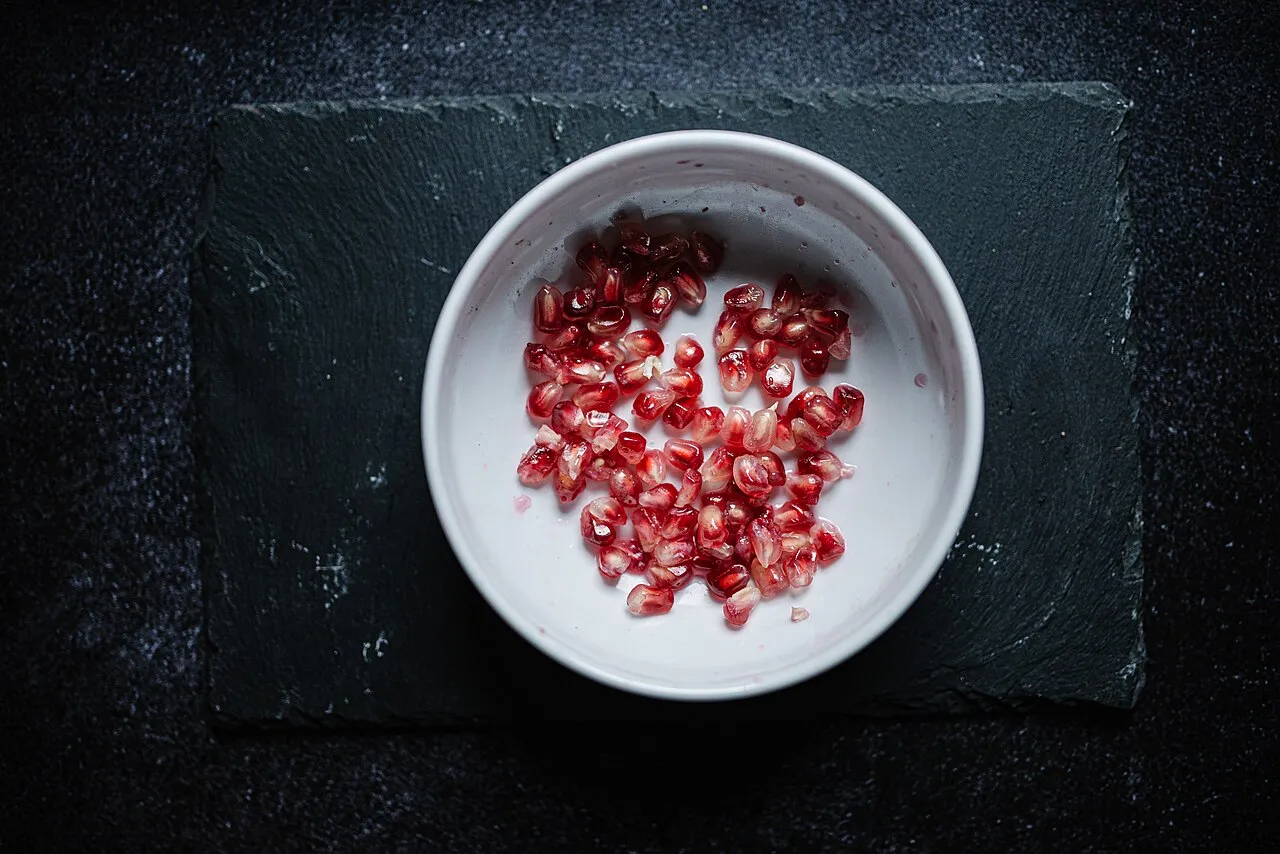
In Modi's layout, ghee is placed on a marked bread, and a few pomegranate seeds or a date on a plain one. Pervez Karanjia gave two reasons for Sraosh's extra breads: that Sraosh is the foremost Yazad, and that Sraosh accompanies the soul to the Chinvat bridge through six spheres. He also noted that the breads for the Baj of Behram Yazad are sweet, because that Baj is a joyful one.
Practice varies between families and Agiaries; your family priest's guidance comes first.
What is chashni?
Chashni is the ritual tasting of the consecrated bread. Modi, Iranica and the avesta.org notes all place it during the eighth chapter of the Yasna, at verse 8.4. In most Bajs the priest tastes five times, taking a small piece of each bread in turn with ghee, water or fruit; in the Baj of Sraosh, with its two extra breads, he tastes seven times, Modi records.
After the ritual, the consecrated bread and fruit are passed round so that everyone present can take a little. Modi describes this in 1922, and Ramiyar Karanjia and Iranica describe the same sharing.
Practice varies between families and Agiaries; your family priest's guidance comes first.
Where does the Dron ritual get its power?
The sources give three answers.
The baj is a sacred formula that frames the act
Mary Boyce and Dastur Firoze Kotwal, in their study of baj and dron as summarised on avesta.org, describe the baj as an essential formula said before, with or after an action. A framing baj, in their reading, strengthens that action and gives it ritual power, called 'amal. Iranica's entry on the Baj describes the same idea differently: the baj sets a boundary of sacred speech around the ritual, just as the pavi furrow marks off its physical space. Both sources add that the two priests in the Yasna exchange the baj between themselves to strengthen it. What the word itself means, and how the Avesta uses it, is the subject of our article on the Meaning of Baj in the Avesta.
All seven creations are present
Ramiyar Karanjia explains that the ritual gathers the seven creations: the priest stands for humans, the ghee for animals, the metal utensils for metals, the marked-off ground for earth, and the fruit and bread for plants, with water and fire also present. Iranica makes the narrower point that the bread stands for the plant kingdom and the ghee for the animal kingdom. Modi, too, wrote that the offerings are symbols of the different creations.
It is the priest's foundation for higher rites
Ramiyar Karanjia writes that before any inner ritual a priest first performs this ritual, called the Baj-dharna or Dron Yasht, and that it gives him the ritual power of the "nani khub". Iranica calls the Dron service a basic preliminary for all other high ceremonies. The full sequence of that ritual is described in our post on Baj-dharna (Dron Yasht).
Practice varies between families and Agiaries; your family priest's guidance comes first.
Did lay Zoroastrians once perform the dron service?
According to Boyce and Kotwal, as quoted on avesta.org, they did. The avesta.org notes say the dron service is now used mainly by priests, but Boyce and Kotwal wrote that it was once performed by laity as well as priests, and by women as well as men: by any Zoroastrian who wore the Navjote.">sudreh and kusti and had entered fully into religious life. Iranica's entry on the Baj adds that the dron service was also said as a grace before ordinary meals. How Bajs fit among the other family ceremonies, such as the Afringan, is covered in our guide to the Zoroastrian outer ceremonies.
Practice varies between families and Agiaries; your family priest's guidance comes first.
Frequently asked questions
What is a dron (darun)?
A dron, also written darun or daran, is a small, round, flat bread of unleavened wheat flour and water, consecrated in the Baj and other Zoroastrian rituals. The word comes from the Avestan draonah, meaning a portion offered to the divine. Zoroastrians in Iran now make it with leavened dough, Encyclopaedia Iranica notes.
Why does the dron have nine marks?
The nine shallow cuts are made in three rows of three before the bread is cooked, with one of the words humata, hukhta, hvarshta (good thoughts, good words, good deeds) said at each cut. Marked breads are "named"; plain ones are called farshast. J.J. Modi records that each Baj uses equal numbers of both.
Who can bake dron?
The sources differ. Encyclopaedia Iranica, citing the Nerangestan, says the dough was kneaded only by priests or their wives. Ervad Ramiyar Karanjia writes that any Parsi or Irani Zoroastrian in a state of ritual purity may prepare it in a ritually pure place. Your family priest or Agiary can tell you its own practice.
What is chashni?
Chashni is the ritual tasting of the consecrated dron, with ghee, fruit and water, during the eighth chapter of the Yasna. J.J. Modi records five tastings in most Bajs and seven in the Baj of Sraosh. After the ritual, the consecrated food is passed round so that everyone present can take a little.
Where does the Baj ritual's power come from?
Mary Boyce and Dastur Firoze Kotwal describe the baj as a sacred formula framing an act and lending it ritual power, called 'amal. Ervad Ramiyar Karanjia adds that the seven creations are present in the offering and that the ritual gives a priest the "nani khub", the ritual power needed for higher ceremonies.


