 PalV's Kasti

On this page
Parsis cook bombil, which they call boomla, both fresh and dried, and two things set their way with it apart. The first is vinegar. A 2014 Times of India piece said Parsis enjoy Bombay duck in a way distinct from other communities, and the cook it quoted, Pervin Marzban Bilimoria, explained why in four words: "Vinegar is the trick here." The second is where boomla sits on the plate. In every source we read, it is a side, not the main dish. Fried or cooked into a hot, sweet and sour patio, it is the sharp side to a mild plate of dal and rice or khichdi. Below we set out the main Parsi boomla dishes, what each is, and what goes with it.
શહેરેવર રોજ
Shehrevar Roj, Tir Mah · 1396 Y.Z.
What is boomla, and is Bombay duck really a duck?
No, it is a fish. The Mercury, a South African daily, gives its scientific name as Harpadon nehereus, places it in the lizardfish family and notes that in Marathi it's bombil. Meher Mirza, writing in SAVEUR in 2021, calls it the lizardfish "that Parsis call boomla" and says Parsis eat it fresh as well as sun-dried. You'll also see it spelt bhoomla or bombla.

Dried boomla is known for its smell. The Mercury puts it down to trimethylamine, which bacteria produce as they break down the fish's proteins. Writing in Outlook in 2022, Farrukh Dhondy was blunter: "Its odour has emptied whole neighbourhoods in western India."
What makes the Parsi way of cooking Bombay duck different?
Vinegar, and with it a pull between sour and sweet. Bilimoria said vinegar has to go in while the dried bombil cooks, because it gives the dish its khatta-meetha (sour-sweet) taste, and that onion adds sweetness as well. Dhondy calls the dried-fish dish sooka boomla no patio "hot, sweet and sour". It belongs to a wider family of vinegary, chilli-red dishes that we cover in our post on Parsi patio.

The vinegar itself has a Parsi address. According to Mirza in SAVEUR, most Parsis reach for Kolah's dark, aged sugarcane vinegar, which is made only in Navsari in Gujarat.
The other marker is the company boomla keeps. Dhondy says sooka boomla no patio is usually eaten with khichri. Bilimoria calls Tarapori patio a great side dish, normally eaten with masoor dal or dhan dar (plain dal and rice). An UpperCrust recipe for fried dried boomla says to serve it alongside any dish, curries above all, so it sits easily next to a plate of Parsi curry chawal. Put together, Parsi boomla is a small, sharp accompaniment to a mild, comforting meal.
Which Parsi bombil dishes should you know?
We could not open a named Parsi boomla recipe with full quantities, so these are short descriptions drawn from the cooks and writers named, not recipes. Our separate guide to Parsi-style bombil walks through cleaning dried fish and cooking Bilimoria's three styles step by step.
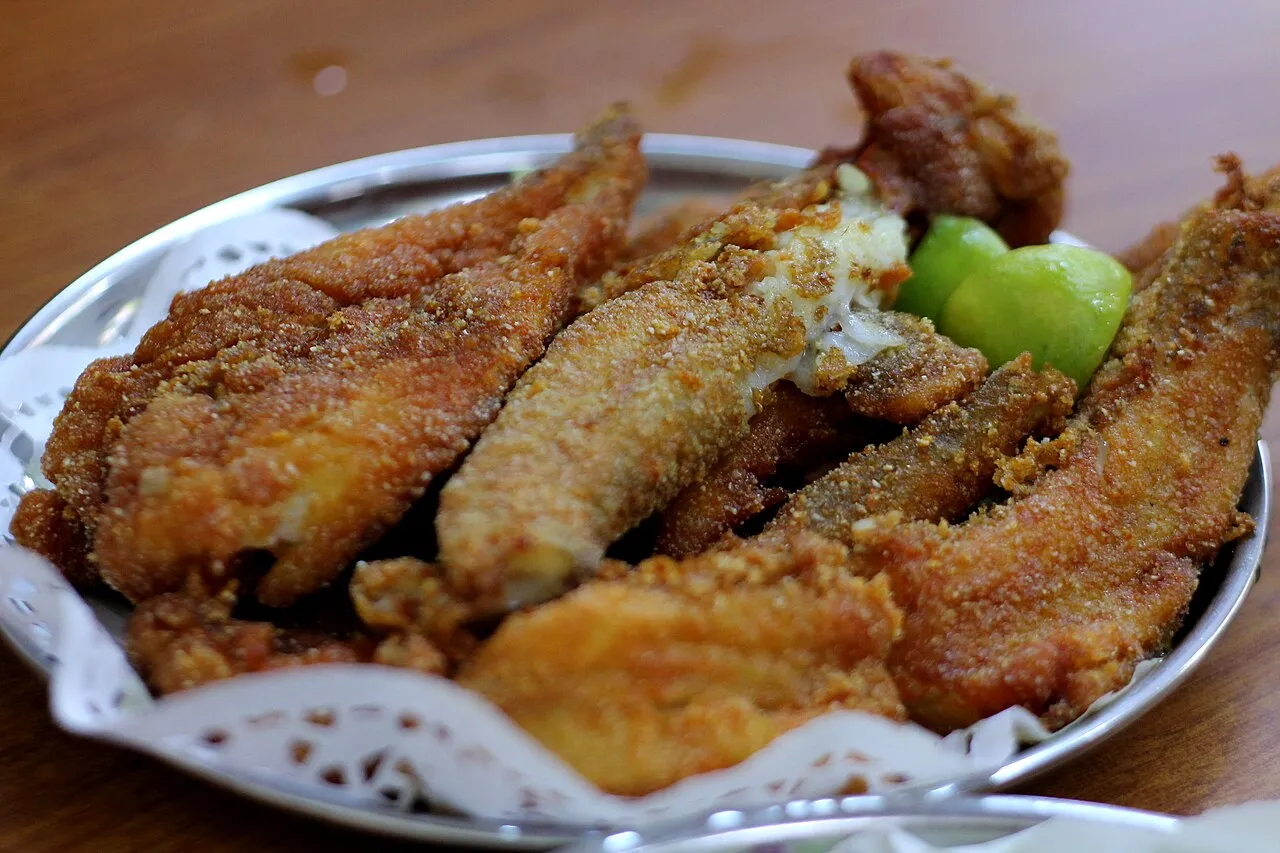
Sookha boomla no patio (dried, sweet and sour)
This is the dish Dhondy holds up as the high point of Parsi boomla cooking. The soaked dried fish goes into a masala of fried onion, green chilli, tomato and red vinegar, which is where the khatta-meetha taste comes from. Bilimoria spells it sookha boomla patio and suggests hot white rice or bread with it.
Tarapori patio
Tarapori patio takes its name from the town of Tarapore. Perzen Patel of Bawi Bride, writing for India Food Network in 2015, says the recipe began there, in a town she calls a historical hotbed for Bawas, calls it a pickled patio and notes that it is made with dried Bombay duck. SAVEUR also describes it as a speciality of the Parsis of Tarapore. In Bilimoria's method the dried fish is marinated in red chillies, garlic and cumin ground in vinegar, then fried in oil.
Tarela boomla (fried Bombay duck)
UpperCrust titles its recipe "Tarela Sookha Boomla (Fried Bombay Duck)", and Dhondy spells the dish tharela boomla. It can be made with fresh or dried fish. For fresh boomla, Bilimoria squeezes out the water, marinates the fish, rolls it in rava and fries it on a hot tava.
The dried version comes from an UpperCrust collection of Parsi recipes from Udvada, Devka, Dahanu and Gholvad. There the fish is soaked for ten minutes, dried, slit open and deboned, rubbed with turmeric, chilli and cumin, and shallow-fried in sesame oil until crisp.
A rarer one: bhoomla seera paila
Shabnam Minwalla, writing in Outlook Traveller, describes bhoomla seera paila, lightly fried Bombay duck dipped in sugar syrup. She lists it among Parsi curiosities that now live on only in cookbooks and in grandmothers' stories.
Where can you eat Parsi-style Bombay duck in Mumbai?
Britannia & Co. at Ballard Estate has been named for its fried Bombay duck by Outlook Traveller in 2018 and by the Free Press Journal, which noted in 2019 that the dish is available only in season. In 2015 Perzen Patel wrote that Tarapori patio could be bought year-round at Parsi outlets such as RTI (the Lady Ratan Tata Institute) and P.A.C. These reports are a few years old, so check with the place before you go.
Frequently asked questions
What is boomla in Parsi food?
Boomla is the Parsi name for bombil, the lizardfish sold in English as Bombay duck. Parsis cook it fresh, for example rolled in rava and fried on a tava, and dried, either fried with spices or cooked into a hot, sweet and sour patio with vinegar. It is mostly eaten as a side with dal, rice or khichdi.
Why do Parsis cook boomla with vinegar?
Cook Pervin Marzban Bilimoria told the Times of India in 2014 that vinegar is the trick with dried bombil. Added while the fish cooks, it gives the dish the khatta-meetha, or sour-sweet, taste it needs, with onion adding more sweetness. Writer Farrukh Dhondy describes the result, sooka boomla no patio, as hot, sweet and sour.
What is Tarapori patio?
Tarapori patio is a sharp, pickle-like Parsi dish of dried Bombay duck, named after the town of Tarapore, where Perzen Patel says the recipe began. The fish is marinated in red chillies, garlic and cumin ground in vinegar, then fried. Pervin Marzban Bilimoria calls it a great side dish and eats it with masoor dal or dhan dar.
How do Parsis cook dried Bombay duck?
They soak and clean it first, then cook it one of two ways. For tarela boomla it is rubbed with turmeric, chilli and cumin and shallow-fried until crisp. For sookha boomla no patio it is fried into an onion, tomato, chilli and vinegar masala, which gives the khatta-meetha taste Parsi cooks look for. Both are served as sides.
What do Parsis eat boomla with?
In every source we read, boomla is a side. Writer Farrukh Dhondy says sooka boomla no patio is usually eaten with khichri. Pervin Marzban Bilimoria serves Tarapori patio with masoor dal or dhan dar, and suggests hot white rice or bread with her dried boomla patio. An UpperCrust recipe suggests serving fried dried boomla with curries.


