 PalV's Kasti
On this page
Parsi curry chawal is a coconut curry, most often made with prawns or fish, ladled over plain boiled or steamed rice and eaten with a sharp onion kachumber. The name simply means "curry rice". Cookbook author Niloufer Mavalvala ranks the seafood version close to dhansak as a quintessentially Parsi dish. It is a weekend lunch rather than a festive dish: Mavalvala and food writer Perzen Patel both remember it as the family's Saturday meal, while a 1995 Busybee column recalls a Bombay Irani restaurant that served it on Sundays. We found no source tying it to weddings or Navroz, so we don't call it a festive staple here.
શહેરેવર રોજ
Shehrevar Roj, Tir Mah · 1396 Y.Z.
What is curry chawal in Parsi food?
Chawal is rice, and curry chawal is the pairing of the two on one plate. In The Art of Parsi Cooking (2016), Mavalvala writes that Parsis treat curry chawal as their own, and that the fish or prawn version in particular sits close to dhansak as a dish people think of as distinctly Parsi.
There is no single fixed recipe. In her column "The genesis of curry" for The Cook's Cook, Mavalvala says every competent cook in a Parsi home makes a slightly different version, and the family's curry becomes something it is known for. Patel makes a similar point in her essay on her grandmother Dolly's prawn curry: in India curry is a whole category of dishes, and the flavour changes from home to home.
Is Parsi curry made with coconut?
Yes. Both of our cookbook sources put coconut at the centre. Mavalvala says Parsi curries stand apart from other curries because they use fresh coconut, with the masala ground on a masala no pathar (grinding stone), and because they aim for a balance of spicy, sour and sweet. Writing in Saveur in 2021, Meher Mirza says coconut fuels most Parsi curries.

What thickens and sours the curry varies by family:
- Mirza's mother's red curry is thickened with khuskhus (poppy seeds), besan and pounded cashews, and soured with tomato and tamarind instead of kokum.
- Patel's family curry uses grated coconut flesh rather than coconut milk, which she likens to a Mangalorean gassi. It skips tamarind altogether and finishes with lemon juice.
- Mavalvala's fish curry allows tamarind or kokum, or lemon or lime juice as a substitute.
The wet coconut paste behind all of these is covered in our guide to Parsi curry masala.
Which fish is used in Parsi curry?
Prawns come up first in both cookbook sources. Mavalvala's book recipe is jhinga na curry chawal, prawn curry with rice, and Patel says that for curry she prefers prawns over any other seafood.
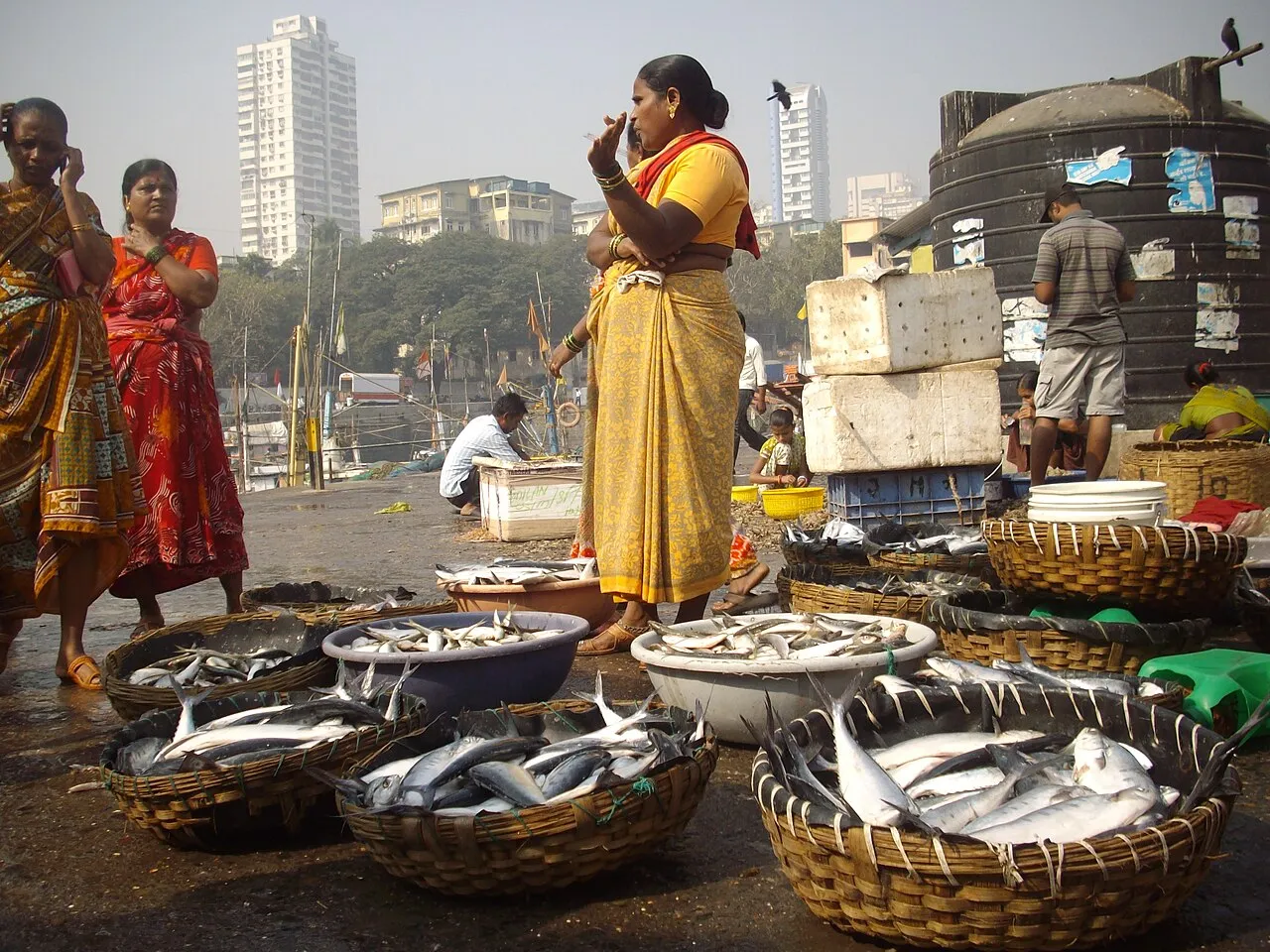
For fish, Mavalvala explains that the older way to make macchi ni curry was to cook the fish whole, skin and bone in, sometimes with the head. That gave the gravy more flavour and wasted nothing. She adds that firm white fillets or steaks, or even salmon or trout, work today. Patel notes the curry can be made with red meat too, but warns that it tastes quite different from the fish version.
What is served with Parsi curry rice?
Plain rice and kachumber. Mavalvala describes the curry going over a generous heap of hot rice, with a kachumber dressed in salt and vinegar alongside. Patel's grandmother brought the kachubar to the table in a glass bowl balanced on the saucepan lid. Mirza quotes Bhicoo Manekshaw's Parsi Food and Customs on the rice: it should be steamed or boiled.
In Patel's family recipe, potatoes go into the curry itself. At Dolly's table, Patel recalls, everyone got three pieces of potato and five prawns, served out with care. Mavalvala's test of a good curry is a guest saying "I could drink that". Patel admits she did exactly that as a child, spooning up the last of it with a squeezed lemon rind.
Why is curry rice a Saturday or Sunday meal?
The sources agree it was a weekend lunch but not on the day. Mavalvala, in The Route to Parsi Cooking (2024), writes that curry chawal was made in her family's homes on most Saturday afternoons when everyone gathered for lunch. Patel's essay, published on her Substack and in New Zealand's The Spinoff in 2022, describes going to her grandmother's house in Mumbai every Saturday, where the menu never changed: prawn curry and steamed rice.
Sunday turns up on the restaurant side. In a Busybee column first printed in the Afternoon Despatch & Courier on 24 April 1995, the writer remembers the Stadium, an Irani restaurant at Churchgate, serving Parsi food on a weekly rota, with curry rice on Sundays and dhansak on Wednesdays. So in Parsi homes it is remembered as a Saturday dish, and at least one Bombay Irani kept it for Sunday.
None of these sources says why the weekend was chosen, so we won't guess. What Patel does describe is the morning's work behind the Saturday lunch: Dolly sent her husband to the market for a fresh coconut and watched from the balcony for the fishmonger. Mavalvala also describes eeda papayta ni curry, an egg and potato curry, as one of the dishes born of the strict no-waste policy Parsi matriarchs kept in their kitchens.
How do you make Parsi prawn curry chawal at home?
This method follows Perzen Patel's recipe "Mumma's Prawn curry", from her 2022 essay "A never ending bowl of curry" on her Substack, Beyond Butter Chicken. It serves four. The steps below are in our own words.
Ingredients
- For the masala: half a fresh or frozen coconut (about 150 g) in pieces, or 200 g desiccated coconut; 1 tsp each of poppy seeds, white sesame seeds and cumin seeds; 2 tbsp coriander seeds; 50 g raw peanuts; 30 g chopped cashews; 10 garlic cloves; 15 dried Kashmiri chillies; 400 g tinned chopped tomatoes.
- For the prawns: 350 g prawns, shelled and deveined with tails left on; ½ tsp turmeric; ½ tsp red chilli powder (optional); 1 tsp salt.
- For the curry: 2 tbsp wheat flour; 100 ml oil; 1 tsp turmeric; 1 tsp red chilli powder (optional); 1 tsp curry powder; 2 to 3 sprigs curry leaves; 2 large potatoes, quartered; juice of 1 lemon; salt.
Method
- Set out every masala ingredient on one plate before you start.
- Dry-roast the seeds, peanuts and cashews until they smell toasty.
- Grind them with the coconut, garlic, chillies and tomatoes, adding roughly 600 to 800 ml water a little at a time, until the paste is thick and completely smooth. A gritty paste gives a gritty curry.
- While you grind, rub the prawns with the turmeric, chilli powder and salt and leave them for about 30 minutes.
- Heat the oil in a heavy pot and fry the wheat flour, stirring out every lump. Add the masala and cook for about 5 minutes, until it stops clinging to the pot.
- Stir in the turmeric, chilli powder and curry powder with enough water to loosen the curry. Go easy on the water.
- Add the prawns, potatoes and curry leaves and simmer for 20 to 25 minutes, until the prawns are done.
- Check the salt and finish with a generous squeeze of lemon. Serve over steamed rice with kachumber.
Patel's own tip is to take your time. She says the flavour her family had lost came back once they roasted the nuts separately, ground the dry spices before the wet ones, and fried the flour in oil before the paste went in. More dishes from the same kitchen are gathered in our Parsi recipes collection.
Frequently asked questions
What does curry chawal mean?
Curry chawal means curry rice. In Parsi homes it usually means a coconut-based prawn or fish curry poured over plain boiled or steamed rice and eaten with onion kachumber. Cookbook author Niloufer Mavalvala describes it as a dish Parsis embrace as their own, ranking the seafood version close to dhansak.
Is Parsi curry made with coconut milk?
Niloufer Mavalvala writes that Parsi curry is made with fresh coconut, and Perzen Patel's family recipe grinds coconut flesh, fresh or desiccated, into a wet paste with chillies, garlic and spices. Patel contrasts this with the creamier coconut-milk curries of Goa and Kerala. Mavalvala's fish curry stirs in coconut milk at the end as an option.
Which fish is best for Parsi fish curry?
Perzen Patel prefers prawns for curry, and Niloufer Mavalvala's book recipe is a prawn curry. For fish, Niloufer Mavalvala says the older method cooked the fish whole with skin and bone for a fuller gravy, and that firm white fillets or steaks work well today. She also lists salmon or trout as options for the curry today.
Why do Parsis put potatoes in prawn curry?
Our sources give no reason, but potatoes are part of the family recipe we follow. Perzen Patel's recipe simmers quartered potatoes with the prawns, and she remembers her grandmother serving each person exactly three pieces of potato and five prawns. The potatoes go in with the prawns and curry leaves and cook for 20 to 25 minutes.
Is Parsi curry chawal eaten on Saturday or Sunday?
Both appear in our sources. Niloufer Mavalvala and Perzen Patel each describe curry chawal as the family lunch on Saturdays. A 1995 Busybee newspaper column remembers the Stadium, an Irani restaurant at Churchgate, serving curry rice on Sundays. Which day it falls on depends on the household, and none of the sources links it to festivals.


