 PalV's Kasti
On this page
- Who founded Dorabjee & Sons, and when?
- How did a chai stall become a Parsi restaurant?
- Is Dorabjee & Sons the oldest restaurant in Pune?
- How has the Dorabjee family run the kitchen for four generations?
- What has changed inside the restaurant since 1878?
- What is Dorabjee & Sons famous for?
- Where is Dorabjee & Sons, and does it do catering?
- Frequently asked questions
Dorabjee & Sons is a Parsi restaurant in Camp, Pune, that the Dorabjee family dates to 1878. Its founder, Sorabjee Dorabjee, began with a bun-maska and chai stall in three rented houses next to each other, and customers soon pushed him to serve full meals. He knew only Parsi cooking, so the menu became Parsi and has stayed that way. In 2018 his great-grandson Darius Dorabjee, the fourth generation, was running the kitchen, the food was cooked on chulhas, and a family member still added the masalas. Slurrp has called it Pune's oldest restaurant, and Outlook India called it possibly India's oldest surviving one. We found no government or archive record of the 1878 date, so treat the year as the family's own account.
શહેરેવર રોજ
Shehrevar Roj, Tir Mah · 1396 Y.Z.
Who founded Dorabjee & Sons, and when?
Every published account we could open names Sorabjee Dorabjee as the founder and 1878 as the year. Darius gave that date to The Indian Express in 2018, calling Sorabjee his great-grandfather, and Slurrp (2022), Outlook India (2022) and EazyDiner (2015) all repeat it.
All of those reports trace back to the family. We found no licence, directory entry or archive document that fixes the year independently, and nobody in print has challenged it.
How did a chai stall become a Parsi restaurant?
The family's story, as Darius told it to The Indian Express, starts with a gap in the market. In those days, he said, the only eating house in the Pune Cantonment was El Moretos, an Italian bar-restaurant for British officers and their families that kept Indians out. Slurrp tells the same story. We could not find El Moretos in any historical source, so it stays the family's account.
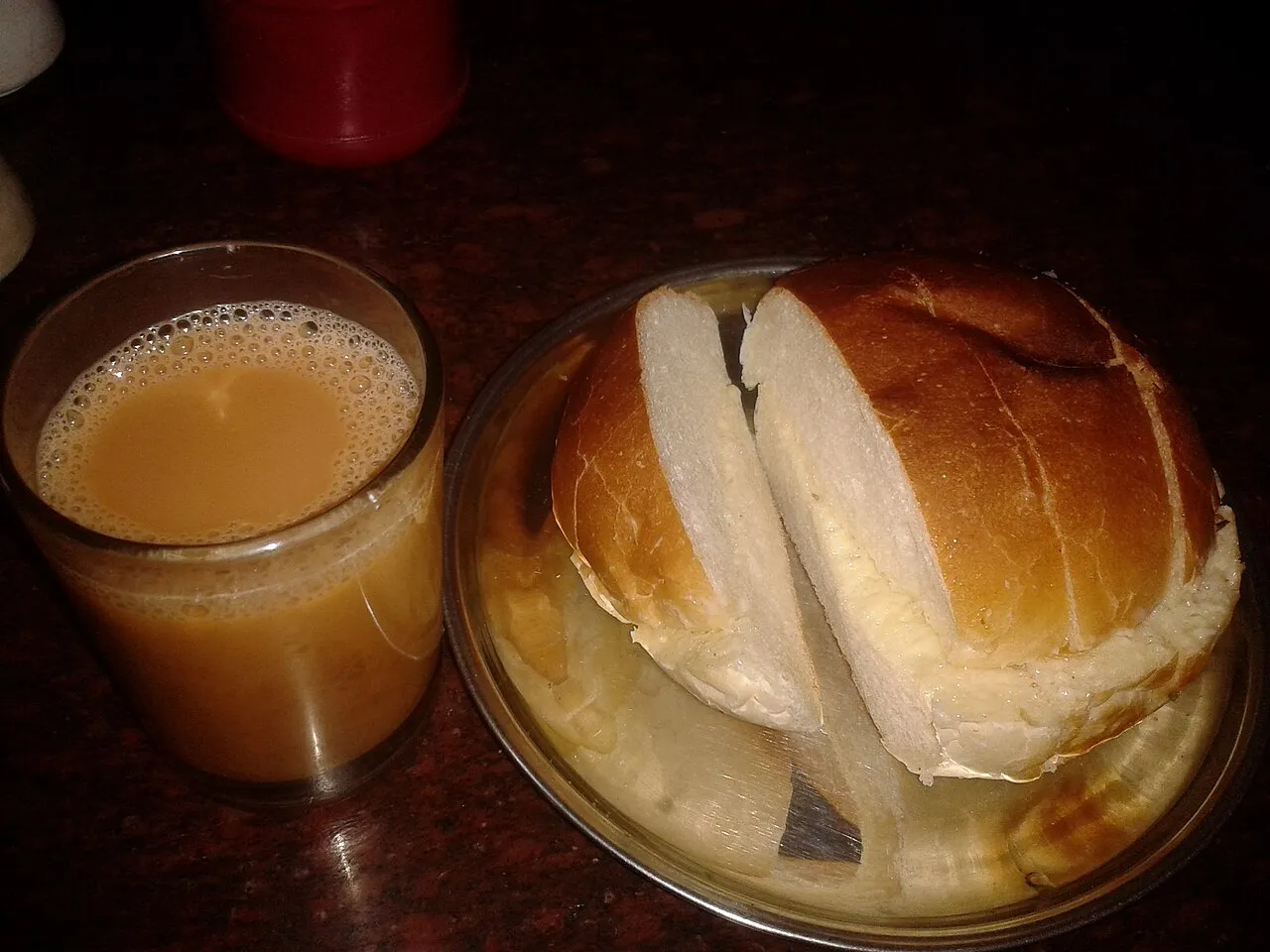
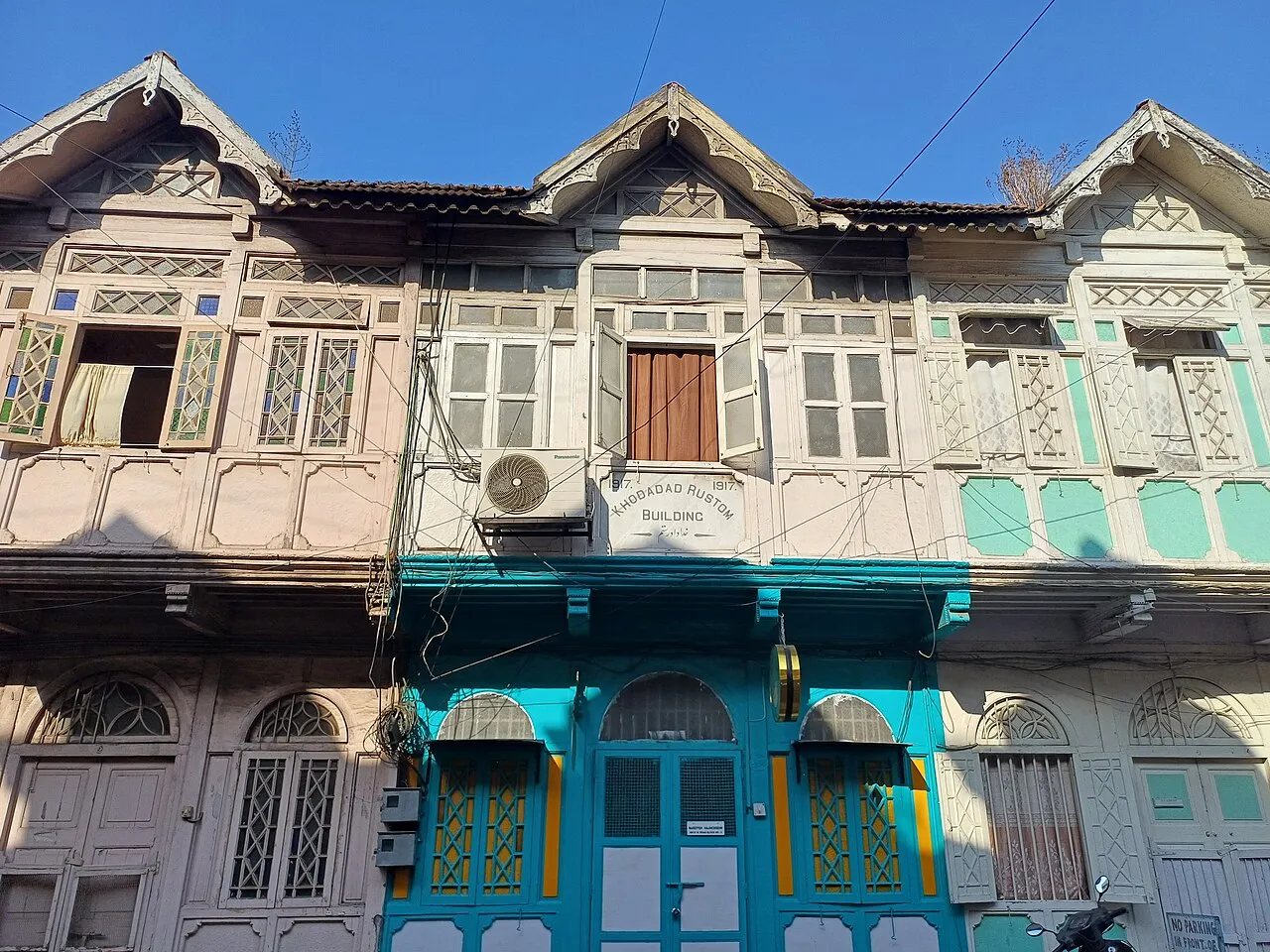
Sorabjee rented three adjoining houses and opened a stall selling bun maska and chai. Customers then asked him for proper meals, because Poona's well-off residents had no restaurant of their own to go to. The building still reflects that start: Slurrp describes the restaurant as three houses with three entrances.
Why Parsi food only? Darius's answer was practical. His great-grandfather knew no other cooking and the family had no hired cooks, so the menu became Parsi by default. According to Slurrp, British officers later started eating there as well, because the food was mildly spiced and suited them.
The bun-maska-and-chai beginning is the same trade that Pune's Irani cafes later made famous, a story we tell in our piece on the Irani cafes of Pune.
Is Dorabjee & Sons the oldest restaurant in Pune?
It is the oldest the press usually names. Slurrp called it "Pune's oldest restaurant" in 2022, and Outlook India's Anvar Alikhan wrote that its 1878 start makes it "possibly India's oldest surviving restaurant". Both rest on the family's date. We have not found a rival Pune restaurant with an older, documented founding year, but we have not found a full survey of the city's eateries either.
Is it the same as Dorabjee's supermarket?
No. Searches for "Dorabjee Pune" also bring up Dorabjee's, a supermarket chain that, according to its own website, Dorabjee Patell took over from the British in 1911. Neither business's published material says whether the two families are related, so we don't say either way.
How has the Dorabjee family run the kitchen for four generations?
The family bought a house across the road, Darius told The Indian Express, so that the women could grind masalas and sift rice at home while the men cooked in the restaurant. Slurrp describes the same house across the street. In 2018 Darius said the men still did the cooking and the whole family ate every meal at the restaurant.
Darius was 47 then and called himself a "working partner", since the large family all hold shares. He had worked in the kitchen since he was 15, when his late father, Marzaban, set him to work for pocket money, and he said no day had passed without a family member in the kitchen.
- The fire. The Indian Express and Slurrp say the food is cooked on chulhas, and Slurrp adds that the restaurant does not use gas. Outlook India and EazyDiner say charcoal, and Outlook reports the family crediting the charcoal for the flavour.
- The masala hand. Only a family member adds the spices. EazyDiner wrote in 2015 that Darius measured and added the masalas himself and left the rest of the prep to his cooks.
What has changed inside the restaurant since 1878?
Very little. Darius told The Indian Express the family was "pretty archaic" and proud of it. Until some time in the 1950s, customers sat on the floor to eat. The restaurant keeps a photograph of a young Bal Thackeray, in his early teens, eating cross-legged on that floor with his family. Folding metal chairs and wooden tables came in during the 1950s, and by 2018 the room had marble-topped tables and plastic chairs.
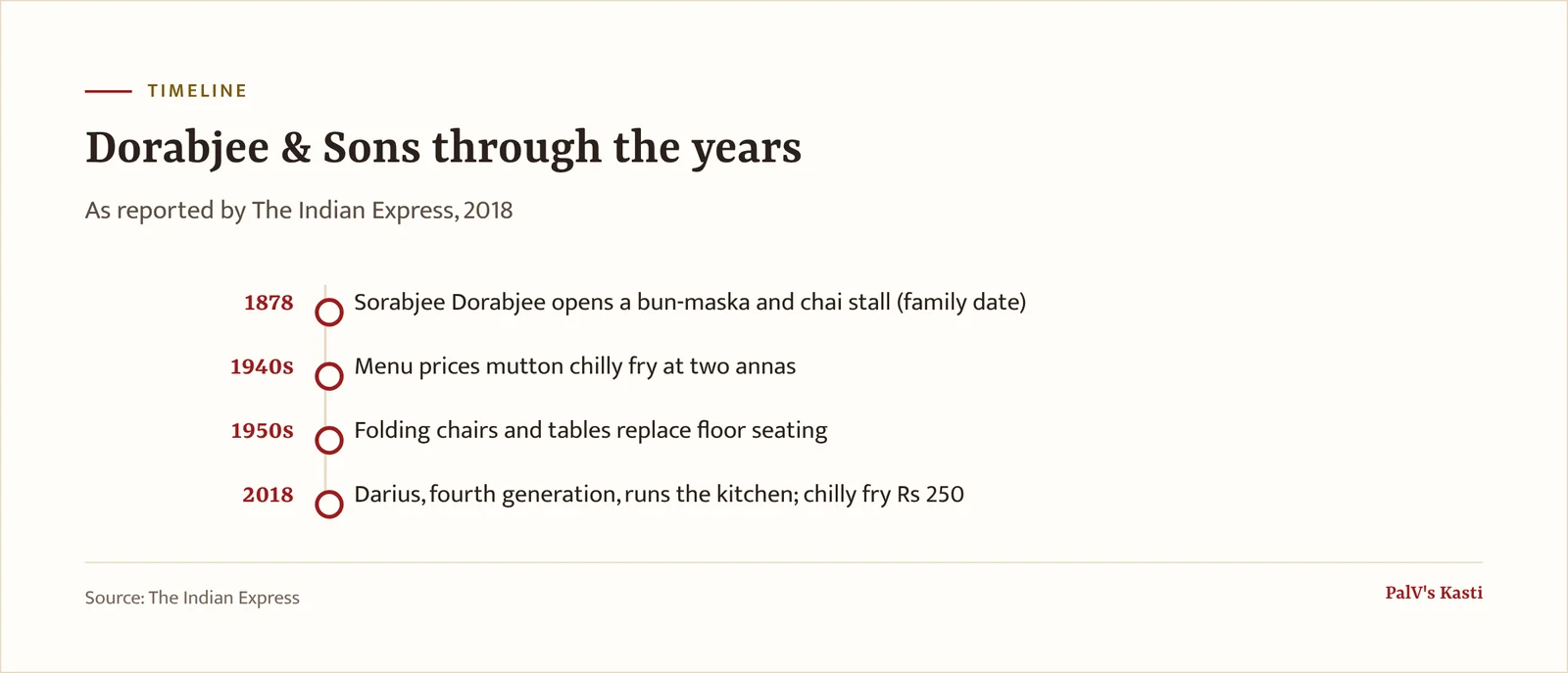

Prices have changed most. Old menus hang on what the family calls a "wall of fame" by the entrance. The Indian Express counted menus from the 1940s, '50s, '60s and '70s in 2018, while EazyDiner, writing in 2015, saw two, from 1955 and 1975. On the 1940s menu a mutton chilly fry cost two annas; by 2018 the same dish cost Rs 250. The Indian Express noted that chicken dishes then cost twice as much as mutton, which was seen as the "poor man's food".
What is Dorabjee & Sons famous for?
The menu has stayed close to a Parsi home table. The Indian Express listed chicken and mutton pulao or biryani, dhansak, salli boti, farcha (chicken fried in egg), akuri on toast at breakfast and lagan nu custard for dessert. Outlook India singled out the Parsi biryani, bittersweet with fried onions, as the house speciality and said the Sunday dhansak "has become an institution of Poona". Slurrp added keema pav, bheja, cutlets, and chicken and mutton patties on weekend mornings. EazyDiner mentioned patra ni machhi and palav dal.
To drink, there is raspberry soda. The Indian Express reported in 2018 that Dorabjee & Sons was one of the few places left in Pune serving Ardeshir raspberry soda. For how this cooking fits into the city's older Parsi kitchens, see our piece on Old Poona Parsi food.
Where is Dorabjee & Sons, and does it do catering?
The restaurant is on Dastur Meher Road at Sarbatwala Chowk in Pune Camp, the address Outlook India printed in 2022. Kayani Bakery is close by. Slurrp (2022) reported a single outlet, and EazyDiner (2015) said Darius had flatly refused to open another branch or add crowd-pleasers such as Chinese dishes.
The family also caters. EazyDiner described Darius's team as some of the most sought-after Parsi caterers in Pune, cooking on charcoal for functions too, and Slurrp says the catering side specialises in Parsi thalis served on banana leaves for weddings and parties. Delivery arrangements and opening hours change, so check with the restaurant before you go.
Frequently asked questions
When was Dorabjee & Sons established?
The Dorabjee family dates the restaurant to 1878, and The Indian Express, Outlook India, Slurrp and EazyDiner all repeat that year. Each of those reports relies on the family's account. We found no government or archive record that independently confirms 1878, though no published source gives a different founding date either.
Is Dorabjee & Sons the oldest restaurant in Pune?
It is usually described that way. Slurrp called it Pune's oldest restaurant in 2022, and Outlook India said its 1878 start makes it possibly India's oldest surviving restaurant. Both claims rest on the family's founding date. We have not found an older documented restaurant in Pune, nor a full survey of the city's eateries.
What is Dorabjee & Sons famous for?
Dorabjee & Sons is known for Parsi home-style food cooked the old way, on chulhas. Outlook India named its Parsi biryani the speciality and called its Sunday dhansak a Poona institution. Other dishes reported on the menu include salli boti, farcha, akuri on toast and lagan nu custard, with Ardeshir raspberry soda to drink.
Where is Dorabjee & Sons located?
Dorabjee & Sons is on Dastur Meher Road at Sarbatwala Chowk in the Camp area of Pune, according to Outlook India. Slurrp reported a single outlet in 2022, and in 2015 EazyDiner said Darius refused to open another. Kayani Bakery is nearby. Check current timings and delivery directly with the restaurant before visiting.
Does Dorabjee & Sons still cook on charcoal?
Slurrp reported in 2022 that it does not use gas. The Indian Express (2018) and Slurrp describe cooking on chulhas, while Outlook India (2022) and EazyDiner (2015) say charcoal fires, which the family credits for the flavour. EazyDiner adds that food for their catered functions is cooked on charcoal too.


