 PalV's Kasti
On this page
Some priests do perform the Navjote of a child whose mother is Parsi and whose father is not, and a Pune fire temple that opened in 2017 recognises such children, PTI reported. Others, including the Bombay Parsi Punchayet's trustees and traditionalist priests such as Ervad Marzban Hathiram, have called them irreligious or invalid, and some trusts' rules exclude the mother and her children altogether. The Nagpur case shows both sides. In November 2023 a Navjote planned in Nagpur for the child of a Hindu father and a Parsi mother met open opposition from the local Anjuman, whose priests said they would not perform it. The Nagpur Parsi Panchayat's rule 5(2), which keeps such women and their children out, is now under challenge in the Supreme Court, and that challenge is pending as of 16 November 2026.
અસપંદામેદ રોજ
Asfandarmad Roj, Tir Mah · 1396 Y.Z.
What happened in Nagpur in 2023?
Parsi Times reported in early November 2023 that a Navjote had been announced in Nagpur for a child born to a Hindu father and a Parsi mother, set for 14 November 2023. According to the paper, Nagpur's Parsi Anjuman and most of the city's 500-strong Parsi community refused to accept the ceremony as valid, and the Anjuman said the priests of Nagpur's only fire temple would not perform it. Parsi Times also reported that the Bombay Parsi Punchayet had declared the child would not be recognised as Parsi.
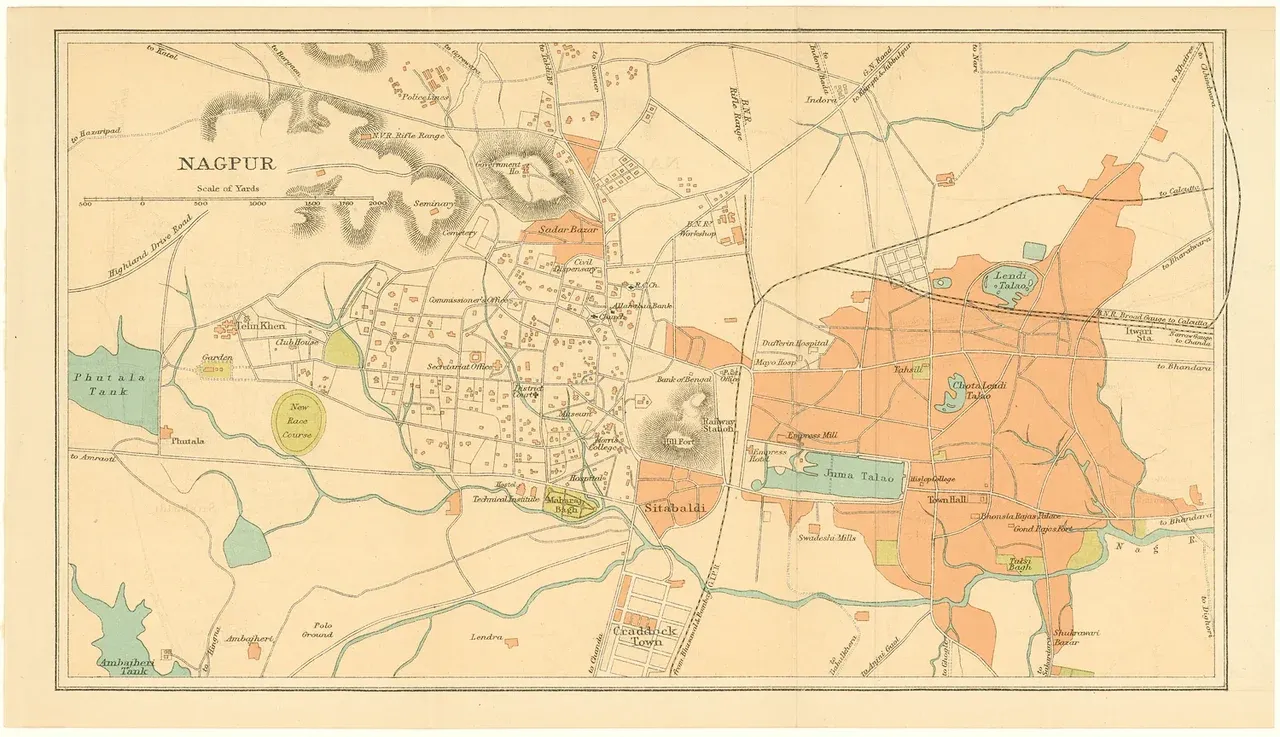
Writing about a Supreme Court petition in March 2026, the Indian Express reported that Dina Budhraja had organised a Navjote for her son in 2023, and that the panchayat's managing committee objected in public and circulated messages about it on social media. We found no report saying whether the November 2023 ceremony went ahead or which priest performed it.
The rule behind the dispute is short. It applies to a Parsi or Irani Zoroastrian woman whose husband is not Parsi and who has children with him. Both she and the children, in the words the Indian Express quoted, "will not be accepted as Parsi/Irani Zarthostis".
Where does the court challenge stand?
Budhraja's petition asks the Supreme Court to strike down rule 5(2). A three-judge bench led by Chief Justice Surya Kant agreed to examine it on 23 March 2026, according to a PTI report. When the case was heard on 25 May 2026, her counsel Shyam Divan told the court that Nagpur has only one Agiary and the nearest other fire temple is in Indore, about 400 km away, LiveLaw reported. On 30 May 2026, PTI reported that the court would await the nine-judge bench's verdict on religious practices before deciding her plea. That bench reserved its verdict on 14 May 2026, and both are pending as of 16 November 2026. The legal history of these children is set out in Children of intermarried women.
Will a priest perform the Navjote of a child with a non-Parsi father?
Priests are divided, and each side has put its view in writing or on record.
Priests who oppose these Navjotes
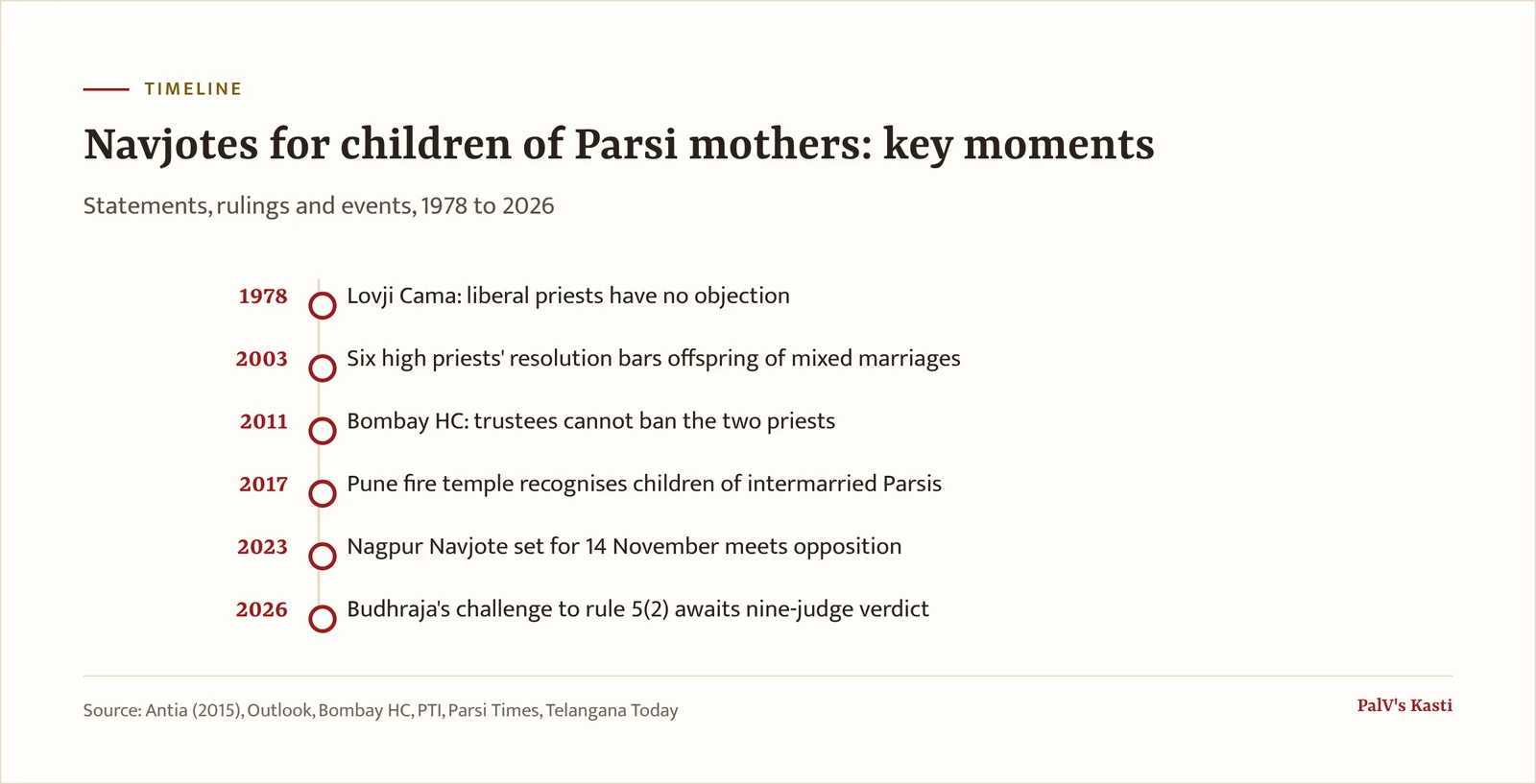
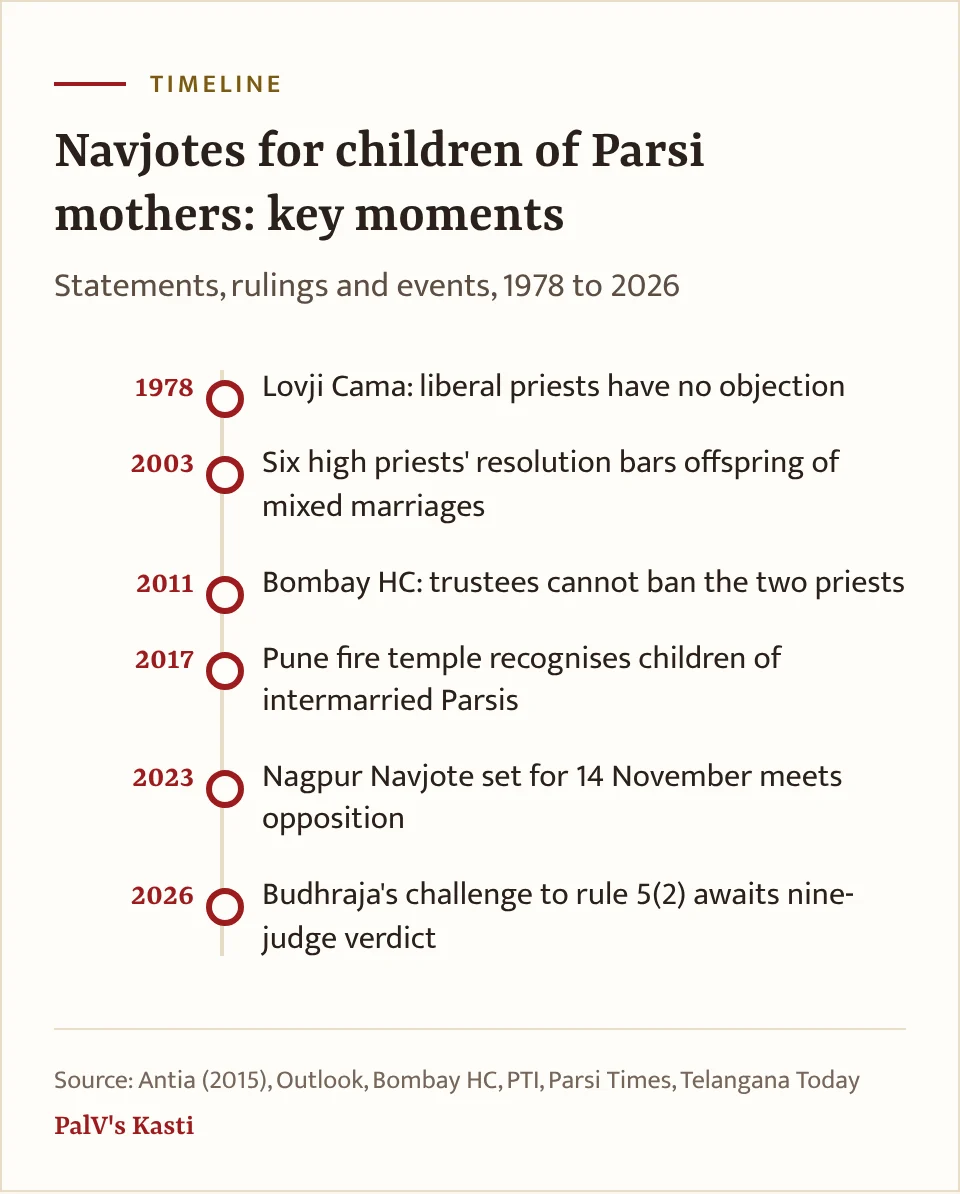
- In April 2003, Outlook reported that six high priests had recently resolved that marrying outside the community was irreligious and that the children of such marriages were barred from the faith. By the magazine's account this went further than earlier practice, shutting out children of Parsi fathers too, though Outlook added that high priest Firoze Kotwal had begun to speak of it as a guideline rather than a fatwa.
- Ervad Marzban Hathiram, on his Frashogard site on 13 October 2016, set out his position in a letter replying to a friend's Navjote invitation for a daughter with one non-Parsi parent. He wrote that one cannot be initiated into the faith because "One is born into the faith", and that investing a child of an interfaith union with the Sadra and Kusti is "a grave spiritual sin". In a 2013 post he wrote that Navjotes done by what he called "rogue" priests for children of "parents of indeterminate genealogy" have "no spiritual validity".
- The Bombay Parsi Punchayet's trustees, in a resolution of 9 June 2009 quoted by the Bombay High Court, called the Navjotes of children of Parsi women married to non-Parsis "unreligious".
Priests who perform them or support them
- The priest Framroze Mirza, who advertised his services, told Outlook in 2003 that these Navjotes "have been going on for years" and that "the high priests themselves have blessed them".
- Kersey Antia, in his 2015 book The Argument for Acceptance in Zoroastrianism, quotes Dr Lovji Cama telling the Third World Zoroastrian Conference in Bombay in 1978 that liberal priests had no objection to such Navjotes "irrespective of which parent is Zoroastrian".
- At the Udwada, Gujarat, one of the holiest Zoroastrian fire temples.">Iranshah Udvada Utsav, Asian Voice reported in January 2016, the Udvada head priest Dasturji Khurshed Dastoor condemned as hypocrisy the practice of admitting into the faith the children of Parsi men who had married non-Parsi women.
- In Pune, a fire temple in Kondhwa that opened in 2017, PTI reported, recognises the children of Parsis who married outside the community. Our article on Half-Parsis says more about families who go there.
Practice varies between families and Agiaries; your family priest's guidance comes first.
Can a trust stop a priest from performing these Navjotes?
On its own premises, a trust has tried. The 2009 resolution barred Mirza and Khushroo Madon from Doongerwadi and two trust Agiaries over, among other things, these Navjotes. On 11 March 2011 the Bombay High Court, in a judgment by Justice D.Y. Chandrachud in Jamsheed Kanga v Parsi Panchayat Funds, held that under its 1884 deed the trust could not stop a duly ordained priest from performing rites there, and that the ban was outside the trustees' power. The court said it was not deciding whether the ceremonies themselves were acceptable in the faith.
Is the child accepted as Parsi after the Navjote?
Not everywhere. A valid Navjote has not, on its own, guaranteed access. In the 1925 Privy Council case of Saklat v Bella, concerning Bella, the daughter of a Goan Christian father and a Parsi mother in Rangoon, the court held, as Noshir Dadrawala has summarised it, that her Navjote did not by itself give her a right to use the Rangoon fire temple. Under Nagpur's rule 5(2) the children are not accepted at all, whereas the Delhi and Kolkata panchayats, the Indian Express reported in 2026, do not regard such women as having lost their identity.
Some families do not hold the ceremony at all. A 2023 SOAS survey report by Nazneen Engineer, Joe Turtle and Sarah Stewart cites an earlier study by Bharat (2017) finding that 20% of intermarried women and 12% of intermarried men had not performed, or did not intend to perform, their children's Navjote.
This is general information, not legal advice; for a specific case, speak to a lawyer.
Frequently asked questions
Can the child of a Parsi mother and a Hindu father have a Navjote?
Some priests will perform it, and a Pune fire temple that opened in 2017 recognises such children, PTI reported. Traditionalist priests such as Ervad Marzban Hathiram call such a Navjote ritually incorrect, and some trusts, including the Nagpur Parsi Panchayat, do not accept the children. Practice varies between Agiaries.
What happened at the Nagpur Navjote in 2023?
Parsi Times reported that a Navjote for the child of a Hindu father and Parsi mother was set for 14 November 2023. The Nagpur Parsi Anjuman refused to accept it, said its priests would not perform it, and the Bombay Parsi Punchayet declared the child would not be recognised as Parsi. We found no report of whether it took place.
What does Nagpur's rule 5(2) say?
Rule 5(2) of the Nagpur Parsi Panchayat, as the Indian Express quoted it, covers a Parsi or Irani Zoroastrian woman with a non-Parsi husband and children by him. Neither she nor those children are to be accepted as Parsi or Irani Zarthostis. Dina Budhraja's challenge to it is pending in the Supreme Court as of 16 November 2026.
Can the Bombay Parsi Punchayet stop priests performing these Navjotes?
Not in its trust Agiaries, the Bombay High Court held. In Jamsheed Kanga v Parsi Panchayat Funds (11 March 2011), it ruled that the 1884 trust deed gave the trustees no power to ban two priests over ceremonies including these Navjotes. The court did not decide whether the ceremonies are acceptable in the faith.
Do all intermarried Parsi parents hold a Navjote for their children?
No. A 2023 SOAS survey report by Nazneen Engineer, Joe Turtle and Sarah Stewart cites a 2017 study by Bharat finding that 20% of intermarried Parsi women and 12% of intermarried men had not performed, or did not plan to perform, their children's Navjote. The figures are from that earlier study.


