PalV's Kasti
On this page
The dugli, more often spelt dagli, is the ceremonial coat Parsi men wear for weddings and navjotes. The Voice of Fashion calls it "a traditional jacket-style garment" and ceremonial menswear for both occasions. In a Parsi Times advertorial of 27 September 2025, Kaizad Wadia describes two styles on offer, a traditional one and a contemporary one, each sold as a set of dagli, shirt and pant. The dagli is not the jama, the long white coat that older Parsi sources describe for weddings and funerals.
શહેરેવર રોજ
Shehrevar Roj, Tir Mah · 1396 Y.Z.
What does a Parsi dagli look like?
The fullest recent description we could verify is Wadia's own, and it is an advertorial for daglis he offers, so read it as a maker describing his work. He sets out two versions:
| Version | How Wadia describes it | Care he recommends |
|---|---|---|
| Traditional / Classic | Dagli, shirt and pant, cut for classic comfort | Machine wash, dry on a hanger |
| Designer / Contemporary | Drawn from the bandhgala: a structured fit, clean lines and no visible stitching at the sleeves or hem. He likens it to a finely tailored blazer | Dry clean only |
Two more details come through in his piece. His daglis have bows, which he singles out for gentle handling. And his care advice speaks of keeping its "pristine whiteness". Wadia also reports a trend for embroidery on the collar or chest pocket, in zari gold, antique silver or white thread, with motifs such as the Asho Faravahar.
We looked for a second, independent account of how a dagli is cut and couldn't open one, so we haven't described the construction beyond what Wadia says.
When is the dagli worn?
At weddings and navjotes. The Voice of Fashion names both as the occasions for this ceremonial menswear, and notes that the navjote is when a child begins to wear the sedreh, the "soft mul vest" we call the Navjote.">Sadra. Wadia, for his part, presents the modern dagli as suited to functions and especially weddings.
For the full picture of what the groom, bride, navjote child and guests wear, see our guide to Parsi wedding attire. For the Sadra itself, read what a Parsi Sadra means.
Is the dagli the same as the jama?
No. The sources treat them as two garments.
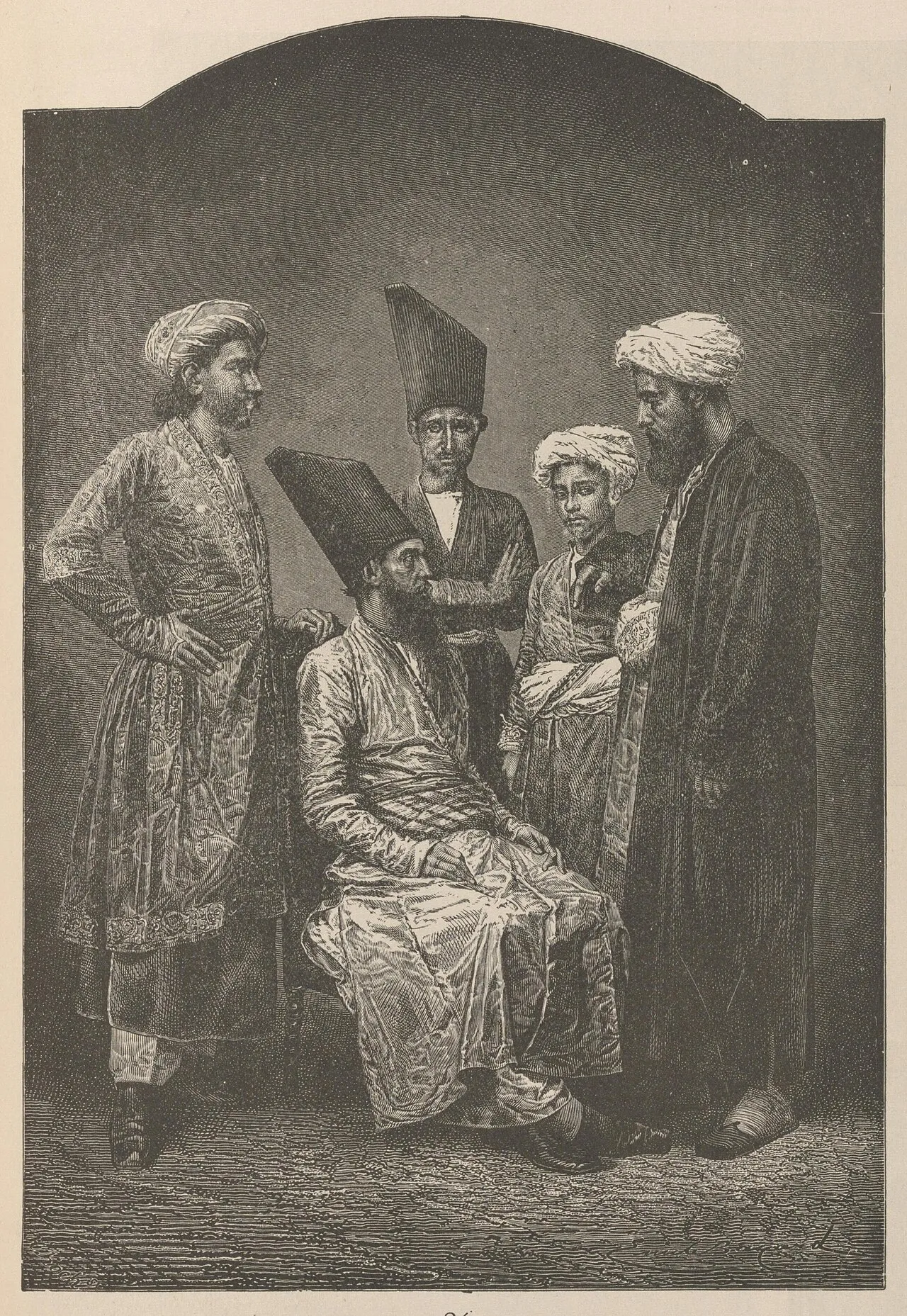
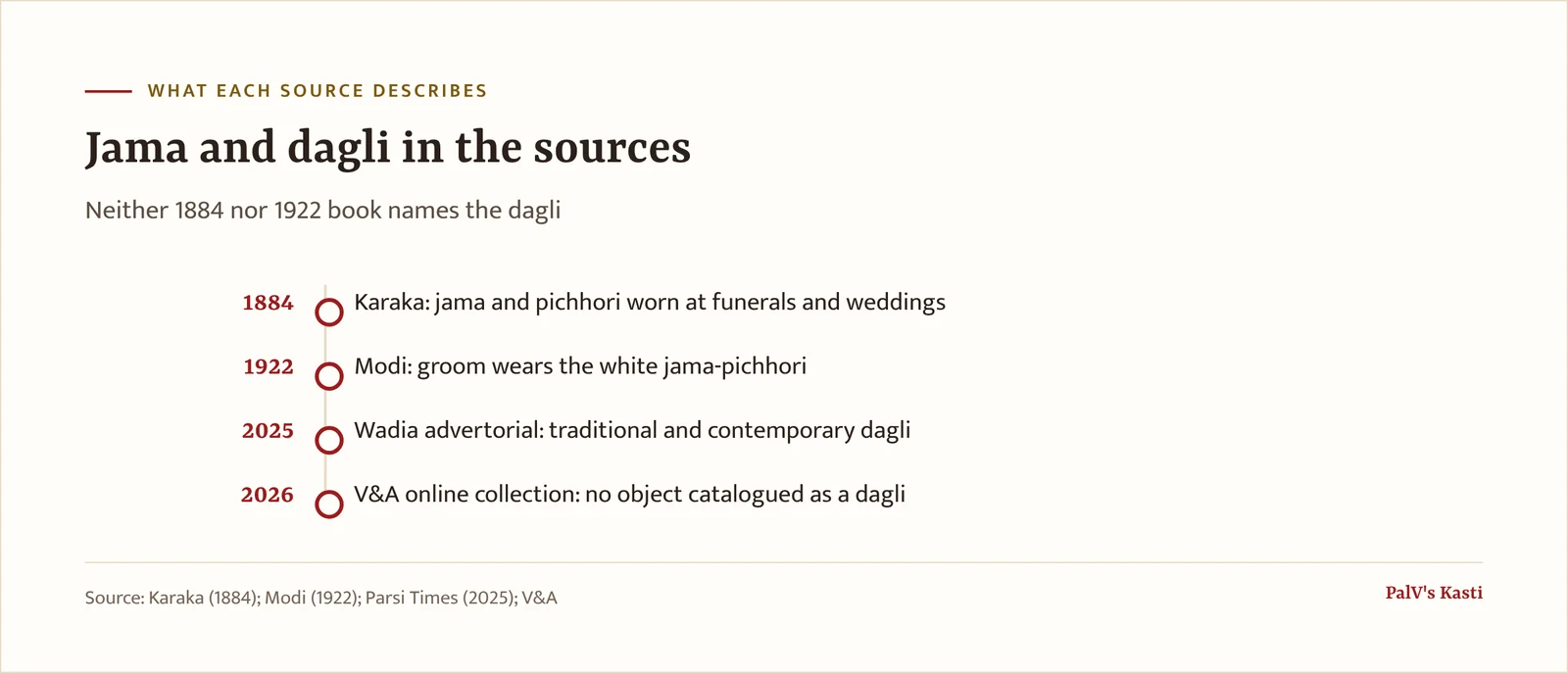

The jama is the ceremonial coat of the older sources. Dosabhai Framji Karaka described it in 1884 as a long double-breasted coat "always made of cotton", its lower part hanging in folds to the ankle. It was worn with the pichhori, a long cloth about a yard wide wound round the waist, at funerals and weddings. J.J. Modi wrote in 1922 that the bridegroom wears the jama-pichhori, which is "always white in colour", and he describes priests putting it on as their "full sacerdotal dress". Neither writer mentions a dagli.
So if you need the ankle-length coat with the waist cloth, ask for a jama. If you want the jacket-style ceremonial coat with bows, ask for a dagli. The rest of the wardrobe, from the topi to the sari, is listed in our guide to Parsi traditional dress. Practice varies between families and Agiaries; your family priest's guidance comes first.
Where did the dagli come from?
We couldn't find a reliable, dated account of the dagli's origin, so we won't guess at one. Karaka's 1884 History of the Parsis and Modi's 1922 Religious Ceremonies and Customs of the Parsees both describe Parsi men's clothing at length, and neither book uses the word dagli. A search of the Victoria and Albert Museum's online collection on 16 November 2026 returned no object catalogued as a dagli.
What Karaka did describe was the angrakha, the outdoor coat of his day: "a loose coat without a belt", with sleeves so long they creased above the wrist. He also noted a "growing fashion" for sleeves cut to fit the arm exactly. Whether the dagli grew out of the angrakha is a question our sources don't answer. For what is documented, read how Parsi dress changed.
Who makes daglis today?
Kaizad Wadia is the one maker we could confirm from a 2025 or 2026 source describing his own daglis, in the Parsi Times advertorial above. We found no 2025 or 2026 report on other dagli tailors that we could open, so we haven't named any. We don't make daglis ourselves. We stitch Sadras to measure, and you can order a Sadra from us for a navjote.
How do you care for a dagli?
These steps are Kaizad Wadia's advice, as given in Parsi Times. Check the label or ask your own tailor if your dagli is made differently.
- A traditional dagli can go in the washing machine. Dry it on a hanger.
- A modern, structured dagli should be dry cleaned.
- Tell the cleaner to handle it gently, especially the bows.
- Steam iron lightly, paying most attention to the collar.
Frequently asked questions
What is a dugli?
A dugli, more often spelt dagli, is the ceremonial coat worn by Parsi men at weddings and navjotes. The Voice of Fashion describes it as a traditional jacket-style garment. Kaizad Wadia's 2025 advertorial describes a traditional style and a contemporary one drawn from the bandhgala, each with a shirt and pant.
Does a Parsi groom wear a dagli?
Yes. The Voice of Fashion calls the dagli ceremonial menswear worn at weddings and navjotes, and Kaizad Wadia presents his modern dagli as suited to functions, especially weddings. Older sources describe the groom in the white jama-pichhori instead, so ask your family which they prefer. Our wedding attire guide covers the rest.
Is a dagli the same as a jama?
No. The jama, as Karaka described it in 1884, is a long double-breasted cotton coat falling in folds to the ankle, worn with a waist cloth called the pichhori. The dagli is a jacket-style ceremonial coat with bows. Neither Karaka nor Modi, writing in 1922, mentions the dagli at all.
How do you wash a dagli?
Kaizad Wadia advises that a traditional dagli can be machine washed and dried on a hanger, while a structured modern dagli should be dry cleaned. He suggests asking the cleaner to handle the bows gently and using a light steam iron on the collar. Follow your own tailor's advice if it differs.
Where did the Parsi dagli come from?
Nobody has published a reliable, dated origin that we could find. Karaka's 1884 history and Modi's 1922 book on Parsi ceremonies describe men's clothing in detail without naming the dagli, and the V&A's online collection lists no dagli. Whether it grew from the angrakha coat is unproven.