 PalV's Kasti
On this page
- What is a Parsi platter, and why is it called a patra?
- Which dishes go on a Parsi wedding platter, course by course?
- How many courses does a Parsi bhonu have?
- How is food arranged on the banana leaf?
- How do you put together a Parsi platter at home?
- What do vegetarian guests get on a Parsi platter?
- How has the Parsi wedding platter changed?
- Frequently asked questions
The classic Parsi platter is the patra: the banana leaf on which the lagan nu bhonu, the Parsi wedding feast, is served. FEZANA's 2012 cookbook Eat, Live, Pray describes that feast as six to eight courses at a sit-down meal. A full leaf opens with lagan nu achaar (the sweet carrot and dried-fruit wedding pickle), thin rotli and wafers. Then come the chicken (salli marghi or farcha), mutton, fish such as patra ni machhi, mutton palao with daal, and finally lagan nu custard, kulfi or ice cream, with raspberry soda alongside. To put one together at home, pick one dish for each course and serve them in turn. Sides and pickle go on the top half of the leaf, mains and rice on the lower half.
અદીબેહેસત રોજ
Ardibehesht Roj, Tir Mah · 1396 Y.Z.
What is a Parsi platter, and why is it called a patra?
Writing in Outlook Traveller in 2015, Shabnam Minwalla explained the name plainly: the Parsi wedding feast is called a patra because it is served on a banana leaf. The meal itself is the bhonu, so you will hear both "patra nu bhonu" and "lagan nu bhonu" (lagan means wedding). Goya's 2019 profile of caterer Tanaz Godiwalla calls it a sit-down wedding feast served on a patra.
So when people say "Parsi platter", they usually mean this run of Parsi dishes laid out on one leaf, not a single plate of mixed food. If you are new to Parsi cooking, our guide to Parsi recipes covers the individual dishes in more depth.
Which dishes go on a Parsi wedding platter, course by course?
Three published accounts list the courses, and they don't agree on the order. Each caterer and family runs the leaf its own way, so read the table as three real menus rather than one rule.
| Course | FEZANA cookbook (2012) | Outlook Traveller (2015) | Roshni Mithaiwalla Siddique, Gulf News (2021) |
|---|---|---|---|
| 1 | Lagan nu achaar, rotli, laganshala (vegetable stew) | Lagan nu achar, rotis, long white wafers | Chicken farcha |
| 2 | Salli marghi, farcha | Fish: patra ni machhi or saas ni machhi | Patra ni macchi |
| 3 | Masala nu ros gos, dahi nu gos | Chicken: farcha, or more often sali murgi | Lagan nu achar with roti |
| 4 | Tareli machi, patra ni machi, khichdi saas | Mutton pulao with thick daal | Sali marghi |
| 5 | Palao with masala ni daar | Ice cream | Mutton palao daar |
| 6 | Lagan nu custard, kulfi | (custard served too) | Lagan nu custard |
Most leaves start with lagan nu achaar. FEZANA's recipe cooks carrots with dried apricots, figs and golden raisins in sugar and cider vinegar, and the book gives the reason it belongs at a wedding: it is sweeter than other pickles, so the couple begin with a sweet mouth rather than a salty or spicy one. Goya adds paper-thin rotlis and saria, the sago wafers.
The chicken is usually salli marghi, topped with crisp potato straws, or farcha, Parsi fried chicken. The mutton version of that potato-straw dish has its own page: Jardaloo sali boti. Our Parsi festive spread guide goes through the pulao dal, the custard and the Navroz and Gahambar menus, so we won't repeat them here.
How many courses does a Parsi bhonu have?
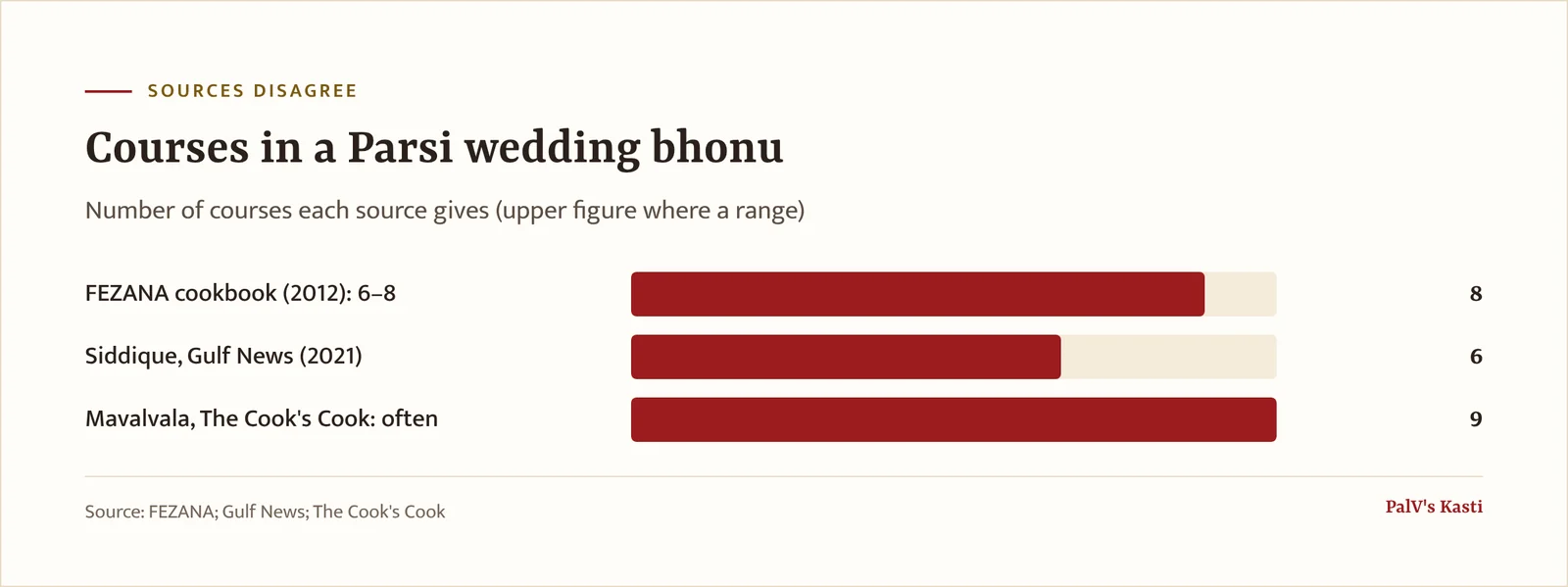
There is no single number. FEZANA says six to eight, with one or more choices per course depending on the budget. Siddique told Gulf News it is a six-course meal. Niloufer Mavalvala, writing in The Cook's Cook, calls the patra nu bhonu "often a 9-course meal". The count moves with the host's budget and the caterer, and a home leaf can go far lower.
How is food arranged on the banana leaf?
FEZANA's cookbook sets out the layout. Only leaves free from tears and blemishes are used, washed and wiped clean, and laid once guests are seated. The top part of the leaf takes the side dishes and condiments. The lower part takes the main courses and rice. When a guest has finished, they fold the ends of the leaf, which tells the waiters to clear it.
How do you put together a Parsi platter at home?
You don't need eight courses. Here is how we would scale the wedding leaf down for a family meal, using the course lists and leaf rules above.
- Choose one dish per course: one chicken, one fish, one rice-and-daal, one sweet. Add mutton if you are feeding a crowd.
- Make the lagan nu achaar and the custard ahead. FEZANA's achaar is cured in sugar and cider vinegar, and the custard has to set firm enough to slice.
- Wash and wipe whole, untorn banana leaves, and lay them after everyone sits down.
- Put achaar, rotli and wafers on the top half of the leaf.
- Bring the mains one at a time to the lower half, the way waiters serve a patra, ending with palao and daal.
- Serve the custard in slices, with raspberry soda on the table throughout.
- Fold the leaf when you're done.
What do vegetarian guests get on a Parsi platter?
Usually a separate menu. Goya reports that Godiwalla runs one for vegetarians, plus options for guests who want food low on spice. If you are building a vegetarian leaf at home, Vegetarian Parsi kebabs make a good main.
How has the Parsi wedding platter changed?
Outlook noted in 2015 that some weddings had moved to buffets and salad counters in place of the patra. Goya reported in 2019 that tandoori chicken and Szechuan meatballs had reached Parsi weddings over the previous decade, served as starters. Godiwalla told Goya she keeps the main lagan nu bhonu traditional, and all of it is cooked on woodfire. According to Goya, her parents Freny and Rohinton started the business in 1969. Homegrown reported in 2021 that December alone brings her about 150 lagans and navjotes on average, and that each sitting seats about 150 people.
For the wider story of the cuisine these dishes come from, read our piece on Parsi food.
Frequently asked questions
What is lagan nu bhonu?
Lagan nu bhonu is the Parsi wedding feast. Lagan means wedding. It is a sit-down dinner served on banana leaves, which is why it is also called the patra. FEZANA describes six to eight courses, running from wedding pickle, rotli and a vegetable stew through chicken, mutton, fish and palao daar to lagan nu custard and kulfi.
How many courses are there in a Parsi wedding platter?
It depends on who is counting. FEZANA's cookbook gives six to eight courses, with one or more choices in each depending on the budget. Roshni Mithaiwalla Siddique described a six-course meal to Gulf News, and Niloufer Mavalvala calls it often a nine-course meal. For a home platter, four or five courses are enough.
Why is food served on banana leaves at Parsi weddings?
FEZANA's cookbook calls the banana leaf the environment-friendly version of a paper plate for feasts serving hundreds. Leftover food wrapped in the leaf can be eaten by animals and the rest breaks down. The same source says the leaf helps keep the flavour and aroma of the food. Guests fold the leaf when finished.
What drink is served with a Parsi wedding meal?
Raspberry soda. Goya lists it as part of the lagan nu bhonu, alongside the custard. Outlook Traveller describes guests wiping their banana leaves with napkins and filling their glasses with the bright red raspberry drink within minutes of sitting down. At home, keep it on the table with the rest of the leaf.
What is a smaller Parsi platter for birthdays?
Roshni Mithaiwalla Siddique told Gulf News that a Parsi birthday or wedding anniversary always means dhandaar kolmi no patiyo. That is white rice and yellow daal with prawns cooked in a tomato gravy, served with fried fish. It is a far simpler plate than the wedding patra, built around one pot of daal and one of prawns.


