 PalV's Kasti
On this page
Supra ni reet (also called Supra nu murat) is the turmeric rite held before a Parsi wedding. Married women take supras, flat winnowing trays, holding turmeric pieces, betel nut, dates, coconut and a few other items. The turmeric is then pounded into a paste and applied to the bride and the groom, each in their own home. In the published accounts we read, the Haldi ni reet, the turmeric step, is not a separate ceremony but the closing part of the supra rite. Ervad Dr Ramiyar Karanjia places it on the first of the four festive days before the wedding, the same day as Madav Saro.
અસપંદામેદ રોજ
Asfandarmad Roj, Tir Mah · 1396 Y.Z.
Is Supra ni reet the same as a Haldi ceremony?
The two are close. Noshir Dadrawala, writing in Parsi Times in 2023, describes the supra nu murat as somewhat like the Hindu haldi ceremony. Karanjia notes that turmeric paste is widely used in India for the same purpose.
Supra ni reet is one of several customs that come before the wedding day. For the full sequence, see our guide to Parsi pre-wedding ceremonies.
What is a supra, and what is placed on it?
A supra is a flat, rectangular mat or cane tray, open at one end, used for winnowing wheat and other grain. Karanjia specifies four new supras for the rite. The items placed on them differ a little between accounts:
- Karanjia (2019): rice, wheat, adad gathya (turmeric pieces), sopari (betel nut), kharak (dates), sakar (rock sugar) and a piece of coconut.
- Dadrawala (2023): paan, supari, haldi, dates and a piece of coconut.
- Parsi Times (2016): a piece of coconut, betel nut, dates and leaves.
Turmeric, betel nut, dates and coconut appear in more than one list.
How is Supra ni reet performed?
All the accounts we read agree that married women lead the rite and that the pounded turmeric ends up on the couple. Karanjia's 2019 account and Dadrawala's 2023 account then differ in the details.
Karanjia's account
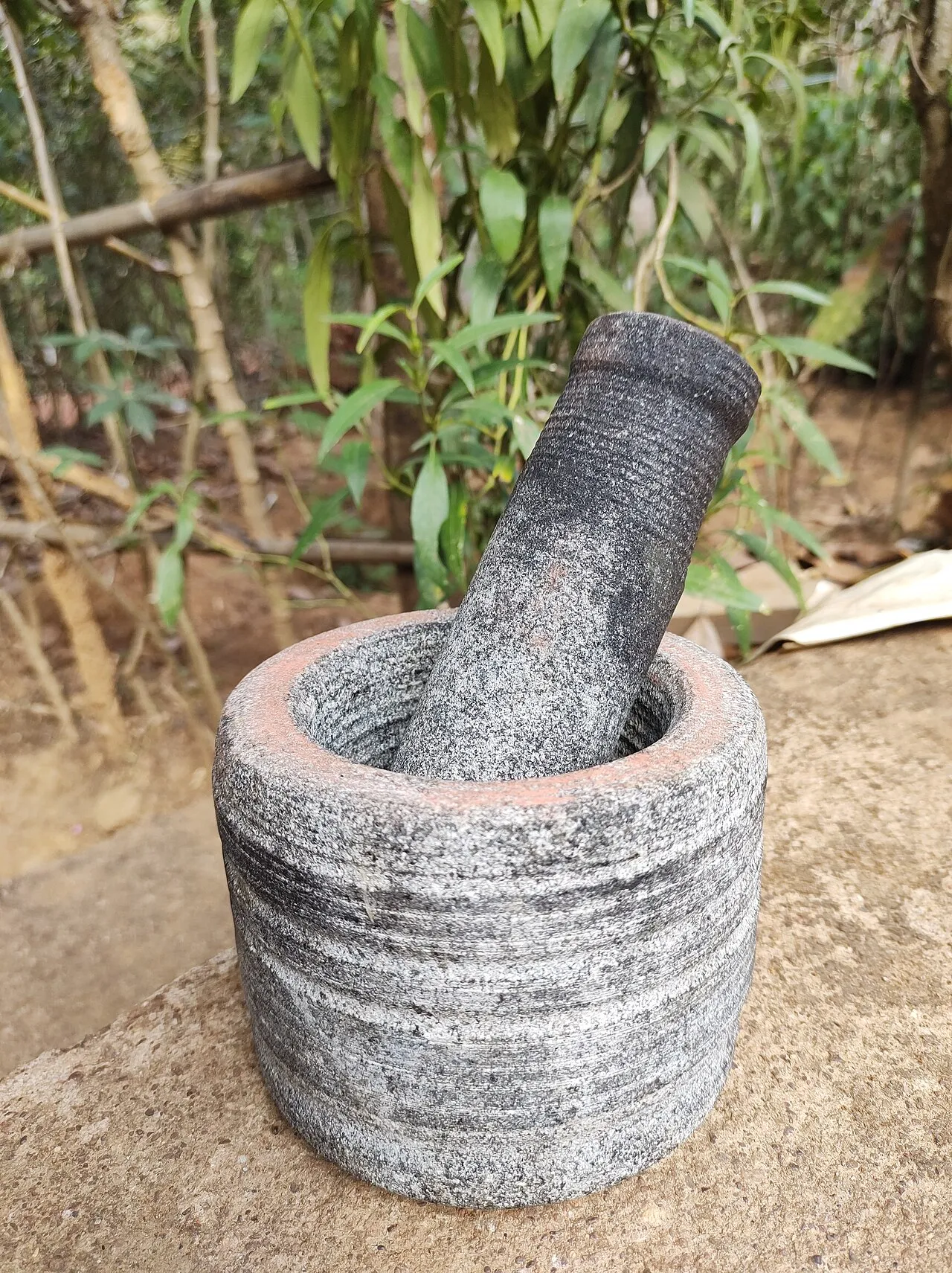
Four married women, called sohasan in Gujarati, use the four supras with the items on them. The four women then grind the turmeric pieces to a powder in a mortar, mix it with water and apply it to the boy and the girl. This is done separately at the bride's house and at the groom's.
Dadrawala's account
- Each of four married women is given a supra.
- The women sing traditional Gujarati wedding songs and pass the supras among themselves seven times, across the length and the breadth.
- A fifth married woman sits in the middle with a khal-batto (mortar and pestle) and dry turmeric.
- All five women pound the turmeric together with milk.
- The paste is applied by all of them to the groom and the bride, with good wishes and blessings.
The 2016 Parsi Times feature describes the same five-woman form, with the turmeric ground in milk. So the mixing liquid differs between sources: water in Karanjia, milk in Dadrawala and the 2016 feature.
Practice varies between families and Agiaries; your family priest's guidance comes first.
When is the Supra ni reet done?
Karanjia places it on the first of the four festive days before the wedding, the same day as Madav Saro. The 1899 Gazetteer of the Bombay Presidency, describing Parsi customs in Gujarat, records a different calendar. There the turmeric was pounded on a lucky day ten to fifteen days before the marriage. After the pounding the two families began laying in stores for the wedding feast.
Karanjia adds that the gift-giving Adarni, if not held earlier, may also fall within these four days. It has its own page, Divo Adarni.
Practice varies between families and Agiaries; your family priest's guidance comes first.
What is pithi chorvi, and why is turmeric applied?
Karanjia calls the application of the turmeric paste pithi chorvi. He gives its significance as enhancing the couple's skin tone.
J.J. Modi, writing in 1922, adds a note on turmeric (haradh) in his account of the wedding day. He traces the word to a Sanskrit root meaning "to be yellow, to shine". In his reading, the colour of turmeric stands for sunlight and for the prosperity and plenty that the sun brings, which is why turmeric marks count as auspicious. He records that on the wedding day the door-posts of the bride's house, and of the groom's, are marked with turmeric.
How was the turmeric rite done in 1899?
The 1899 Gazetteer describes the rite in two stages. First, kinswomen at both houses chose four young married girls to pound the turmeric and shake it in a winnowing fan while songs were sung. Then, towards evening on the third day before the wedding, the women of each family seated the boy and the girl outside their homes, rubbed them with the turmeric pounded earlier, and bathed them in fresh water.
After the bath, the Gazetteer says, four married girls lifted the boy and the girl on a wooden stool made without nails. They carried them seven times around the lucky chalk designs in the middle of the hall. Frankincense was burned before them, and they were asked to forecast the year's grain prices. We have found no modern account of this part still being kept.
The turmeric rite comes after the engagement, in the run-up to the wedding. For the earlier rites, see our guide to the Parsi engagement ceremony.
Practice varies between families and Agiaries; your family priest's guidance comes first.
Frequently asked questions
What is Supra ni reet?
Supra ni reet, or Supra nu murat, is a Parsi pre-wedding rite in which married women handle winnowing trays (supras) holding turmeric, betel nut, dates and coconut. The turmeric is then pounded into a paste and applied to the bride and groom, separately at each family's home.
Is there a haldi ceremony in a Parsi wedding?
Yes, as part of the Supra ni reet. After the supra trays are passed among the married women, turmeric is pounded and applied to the couple. Noshir Dadrawala calls the rite somewhat like the Hindu haldi ceremony. The accounts we read describe no separate haldi rite.
Who pounds the turmeric in Supra ni reet?
Married women. Ervad Ramiyar Karanjia says four married women grind it in a mortar and mix it with water. Noshir Dadrawala describes four women passing the supras while a fifth sits in the middle with a mortar, and all five pound the turmeric with milk.
What is pithi in a Parsi wedding?
Ervad Ramiyar Karanjia uses the name pithi chorvi for applying the pounded turmeric paste to the bride and the groom before the wedding. He says it is done separately at the bride's home and at the groom's, and that its significance is to enhance the couple's skin tone.
When is the Parsi haldi done?
Ervad Ramiyar Karanjia places the supra and turmeric rite on the first of the four festive days before the wedding, alongside Madav Saro. The 1899 Bombay Gazetteer recorded Parsis in Gujarat pounding the turmeric ten to fifteen days before the wedding. Confirm the day with your family priest.


