 PalV's Kasti
On this page
Tamota per eedu is eggs cooked on top of a soft, spiced tomato and onion base. To make it, you fry cumin, garlic, ginger and green chilli in a little oil, add onion and let it turn golden, then cook diced tomatoes until they soften. Season with salt and fresh coriander, pour beaten eggs over the whole pan and leave it on low heat for about five minutes until the eggs set. That is the method B. Bhasin gives in FEZANA's cookbook Eat, Live, Pray (2012), and it is the one we follow below. Once the base is ready, the eggs need only about five minutes, which is why we think it suits a weekday breakfast.
અસપંદામેદ રોજ
Asfandarmad Roj, Tir Mah · 1396 Y.Z.
What is tamota per eedu?
"Tamota" is tomato, and "per eedu" means egg on top of something. Food writer Meher Mirza, writing in SAVEUR in 2021, describes a whole range of Parsi dishes called par eeda and translates the name as "egg cooked over something". FEZANA's book puts it as "eggs on top of a vegetable".
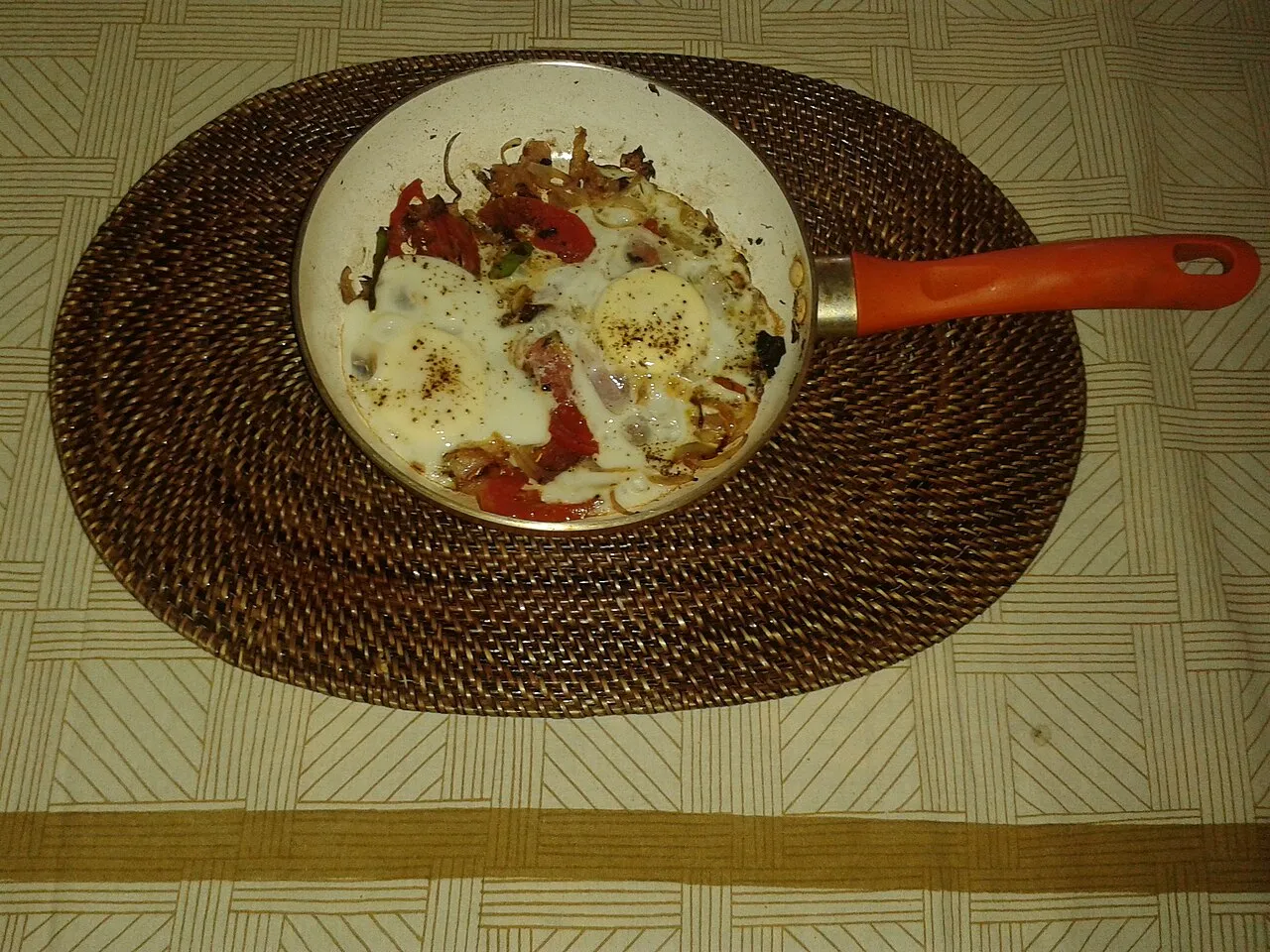
The same book calls per eedu "a popular fall back in Parsi homes" and names tomatoes first among its possible bases. You will see the dish spelt several ways: tamater par eedu in Shabnam Minwalla's 2021 piece on Parsi breakfasts for Outlook Traveller and tamato-per-eedu on a chef's menu printed in FEZANA's book. They are the same dish. If you want the okra version, our Bhida per eedu post walks through it.
Is tamota per eedu a breakfast dish?
It sits comfortably at breakfast. In her Outlook Traveller article on the big Parsi breakfast, Minwalla places tamater par eedu with bhindi par eedu and kera par eedu among the egg dishes of that table, and describes the tomato, okra or banana being "blanketed with egg and cooked on a low heat". She also notes, in brackets, that plenty of Parsis say they can only stomach their vegetables this way.
It also travels beyond breakfast. In a 2018 Outlook Traveller piece on Parsi food in Mumbai, Minwalla notes that many wedding hosts add an egg dish to the standard menu, typically fried eggs on a thin bed of potato or tomato. And FEZANA's book prints chef Jehangir Mehta's degustation menu of Parsi classics, which includes "Cinnamon tomato eggs on cocotte (tamato-per-eedu)".
What do you need for tamota per eedu?
These quantities are B. Bhasin's, from Eat, Live, Pray (FEZANA, 2012), page 98. The recipe says it serves four to six.

- 1 tbsp oil
- ½ tsp cumin seeds
- 4 cloves garlic, chopped or ground
- A ¼-inch piece of ginger, chopped or ground
- 1 green chilli, cut fine
- 1 large onion, cut fine
- 4 large tomatoes, diced
- ½ tsp salt, or to taste
- ¼ bunch fresh coriander, cut fine
- 3 eggs, beaten
How do you make tamota per eedu, step by step?
- Warm the oil in a frying pan.
- Put in the cumin, garlic, ginger and green chilli and stir them for a few minutes. Then add the onion and keep cooking until it turns golden brown.
- Tip in the diced tomatoes and cook for a few minutes, until they go soft.
- Stir in the salt and the chopped coriander.
- Pour the beaten eggs over the tomato mixture and spread them so they cover it evenly. Turn the heat to low and cook for about five minutes, until the eggs have set.
Bhasin's recipe doesn't give a total cooking time, so we won't invent one. The egg stage is the only timed step. For bread, the banana version printed two pages earlier in the same book (Rustom Engineer's kera per eedu) suggests hard-crusted French bread or wheat rotlis, and we'd reach for the same here.
Should the eggs be beaten or broken in whole?
Both are done. Bhasin beats the eggs and spreads them over the tomatoes, which gives you a set, omelette-like top. The potato-and-tomato version on the page before it, by Mikie R. Katgara, does the opposite: you break whole eggs onto the vegetables, cover the pan and cook until set. Katgara also offers beaten eggs as an alternative, whisked until stiff and spread over the hot mixture. Pick whichever your family grew up with.
Can you add potatoes to tomato per eedu?
Yes, and FEZANA's book has a separate recipe for it: tamota papeta per eedu, contributed by Mikie R. Katgara and written for three people. It uses three large potatoes, two onions and two tomatoes, with ginger-garlic paste, chilli powder, turmeric, cumin, green chillies, coriander and three eggs. The onions are fried golden, the spices go in, then the sliced potatoes are coated in the masala and covered with a layer of sliced tomato. The pan is covered and cooked on a slow fire for 25 to 30 minutes before the eggs go on.
That makes it a slower dish than plain tamota per eedu. If breakfast has to be quick, leave the potatoes for the weekend.
What else goes on the table with it?
Pickle is one option. Meher Mirza writes in SAVEUR that Parsis pickle everything from fish roe to mutton, and our Gharab nu achaar post covers the fish roe one. If you came here looking for Parsi custard or jardaloo ma murghi as well, our guide to Parsi recipes is the place to start, and our wider look at Parsi food explains where dishes like these fit in the cuisine.
Frequently asked questions
Can you break whole eggs over the tomatoes instead of beating them?
Yes. B. Bhasin's tamota per eedu in FEZANA's Eat, Live, Pray pours beaten eggs over the tomatoes, but Mikie R. Katgara's potato version in the same book breaks whole eggs on top, covers the pan and cooks until they are done. Katgara also gives beaten eggs, whisked till stiff, as an alternative. Either works over the tomato base.
How long do the eggs take in tamota per eedu?
In B. Bhasin's recipe in FEZANA's Eat, Live, Pray, the beaten eggs cook on a low burner for about five minutes, until they set. Before that, the spices get a few minutes, the onion cooks until golden brown and the tomatoes cook for a few minutes until soft. The recipe gives no total time, so judge by the pan.
Is tamater par eedu the same as tamota per eedu?
Yes. Tamater par eedu, tamota per eedu and tamato-per-eedu are different spellings of the same Parsi dish of eggs cooked over tomatoes. Shabnam Minwalla uses tamater par eedu in Outlook Traveller, FEZANA's cookbook uses tamota per eedu, and chef Jehangir Mehta's menu printed in that book spells it tamato-per-eedu.
How many people does this tamota per eedu recipe serve?
B. Bhasin's version in FEZANA's Eat, Live, Pray uses four large tomatoes and three beaten eggs and says it serves four to six. Mikie R. Katgara's tamota papeta per eedu in the same book, which adds three large potatoes, serves three.
Do Parsis serve egg dishes like this at weddings?
Some do. Writing in Outlook Traveller in 2018, Shabnam Minwalla notes that many hosts add an egg creation to the standard Parsi wedding menu, typically fried eggs sitting on a thin bed of potato or tomato. Minwalla presents it as an addition some hosts make to the menu, so you should not expect it at every Parsi wedding.


