 PalV's Kasti
On this page
Gharab nu achaar is the Parsi pickle of fish roe. "Gharab" is the roe, and the roe used for this pickle comes from a fish called bhing. The method, as the sources we could read describe it, is short. India Food Network says the roe is pickled in spices and sugarcane vinegar, and Niloufer Mavalvala writes that Parsi achar in general is usually cooked in oil and then covered with oil to keep it. We are not printing quantities here. The one full recipe by a named Parsi cookbook author that we found, in Mavalvala's The World of Parsi Cooking (2019), sits behind a paywall, and we won't patch together a version from unattributed blogs. What follows is everything we could confirm about the pickle, the fish, the season and where to find it.
અદીબેહેસત રોજ
Ardibehesht Roj, Tir Mah · 1396 Y.Z.
What is gharab nu achaar?
Gharab nu achaar (also spelt gharab nu achar) is a fish roe pickle from the Parsi kitchen. Writing in Parsi Times in 2021, Dara M Khodaiji called it the pickle made from the roe of the bhing, a fish he described as delicious but very bony, similar to the hilsa of Bengal. India Food Network's 2016 guide to Parsi pickles names the same fish but translates bhing as herring. So the two sources agree on the word and disagree on the English name, and we'd rather show you both than pick one.
Roe pickle isn't an oddity in this cuisine. Meher Mirza, writing for SAVEUR, put it plainly: Parsis pickle everything from fish roe to mutton. Niloufer Mavalvala names prawns, fish roe and fish as the main ingredients of Parsi achar, with mango, green chillies and brinjal as the vegetable versions. The word gharab turns up in other dishes too. Mavalvala's 2024 book includes gharab kohra no patiyo, a fish roe and pumpkin stew.
How is gharab nu achaar made?
Here is the method in outline, built only from what named sources say:
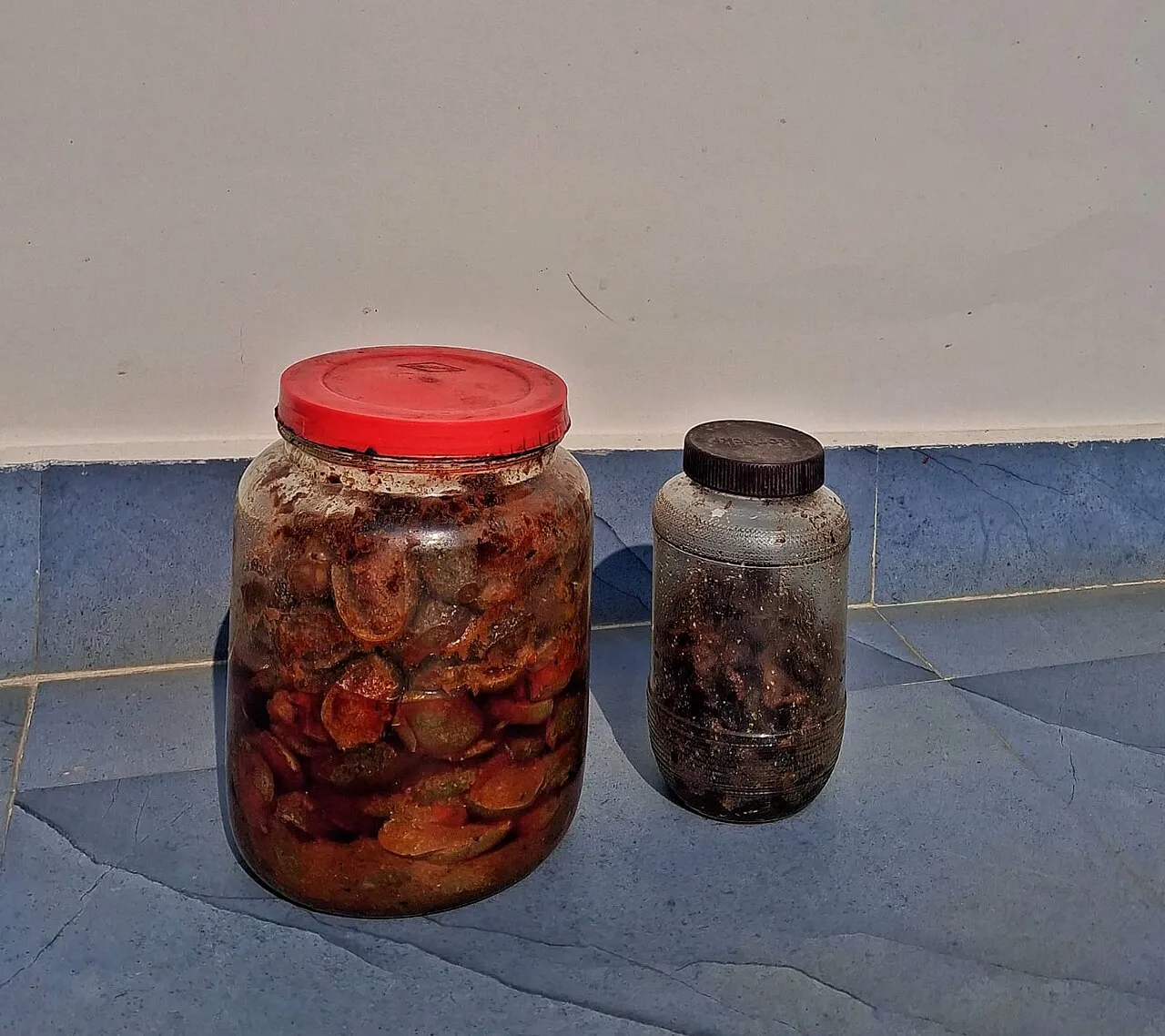
- India Food Network's description of gharab nu achar has the roe pickled in spices and sugarcane vinegar.
- Mavalvala says Parsi achar is usually cooked in oil, then kept under a layer of oil so it lasts. She gives this for achar in general, not for this pickle alone.
- Mirza writes that the sting of the vinegar in Parsi pickles is often softened with a little jaggery or sugar.
The vinegar matters. Mirza writes that most Parsis reach for Kolah's dark, aged sugarcane vinegar, made only in Navsari in Gujarat. Food writer Vir Sanghvi makes a similar point about Parsi prawn pickles, which he says depend on a special vinegar from Navsari.
What we couldn't confirm: the spice list, the ratio of roe to vinegar, whether the roe is cooked or salted before pickling, and how long the finished pickle keeps. None of the sources we could open spells these out, so follow the recipe you are cooking from on all four points.
Where can you find a full recipe?
Mavalvala's The World of Parsi Cooking: Food Across Borders (2019) carries "Pickled Fish Roe, Gharab nu Achar" in its chapter "Mamaiji nu Pinjru", or Grandma's Pantry, next to buffenu, gajar mewa nu achar and a green prawn pickle. Her headnote says it was a speciality of her great-aunt Hilla, and the recipe is sized to make 7 kg. That's a large batch, well beyond a single jar.
When is fish roe in season?
India Food Network says bhing roe is harvested in the monsoon. That's the only source we found giving a season, so treat it as one writer's account. Mavalvala, in The Route to Parsi Cooking (2024), adds the bigger problem: fish roe is seasonal and now hard to find. She remembers roe once being thrown in when her family bought fish from the fisherman who went from house to house. Because roe is now scarce and very costly, she writes, her fish roe and pumpkin stew is one of the recipes lost over the years, and younger generations haven't had the chance to taste it.
Who made Parsi pickles like gharab nu achaar at home?
Mostly women, and mostly together. India Food Network describes pickling in older generations as a group job: once the day's cooking was finished, women gathered in the afternoon to pickle, with the juniors chopping and the experienced hands pounding spices. Mavalvala writes that these household rules fell to the women of the community, and that the skill was learnt more through practice than from written recipes. She adds that families keep these preserves in the larder to eat, to share and to give as gifts. She also notes a Parsi phrase, "achar bharwanu", which means filling pickle and is used, half in jest, for hoarding anything you never get round to using.
Can you still buy gharab nu achaar?
Sometimes. Khodaiji wrote in 2021 that gharab nu achaar and bafenu are hardly ever made at home now, though some Parsi commercial outlets still prepare them. Shabnam Minwalla's Outlook Traveller guide to Parsi food in Mumbai (last updated 2018) mentions Grub Corner stocking E.F. Kolah pickles, including a "fish egg achar". We haven't checked current stock at either, so ring ahead before you travel for a jar.
If roe is hard to come by, the rest of the table is easier. Our guide to Parsi recipes shows where to begin, and our overview of Parsi food covers the wider cuisine. For something quick with eggs, try our tamota per eedu recipe, or browse more Parsi breakfast dishes.
Frequently asked questions
What does gharab mean in Parsi cooking?
Gharab means fish roe. Gharab nu achaar is fish roe pickle, and Niloufer Mavalvala's 2024 book also has gharab kohra no patiyo, a stew of fish roe and pumpkin. Both depend on fresh roe, which is seasonal and, according to Mavalvala, now scarce and expensive. That, she writes, is why the stew has been lost over the years.
Which fish's roe is used for gharab nu achaar?
The roe of the bhing. Parsi Times columnist Dara M Khodaiji describes bhing as a tasty but very bony fish, similar to the Bengali hilsa. India Food Network's 2016 pickle guide translates bhing as herring instead. Both sources agree that the pickle is made from this one fish's roe. They differ only on the English name.
What vinegar is used in Parsi fish roe pickle?
Sugarcane vinegar, according to India Food Network's description of gharab nu achar. SAVEUR's Meher Mirza writes that most Parsis use Kolah's dark, aged sugarcane vinegar from Navsari in Gujarat, and that the sourness of Parsi pickles is often softened with a little jaggery or sugar. Use whatever vinegar your chosen recipe specifies.
Where can I buy gharab nu achaar in Mumbai?
Parsi Times reported in 2021 that some Parsi commercial outlets still make it, though few homes do. An Outlook Traveller guide last updated in 2018 lists Grub Corner in Mumbai as stocking E.F. Kolah pickles, including a "fish egg achar". Stock may well have changed since then, so call the shop before making a special trip.
Is there a published recipe for gharab nu achaar?
Yes. Niloufer Mavalvala's The World of Parsi Cooking: Food Across Borders (2019) includes "Pickled Fish Roe, Gharab nu Achar" in its Grandma's Pantry chapter. She credits the recipe to her great-aunt Hilla, and it makes 7 kg. The book is the most reliable named source we found for exact quantities.


