 PalV's Kasti
On this page
Zoroastrian sky burial, which Parsis call dokhmenashini, has ended in Iran, and the recent sources we found confirm it in two Indian cities. In Iran, Encyclopaedia Iranica records that Tehran replaced its dakhma with a cemetery in 1937, and Kerman and Yazd opened cemeteries in 1939 and 1960. Iranica adds that Zoroastrians in other countries use ordinary undertakers and crematoriums. The practice continues where a community still keeps working towers: in Mumbai at Doongerwadi, which the Bombay Parsi Punchayet (BPP) still runs, and in Surat, where a 2022 Supreme Court order names three dakhmas in use. Karachi's tower was still described as in use in a 2015 news report. The two pressures named in the news reports we read are the loss of vultures and a move towards cremation.
શહેરેવર રોજ
Shehrevar Roj, Tir Mah · 1396 Y.Z.
What does "sky burial" mean for Zoroastrians?
"Sky burial" is the phrase newspapers use for dokhmenashini, the laying of the body in a dakhma, or Tower of Silence, open to the sun and birds. The Hindustan Times used it in December 2016, describing the dakhmas at Doongerwadi as places "where the dead are laid out for a sky burial". The Free Press Journal used it again in February 2025. The reasons Parsis avoid fire and earth are explained in our post on why Parsis don't burn or bury, and what happens to the bones afterwards is in our post on the Parsi well of death.
Is sky burial still practised in Iran?
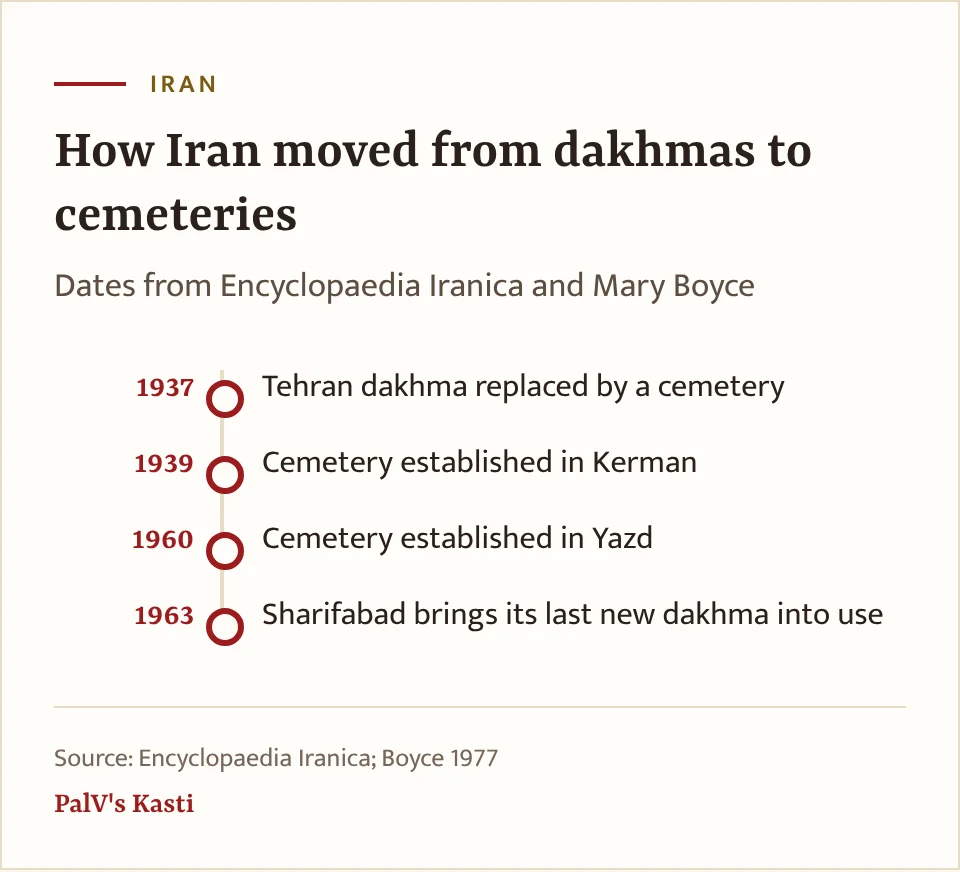
No, according to the published record. Mary Boyce, writing in Encyclopaedia Iranica in 1993, gives the dates: the Tehran dakhma was replaced by a cemetery in 1937, cemeteries were set up in Kerman in 1939 and in Yazd in 1960, and the dakhma at Sharifabad, a village near Yazd, was abandoned about a decade later.
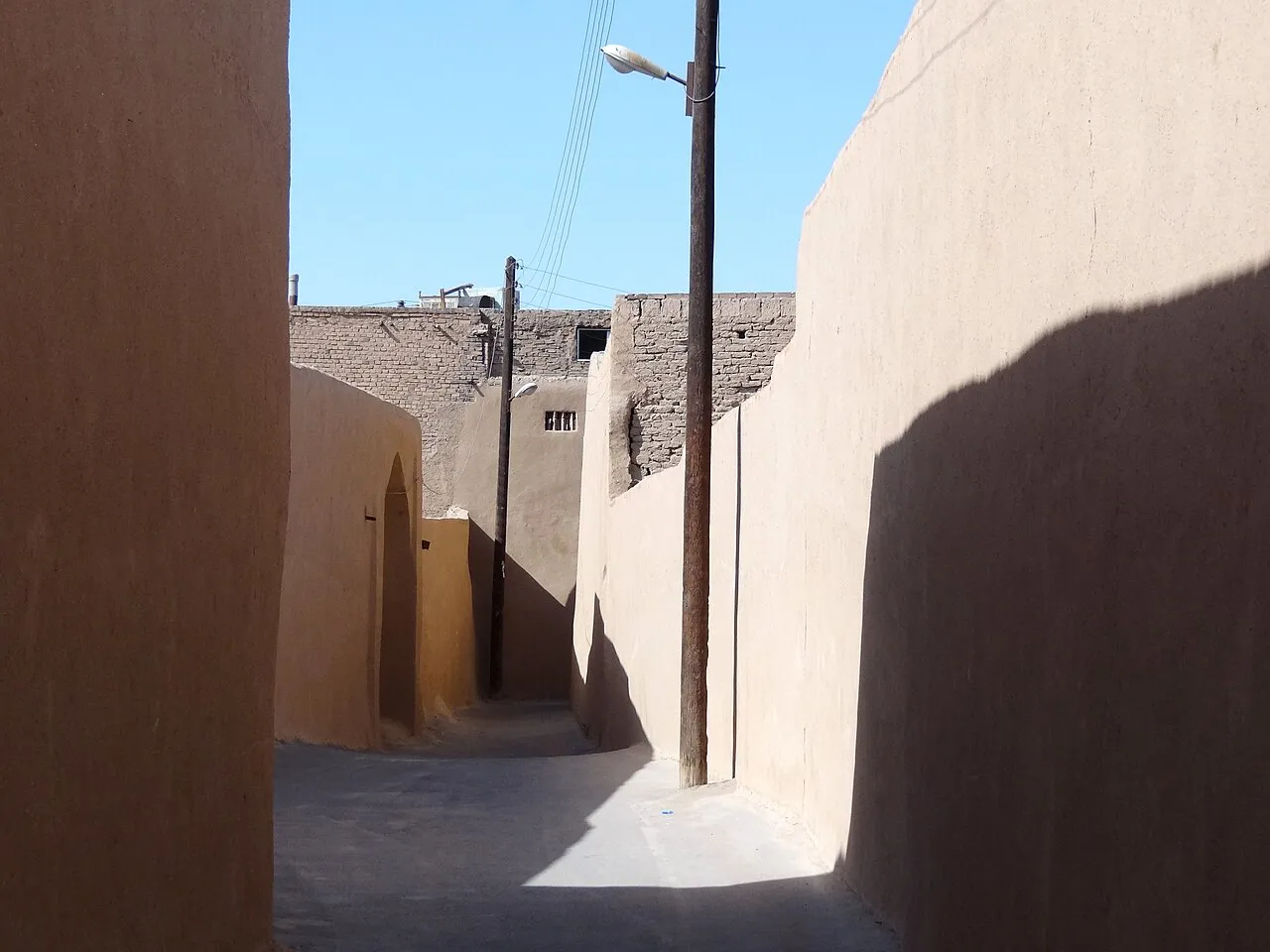

Sources differ on why. The journalist Coomi Kapoor, in her 2021 book "The Tatas, Freddie Mercury & Other Bawas" (Westland), excerpted by Scroll, writes that Reza Shah banned the method in the 1940s. Boyce's Iranica article dates the first cemetery to 1937 and notes that reformist influences were first strongly felt in Iran in the 1930s.
Boyce, in her 1977 book "A Persian Stronghold of Zoroastrianism", writes that the village brought a new dakhma into use in 1963 and that circumstances suggested it would be the last ever built in Iran. A Down To Earth photo caption from November 2025 says the Tower of Silence in Yazd is no longer in use.
Where is Zoroastrian sky burial still practised in India?
Mumbai and Surat are the two places our sources confirm with recent dates.
Mumbai (Doongerwadi)
The BPP's website, as we read it in November 2026, says Doongerwadi has five dokhmas, of which three (Anjuman, Sethna and Bisni) are "constantly functional", with a fourth, the Banaji dokhma, out of use for now. In February 2025 the BPP chairman Viraf Mehta told the Free Press Journal that "the existing system is functioning without any hiccups", even though the solar equipment installed there had broken down before the pandemic. In August 2026 he told the same paper that the BPP had a donor and a plot for a vulture aviary at Doongerwadi, a project on which the Bombay Natural History Society is working with the trust. Mehta said the plan was held up by one problem: finding a test that is not too intrusive to tell which bodies carry diclofenac, the veterinary drug that kills vultures.
Surat
In the Surat Parsi Panchayat Board's case, the Supreme Court of India recorded an agreed protocol on 4 February 2022 for Parsis who died of COVID-19. Under it, Dokhma No. 3 was set aside for COVID victims, while other bodies would go to Dokhma No. 1 and No. 2.
Places without a tower
Where there is no tower, families use burial or cremation. ThePrint, in January 2022, gave Delhi as an example of a city with no tower of silence. Kapoor's book says Parsis in India keep to dokhmenashini "in towns that have dakhmas".
Is it still practised in Pakistan and elsewhere?
In September 2015, an AFP report carried by Dawn described Karachi's tower of silence, in the city's Parsi neighbourhood, as a place where the remains of the dead are "left in the open to be consumed by vultures". We found no 2024 to 2026 source confirming its current use. In May 2024, The Guardian reported that the decline of vultures was making traditional Zoroastrian rites "impossible to perform", and quoted Hoshang Kapadia, who lives in Karachi and is in his 80s, saying: "We are no longer able to fulfil our traditions."
For Zoroastrians living in other lands, Iranica says they "have to make use of general undertakers and public crematoriums".
Why is sky burial disappearing?
The sources we read give two reasons.
First, the loss of vultures. The Free Press Journal (August 2026) reports that India's vulture numbers fell sharply because of diclofenac in cattle carcasses, and that dokhmenashini was severely affected. Down To Earth (November 2025) writes that the decline has forced Parsis to look at alternatives. ThePrint (January 2022) reported concerns about the time bodies take at the towers since the drop in vultures. More on the birds is in our post on vultures and the Tower of Silence.
The second is a growing choice of cremation, which divides the community. Scroll reported in April 2016 that after a Zoroastrian prayer hall opened at the Worli crematorium in August 2015, Parsiana editor Jehangir Patel estimated that at least 15% of Mumbai's Parsis were choosing cremation. Dinshaw Tamboly, who campaigned for the hall, told Scroll he expected that number to grow. On the other side, Open magazine reported in July 2016 that orthodox Parsis hold that cremation desecrates fire, which is holy, and that burial pollutes the earth. Writing in Iranica in 1993, Boyce noted that in Bombay orthopractic priests would not perform funeral rites if the body was cremated. Down To Earth reports that people online cited the cremation of Ratan Tata in this debate.
Practice varies between families and Agiaries; your family priest's guidance comes first.
Frequently asked questions
Do Parsis still use sky burial?
Yes, where a working tower exists. The Bombay Parsi Punchayet's website lists three functioning dokhmas at Doongerwadi, Mumbai, and a February 2022 Supreme Court order names three dokhmas in Surat. Elsewhere, ThePrint reported in 2022, families turn to burial or cremation because there is no tower, as in Delhi, or because bodies take longer since vultures declined.
Where is Zoroastrian sky burial still practised?
Recent sources confirm Mumbai's Doongerwadi (BPP website, Free Press Journal 2025 and 2026) and Surat (Supreme Court order, 2022). An AFP report in Dawn described Karachi's tower in use in 2015. Iran began replacing its dakhmas with cemeteries in 1937, and Zoroastrians abroad use ordinary undertakers and crematoriums.
Is the Yazd Tower of Silence still used?
No. Encyclopaedia Iranica records that Yazd opened a cemetery in 1960, and a Down To Earth photo caption from November 2025 says the Tower of Silence in Yazd is no longer in use. Mary Boyce wrote in 1977 that the Sharifabad dakhma of 1963 was likely to be the last built in Iran.
Why is Zoroastrian sky burial declining?
The sources point to two causes. Vulture numbers in India fell sharply because of the veterinary drug diclofenac, so bodies take longer at the towers. More Parsis also choose cremation: Scroll reported in 2016 that at least 15% of Mumbai's Parsis did so after the Worli prayer hall opened in 2015. Orthodox Parsis oppose it.
When did Iran stop using Towers of Silence?
Encyclopaedia Iranica says Tehran replaced its dakhma with a cemetery in 1937, followed by Kerman in 1939 and Yazd in 1960, with Sharifabad's dakhma abandoned about a decade later. Coomi Kapoor's 2021 book instead says Reza Shah banned the practice in the 1940s. The two accounts differ on dates and cause.


