PalV's Kasti
On this page
- When did the first Parsis come to Canada?
- Which were the first Zoroastrian associations in Canada?
- How did Parsis in the Greater Toronto Area build their Darbe Mehr?
- How did the community grow in British Columbia?
- Where do Parsis live in Canada today?
- What part did Canadian Zoroastrians play in forming FEZANA?
- Frequently asked questions
The first Parsi on record reached Canada in 1866, but Parsis settled in real numbers only from the 1960s, once they could enter as landed immigrants. The families who arrived then built the community themselves. They met in rented halls, founded the Zoroastrian Society of British Columbia in 1968 and the Zoroastrian Society of Ontario in 1971, and later received gifts from the Guiv family that gave both societies a Darbe Mehr of their own: Toronto in 1980 and Burnaby in 1985. The 2021 Census of Canada counted 7,285 Zoroastrians, Parsi and Iranian together, and 3,895 of them lived in the Toronto area.
This page is part of our series on the Zoroastrian diaspora, which follows the Parsi diaspora and other Zoroastrians abroad.
શહેરેવર રોજ
Shehrevar Roj, Tir Mah · 1396 Y.Z.
When did the first Parsis come to Canada?
The earliest arrival on record is a single man. In a 2009 paper in the journal Iranian Studies, historian Richard Foltz, drawing on John Hinnells' study of the Zoroastrian diaspora, names Pheroze Sethna as the first Parsi known in Canada, in 1866. Foltz adds that Parsi students were already studying at the University of Toronto "as early as 1922".
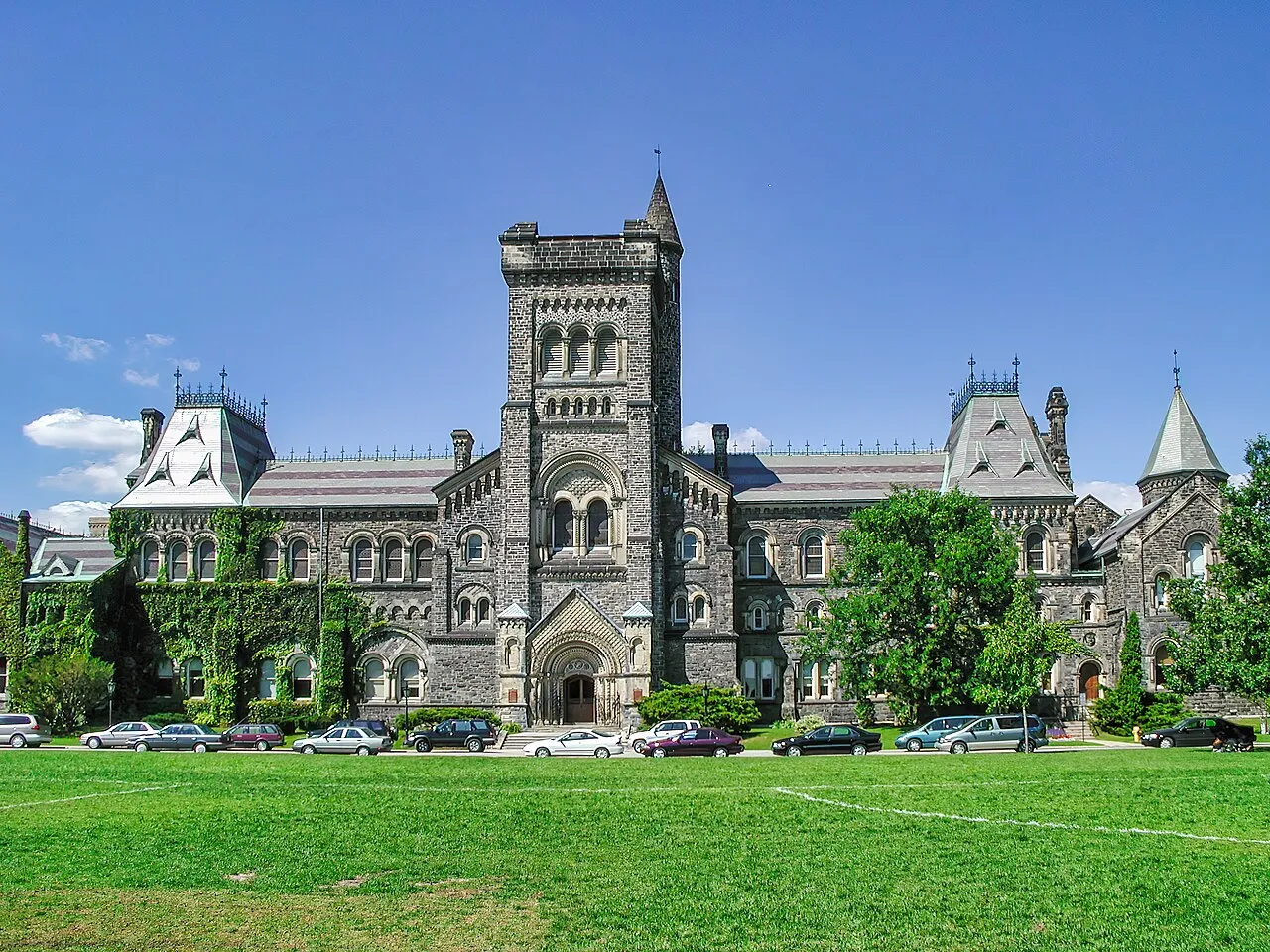
Settlement came four decades later. Foltz writes that Parsis were given landed immigrant status from the early 1960s. The Zoroastrian Society of Ontario (ZSO) tells the same story from its side, tracing its "humble beginnings" to the mid-1960s, when the first wave of Zarathushtis moved to Canada and settled in and around Toronto.
Montreal mattered early on. Foltz notes that Montreal, the country's leading city until the 1970s, had a very active Zoroastrian community, and that the Toronto and Vancouver communities have since grown far larger.
Parsis were not alone for long. Foltz's paper is about Iranian Zoroastrians, and in 2009 he called Canada "the number-one destination for Iranian migrants". He also observed that the two groups share places of worship but still largely live in separate spheres. The ZSO notes that Zarathushtis from India and Pakistan mostly speak Gujarati, and those from Iran mostly Farsi.
Which were the first Zoroastrian associations in Canada?
Two societies give their founding dates on their own websites. The Zoroastrian Society of British Columbia (ZSBC) says it was founded on 22 February 1968 by about twenty Zarathushti families. The ZSO says it was set up and registered in 1971 as a not-for-profit religious body, and that in its early years it held its meetings and activities in rented places.
Harvard's Pluralism Project points out that several of the oldest North American Zoroastrian associations that are still active were started in Canada. Today the Federation of Zoroastrian Associations of North America (FEZANA) lists five Canadian member associations on its website:
- Ontario Zoroastrian Community Foundation (OZCF), Oakville, Ontario
- Zoroastrian Association of Alberta (ZAA), Rocky View County, Alberta
- Zoroastrian Association of Quebec (ZAQ), Beaconsfield, Quebec
- Zoroastrian Society of British Columbia (ZSBC), Burnaby, British Columbia
- Zoroastrian Society of Ontario (ZSO), Willowdale, Toronto
FEZANA also lists two smaller Canadian groups: the Zoroastrian Association of Atlantic Canada and the Zoroastrians of London, Ontario.
How did Parsis in the Greater Toronto Area build their Darbe Mehr?
The Toronto Darbe Mehr was the gift of one benefactor. The ZSO credits Arbab Rustom Guiv, whom it describes as a prominent Zarathushti of Iran, with a large cash donation that bought the property at 3590 Bayview Avenue and paid for improvements, including a large assembly hall. The property belongs to a trust, the Rustom Guiv Foundation of Ontario, which leases it to the ZSO for 999 years at one cent a year, according to the society.
The ZSO gives the date its centre opened for worship: the inaugural Jashan was held on 21 September 1980. The building is named the Mehraban Guiv Darbe Mehr after Arbab Guiv's nephew. The ZSO says it is now busy with Fasli and Shahenshahi Muktads, Gahambars, Jashans, navjotes, weddings, post-funeral prayers, religion classes and youth sports.
The Toronto community also has its own scouts. The Pluralism Project records a Zoroastrian troop, Troop Toronto 100, founded in 1990, and the ZSO names the "First Zoroastrian – 100th Toronto Scout Group" among the groups that meet at its centre.
The community did not stay on Bayview Avenue alone. In his 2009 paper, Foltz mentions a newer branch site in Mississauga, used mainly by Parsis. The Pluralism Project counts three Canadian Dar-e-Mehrs: Toronto, Mississauga and Vancouver.
What is the OZCF property in Oakville?
The Ontario Zoroastrian Community Foundation is FEZANA's second Ontario member, based in Oakville, which FEZANA calls a suburb of Toronto. FEZANA reported in July 2016 that the OZCF owns a 10-acre property there, and that a fundraising gala at the Oakville Convention Centre, attended by more than 400 Parsi and Iranian guests, raised over $2,240,000 towards a Cdn$3 million target for a proposed Atashkadeh. FEZANA described the plan as a consecrated place of worship with a consecrated Atash-e-Adaran. In his 2009 paper, Foltz had noted that the Canadian Zoroastrian centres he wrote about, though called temples, had not been fully consecrated. We have not found a dated source on the project's progress after 2016, so we do not describe where it stands today.
How did the community grow in British Columbia?
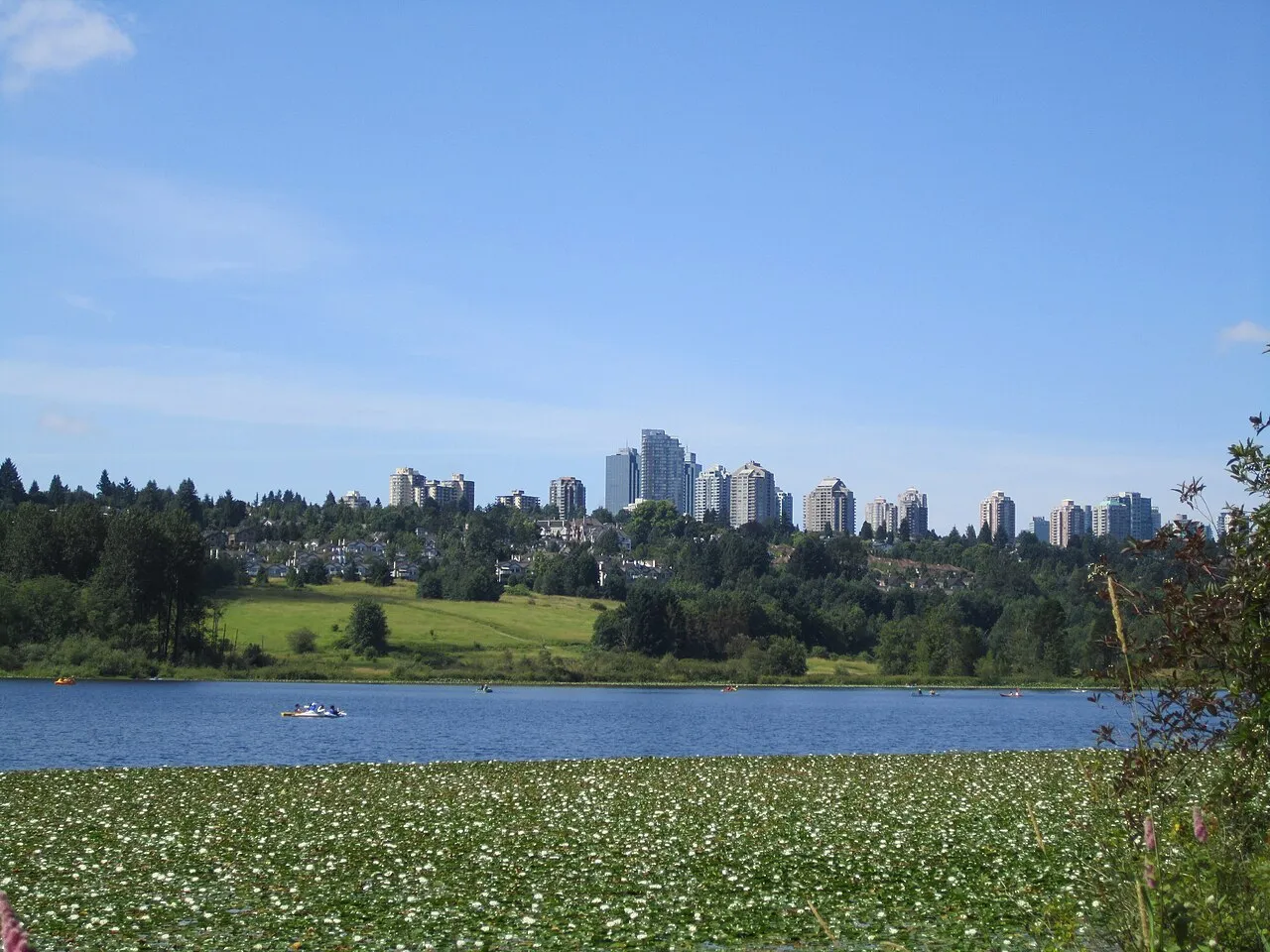
The ZSBC's own figures show the growth plainly. It began in 1968 with about twenty families and now describes itself as a society of more than 513 families. Its Darbe Mehr, which it calls its community centre, is at 6900 Halifax Street, Burnaby. The society says the Burnaby property was bought in 1985 with a gift from the late Mrs Morvarid Guiv, the wife of Arbab Rustom Guiv.
Where do Parsis live in Canada today?
Mostly in two city regions. Statistics Canada's 2021 Census table on religion counts people as "Zoroastrian" and does not separate Parsis from Iranian Zoroastrians. It gives 7,285 Zoroastrians in Canada. Of these, 4,785 lived in Ontario, including 3,895 in the Toronto census metropolitan area. British Columbia had 1,675, with 1,535 in the Vancouver area. Alberta had 415 (275 in the Calgary area) and Quebec 310 (275 in the Montreal area).
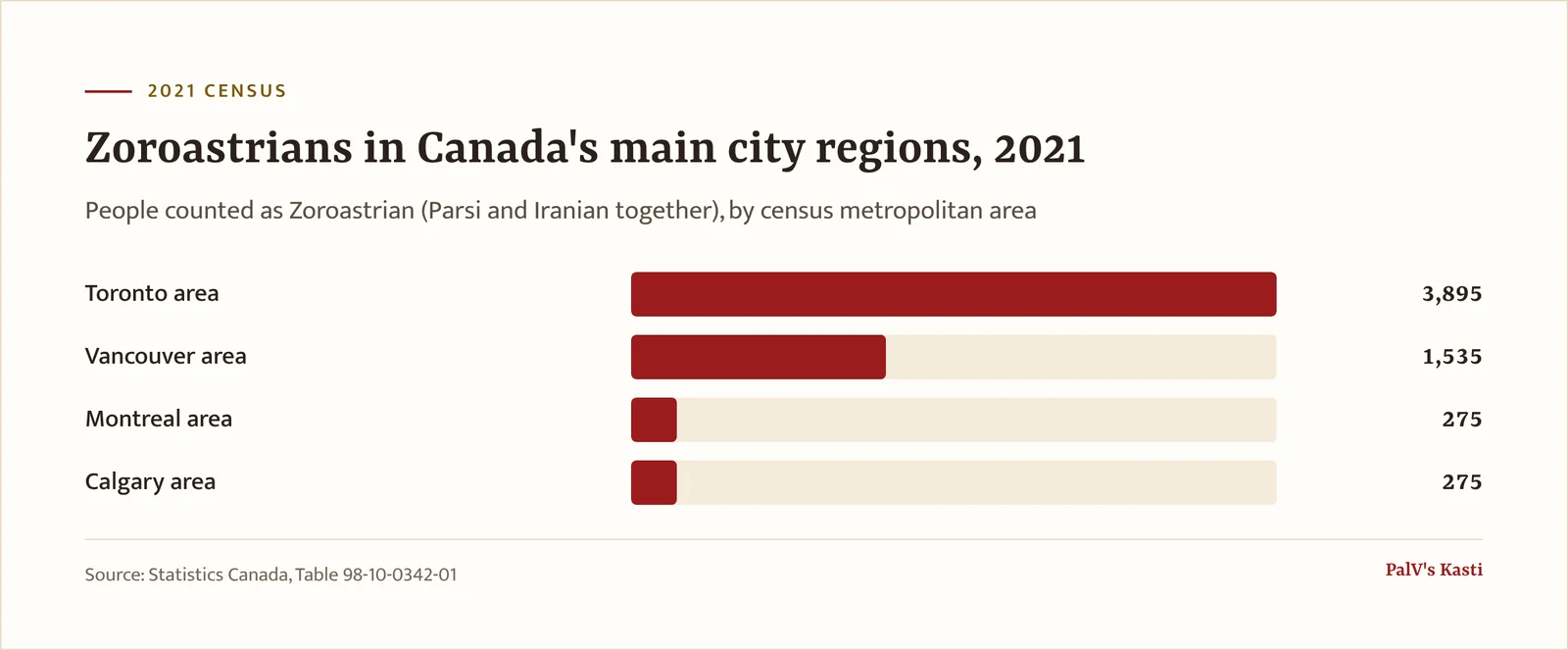
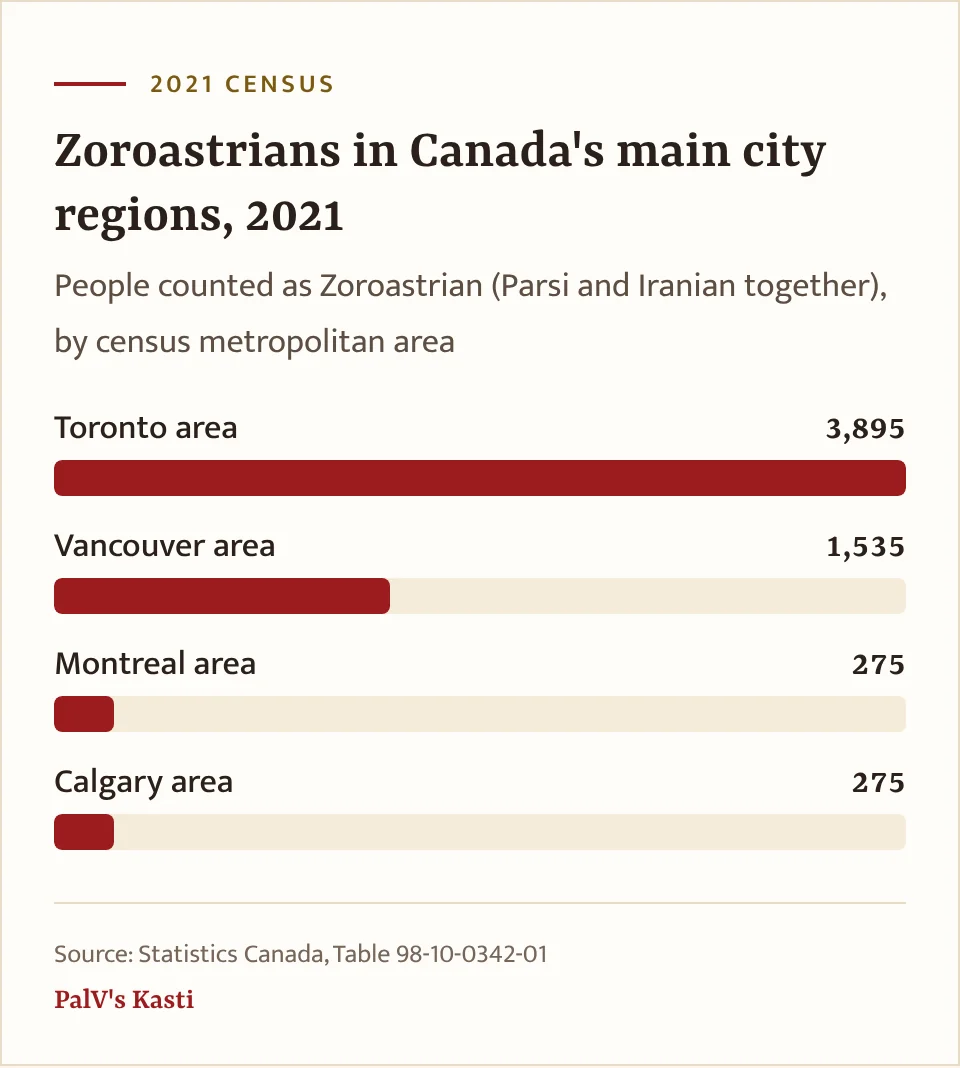
By our calculation, the Toronto and Vancouver areas together hold about three in four of Canada's Zoroastrians, which matches where the first societies and Darbe Mehrs were built. The same table counts 5,730 of the 7,285 as first generation. The census figures are based on 25% sample data for people in private households.
How families raised in Canada keep the religion going is the subject of our post on diaspora Zoroastrian identity. For the community the emigrants left behind, see our page on the Parsi population in India, and for a far smaller community in Europe, read about Zoroastrians in Italy.
What part did Canadian Zoroastrians play in forming FEZANA?
A founding one. FEZANA's own history says that at the Fifth North American Congress in Los Angeles in 1985, Homi Minocher Homji of Toronto put forward the proposal for a structured North American federation. It also credits Alberta, represented by Firdosh Mehta, with adding the "E" to the name, which had been drafted as FZANA.
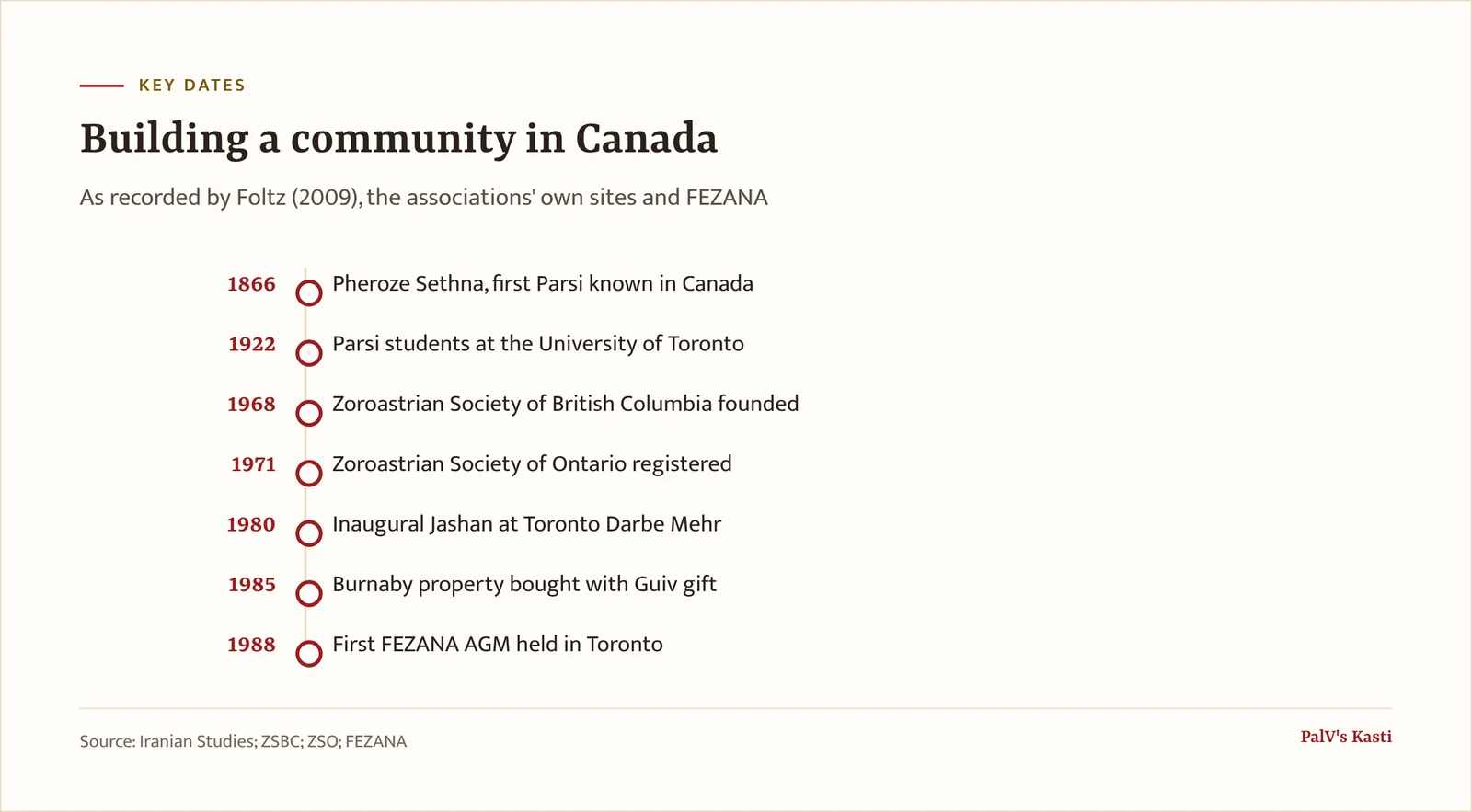
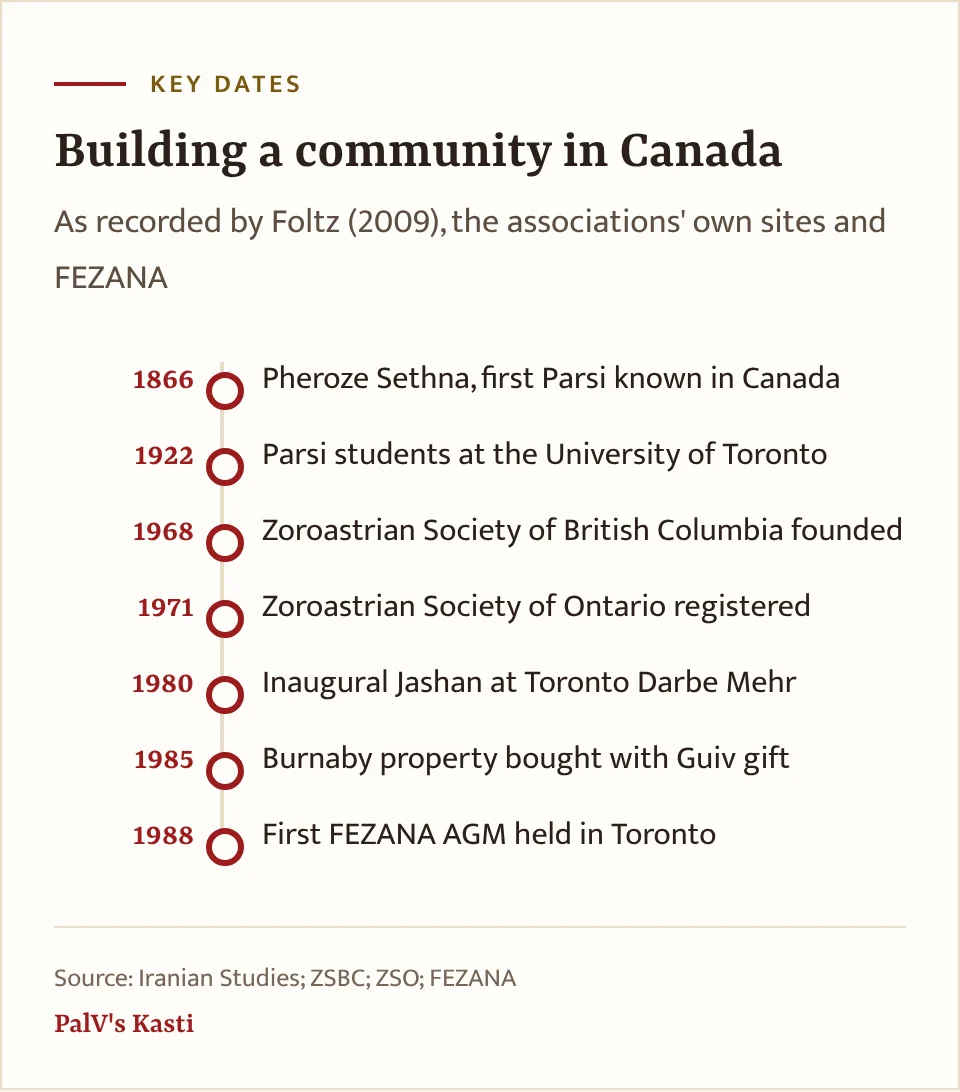
The federation's first Annual General Meeting was held in Toronto on 1 April 1988, hosted by the ZSO. By FEZANA's list, Canadian associations have since hosted seven more: Kirkland, Quebec (1989), Vancouver (1992), Alberta (1993), Montreal (2002), Oakville (2010), Pointe-Claire, Quebec (2011) and Toronto again in 2025.
Toronto also hosted an early gathering of priests. Dr Kersey H. Antia, in an essay published on avesta.org, records that priests in North America met in large numbers in Toronto in November 1983 and agreed on certain matters, though not on everything.
Frequently asked questions
Where do most Zoroastrians in Canada live?
Most live around Toronto and Vancouver. The 2021 Census of Canada, which counts Parsis and Iranian Zoroastrians together, found 3,895 Zoroastrians in the Toronto area and 1,535 in the Vancouver area, out of 7,285 nationally. Statistics Canada based these figures on 25% sample data for people living in private households.
When did Parsis first come to Canada?
Historian Richard Foltz, drawing on John Hinnells, names Pheroze Sethna, in 1866, as the first Parsi known in Canada. Parsi students were at the University of Toronto by 1922. Settlement in numbers began after Parsis received landed immigrant status in the early 1960s, and the first wave of families reached Toronto in the mid-1960s.
Where is the Zoroastrian centre in Toronto?
The Zoroastrian Society of Ontario's Darbe Mehr, named the Mehraban Guiv Darbe Mehr, is at 3590 Bayview Avenue, Toronto. The society says its inaugural Jashan was held on 21 September 1980. Historian Richard Foltz reported a branch site in Mississauga in 2009, and FEZANA reported in 2016 that the Ontario Zoroastrian Community Foundation owns a separate 10-acre property in Oakville.
Is there a fire temple in Canada?
In 2009 historian Richard Foltz wrote that the Canadian Zoroastrian centres he studied, though called temples, had not been fully consecrated. In 2016 FEZANA reported fundraising by the Ontario Zoroastrian Community Foundation for a consecrated Atashkadeh in Oakville. We have not found a recent source confirming its completion, so its current status is unknown to us.
What is the Zoroastrian Society of Ontario?
The Zoroastrian Society of Ontario is a not-for-profit religious body founded and registered in 1971 by Zarathushtis who settled around Toronto from the mid-1960s. It runs the Mehraban Guiv Darbe Mehr on Bayview Avenue and calls itself the largest association of Zarathushtis on the continent. It hosted FEZANA's first AGM in 1988.