PalV's Kasti
On this page
Each of the five Gah prayers invokes its own Yazatas. In James Darmesteter's translation, the Hawan Gah turns to Mithra and Raman Khwastra, the Rapithwin Gah to Asha Vahishta and Atar, the Uzerin Gah to Apam Napat and the waters made by Mazda, the Aiwisruthrem Gah to the Ashavan Fravashis, and the Ushahin Gah to Sraosha with Rashnu and Arshtad. Before them, every Gah first addresses the watch itself and then a pair of lords tied to it, such as Savanghi and Visya in the Hawan Gah. Yasna 1 and Sirozah 1 put the same Yazatas in the same watches. Are these the "hamkars" of each Geh? Not in the prayer texts, which never use the word. But Ervad Ramiyar Karanjia, who says hamkar literally means "co-workers", sets out each Geh's Yazad and its co-worker in a table, and we give his list below.
શહેરેવર રોજ
Shehrevar Roj, Tir Mah · 1396 Y.Z.
Which Yazatas are invoked in each Gah?
These are the Yazatas named in the second paragraph of each Gah, with the spans printed in Darmesteter's edition on avesta.org.
| Geh | Span as printed | Yazatas named in paragraph 2 |
|---|---|---|
| Hawan | sunrise to midday | Mithra of wide pastures, and Raman Khwastra |
| Rapithwin | midday to mid-afternoon | Asha Vahishta, and Atar, son of Ahura Mazda |
| Uzerin | mid-afternoon to sunset | the lofty Ahura Apam Napat, and the waters made by Mazda |
| Aiwisruthrem | sunset to midnight | the Ashavan Fravashis, the women with their troops of heroes, the Yairya Hushitay, Ama, Verethraghna and Uparatat |
| Ushahin | midnight to dawn | Sraosha, companion of Ashi, with Rashnu Razishta and Arshtad |
The Hawan Gah gives Mithra "a thousand ears, ten thousand eyes". Aiwisruthrem has the longest list, six entries, where each of the other four Gahs names two or three. One small point on the Ushahin row: the avesta.org English prints only "the very straight Razishta", but the Avestan line beside it reads rashnaosh razishtahe, and both Sirozah 1 and Yasna 1.7 name Rashnu here.
For more on the afternoon watch and Apam Napat, see our article on Uziran Geh.
Who are the paired lords named first in each Gah?
In its first paragraph, after addressing the watch, every Gah names two beings honoured with it. They come before the main Yazatas.
| Geh | Pair in paragraph 1 of the Gah (Darmesteter) | Pair in Yasna 1 (Mills, avesta.org edition) |
|---|---|---|
| Hawan | Savanghi and Visya | Savanghi and Visya (1.3) |
| Rapithwin | Fradat-Fshu and Zangtuma | Fradat-fshu and Zangtuma (1.4) |
| Uzerin | Fradat-Vira and Dakhyuma | Fradat-vira and Dakhyuma (1.5) |
| Aiwisruthrem | Fradat-vispam-hujyaiti and Zarathushtrotema | Zarathushtrotema, and "him who possesses and who gives that prosperity in life" (1.6) |
| Ushahin | Berejya and Nmanya | Berejya and Nmanya (1.7) |
In Yasna 1, each pair is called the "Asha-sanctified master(s) of Asha".
The Aiwisruthrem row doesn't line up neatly. Darmesteter's Gah names Fradat-vispam-hujyaiti beside Zarathushtrotema, and calls Aiwisruthrem itself the watch "that furthers life". Yasna 1.6 names Zarathushtrotema, but where the Gah has a second name, it addresses a being who gives "prosperity in life". It also puts Aibigaya beside Aiwisruthrem, with the footnote "Or, 'who furthers life.'" We've kept both readings side by side rather than force them to match. What the individual names mean is covered in our article on what each Geh's name means.
What does hamkar mean, and do the Gah prayers use the word?
Ervad Ramiyar Karanjia explains that the term refers to divine beings, Ameshaspands and Yazads, "who have similar or common functions", and that the word "literally means 'co-workers'". In a Jame Jamshed column he applies it to the Yazads who work under each Ameshaspand: "These are called the Hamkars of the Ameshaspand".
The Gah texts don't use the word. We searched Darmesteter's edition of all five Gahs on avesta.org and found no mention of hamkars.
Karanjia does, though, pair each Geh with co-workers. His column "5 Gehs – An Understanding" has a table headed "Geh Yazads & their co-workers". For each watch it gives the watch's own Yazad and the first of its paired lords, Hāvani and Sāvanghi for Havan, for example, and then an "associate divine being". Noshir H. Dadrawala, writing in Parsi Times on 1 November 2025, names a presiding divinity for each Geh, and his list matches Karanjia's:
| Geh | Associate divine being (Karanjia) | Presiding divinity (Dadrawala) |
|---|---|---|
| Havan | Meher Yazad | Meher Yazata |
| Rapithwin | Ardibahesht Ameshaspand | Ardibehesht Amshaspand |
| Uziran | Berez Yazad | Berez Yazata |
| Aiwisruthrem | Asho Farohars (Fravashis) | all the Holy Fravashi |
| Ushahin | Sarosh Yazad | Sarosh Yazata |
Uziran is the one row where both writers name a being, Berez, who does not appear in the second paragraph of the Gah. Both also note that from the beginning of Avan Mah to the Vahishtoisht Gatha, the Hawan Gah is recited in the Rapithwin hours. That custom is explained in our article on Second Havan (Biji Havan) Geh.
Practice varies between families and Agiaries; your family priest's guidance comes first.
Do the other Avestan texts agree on these Yazatas?
Yes. Two other texts give the same main Yazatas to the same watches, which makes a useful cross-check.
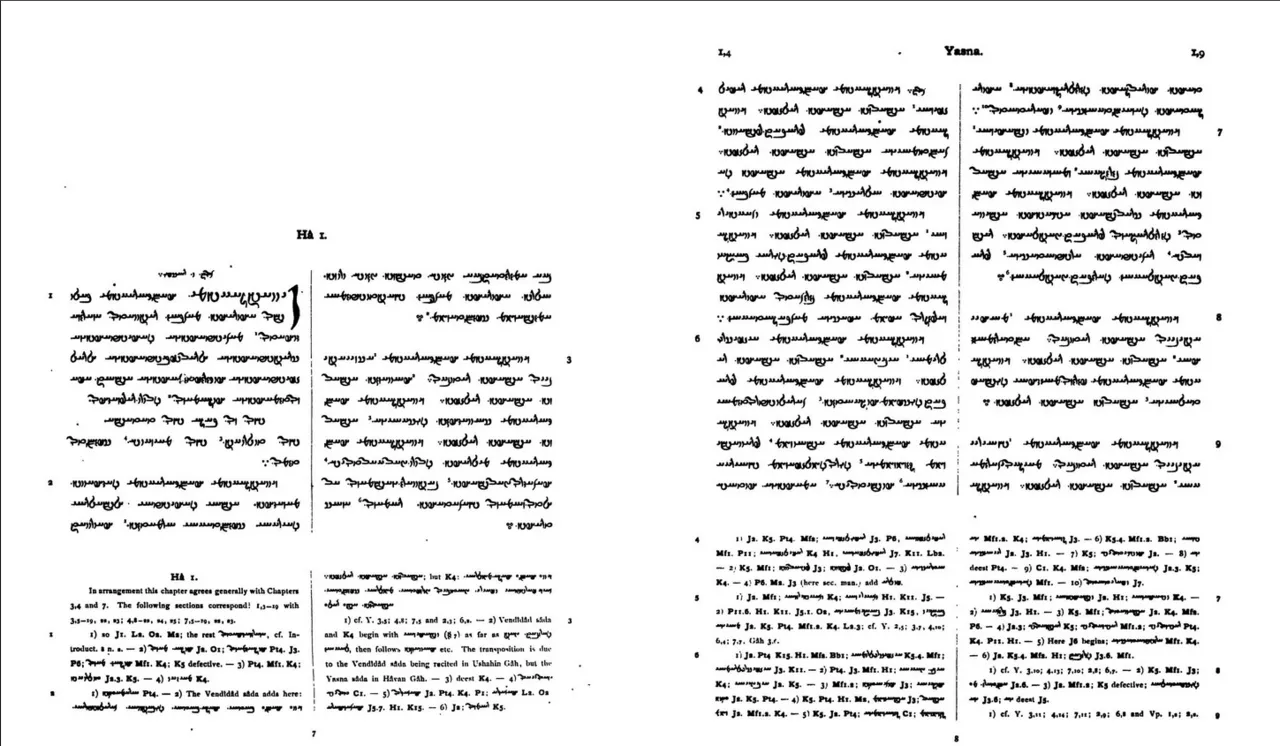
Yasna 1. The opening chapter of the Yasna announces the sacrifice to each watch in turn. In the avesta.org edition of L.H. Mills's translation, Hawan comes with Mithra of wide pastures and Raman Khwastra (1.3), and Rapithwin with "Asha the Best" and the Fire of Ahura Mazda (1.4). Uzerin comes with "that lofty Ahura Napat-apam (the son of waters)" (1.5), and Aiwisruthrem with "the fravashis of the saints" (1.6). Ushahin comes with Sraosha and "the very straight Rashnu and Arshtad" (1.7).
Sirozah 1. Sirozah 1, in Darmesteter's translation on avesta.org, gives a short line for each Geh:
- Hawan: Mithra, "the lord of wide pastures", with Rama Hvastra.
- Rapithwin: Asha-Vahishta, then Atar, "the son of Ahura Mazda".
- Uzerin: "Apam Napat, the tall lord", with the water Mazda made.
- Aiwisruthrem: "the Fravashis of the faithful", running on through the prosperity of the seasons to Verethraghna.
- Ushahin: "the holy, devout, fiend-smiting Sraosha", followed by Rashnu Razishta and Arshtat.
Why is the evening watch tied to the Fravashis?
Of the five watches, Aiwisruthrem has the clearest link to one group of beings. Mary Boyce writes in Encyclopaedia Iranica that the fourth watch, "from sunset to midnight", is held to be under the Fravashis' protection. The Gah, Yasna 1.6 and Sirozah 1 all put the Fravashis first for this watch, and Karanjia and Dadrawala both give it to the Fravashis too. The full picture of that watch is in our article on Aiwisruthrem Geh, the evening watch from sunset, and the five prayer texts are described in the five Gah prayers in the Khordeh Avesta and on our Geh prayers page. For timings and an overview of all five, see our guide to the Five Gehs.

Frequently asked questions
Which Yazatas are invoked in Hawan Geh?
The Hawan Gah invokes Mithra of wide pastures and Raman Khwastra in its second paragraph, in James Darmesteter's translation. Yasna 1.3 and Sirozah 1 name the same two with the Hawan watch. Before them, the Hawan Gah addresses the paired lords Savanghi and Visya. Karanjia and Dadrawala name Meher Yazad for this Geh.
Which Yazatas belong to Rapithwin Geh?
The Rapithwin Gah invokes Asha Vahishta and Atar, son of Ahura Mazda. Yasna 1.4, in the avesta.org edition of Mills, names Asha the Best and the Fire of Ahura Mazda with Rapithwin. The paired lords named first in the Rapithwin Gah are Fradat-Fshu and Zangtuma. Karanjia and Dadrawala give this Geh to Ardibahesht.
Which Yazatas are invoked in Uziran Geh?
The Uzerin Gah, as Darmesteter spells it, invokes the lofty Ahura Apam Napat and the waters made by Mazda. Sirozah 1 calls Apam Napat "the tall lord" in its line for this watch. The paired lords named first are Fradat-Vira and Dakhyuma. Karanjia and Dadrawala name Berez Yazad as this Geh's associate.
Which Yazatas are invoked in Ushahin Geh?
The Ushahin Gah invokes Sraosha, companion of Ashi, together with Rashnu Razishta and Arshtad. Yasna 1.7 names Sraosha with "the very straight Rashnu and Arshtad" for Ushahin. The paired lords named first in the Ushahin Gah are Berejya and Nmanya. Karanjia and Dadrawala both give this Geh to Sarosh Yazad.
What is a hamkar?
Ervad Ramiyar Karanjia explains that hamkar literally means "co-workers" and refers to divine beings with similar or common functions. He uses it for the Yazads who work under each Ameshaspand. The Gah prayers don't use the word, but Karanjia's table of Geh Yazads and their co-workers pairs each watch with one of its paired lords, such as Sāvanghi for Havan.