PalV's Kasti

On this page
The five Geh names are Avestan names for parts of the day, and the texts we checked mostly tell you what time each name covers, not what the word means. The Bundahishn, in E. W. West's translation, calls Havan "the period of daybreak", Rapithwin "the period of midday" and Uziran "the period of afternoon". It runs Aiwisruthrem from the appearance of the stars until midnight, and Ushahin from midnight "until the stars become imperceptible". Rapithwin is the one name with a word-level reading we could check: Ervad Marzban J. Hathiram derives it from "arem" and "pithwa", nourishment. For the other four, Parsi writers offer spiritual readings, such as Havan as "pounding" and Aiwisruthrem as hearing. The word Geh itself means "time".
શહેરેવર રોજ
Shehrevar Roj, Tir Mah · 1396 Y.Z.
What does the word Geh mean?
Geh, also written Gah, means "time" or "period of time", as Ervad Ramiyar Karanjia's site puts it. Mary Boyce, writing in Encyclopaedia Iranica, says gāh means either "place" or "time" in Middle Persian, Parthian and New Persian. In priestly use, she traces it back to Avestan gāθā-, the word for Zarathushtra's hymns.
Boyce is candid that the link between hymn and hour is unclear. Why gāθā- came to name the day-divisions, she writes, "is not certain". L. H. Mills, who translated the Gah prayers for the Sacred Books of the East in 1887, offered a guess in a footnote: the term may have come from chanting the Gathas at fixed times of the day. How the day came to have five Gehs at all is a separate question, covered in why the Zoroastrian day has five Gehs.
How are the Geh names written in Avestan and Pahlavi?
Each Geh name has an Avestan form, used in the prayers, and a Pahlavi form, used in the Middle Persian books. Parsi writers spell them in more than one way too, so the same Geh turns up as Havan or Hawan, and as Ushahin or Ushahen.
| Usual Parsi spellings | Avestan form (West) | Pahlavi form (Bundahishn, West) | What the Bundahishn says the period is |
|---|---|---|---|
| Havan, Hawan, Hāvan | Hâvani | Hâvan | "the period of daybreak" |
| Rapithwin, Rapithwan | Rapithwina | Rapîtvîn | "the period of midday" |
| Uziran, Uzerin, Uzirin | Uzayêirina | Aûzêrîn | "the period of afternoon" |
| Aiwisruthrem | Aiwisrûthrema | Aîbisrûtêm | from the appearance of the stars until midnight |
| Ushahin, Ushahen | Ushahina | Aûshahîn | from midnight "until the stars become imperceptible" |
The Avestan and Pahlavi forms come from West's translation of the Bundahishn and his footnote listing the Avesta names (Sacred Books of the East, volume 5). The Parsi spellings are the ones used on avesta.org (Hawan, Rapithwin, Uzerin, Aiwisruthrem, Ushahin), on Ervad Ramiyar Karanjia's site (Hāvan, Rapithwan, Uziran, Ushahen) and by Ervad Marzban J. Hathiram (Havan, Uzirin). Mills, in his translation of the Gahs, writes Aiwisrûthrima where West has Aiwisrûthrema.
These Bundahishn periods are descriptions, not clock times. Each Geh begins at a point fixed by the sun or the stars, so its start moves through the year and from one city to the next. We don't give fixed times here. Our guide to the five Gehs explains the timings.
What does Rapithwin mean?
Rapithwin is the midday Geh: the Bundahishn calls it "the period of midday", and Mills's footnote says the Rapithwin Gah is recited every day at the hour of Rapithwina.
For the word itself, Ervad Marzban J. Hathiram writes that Rapithwin is derived from "arem", which he glosses as righteous or timely, and "pithwa", nourishment. So in his reading the name points to timely nourishment at the middle of the day.
The older form of the name shows up in the Gathas. Ervad Ramiyar Karanjia's site names Arempithwa, the mid-day, as one of three divisions of the day found in Yasna 44.5, and the English of that verse on avesta.org asks who made "morning, noon, and night".
Rapithwin isn't prayed all year. Hathiram and the English Khordeh Avesta of Prof. Ervad Maneck F. Kanga both say that for five months, from Mah Avan onwards, the Havan Gah is recited in its place, a period called the Second Havan. Why that happens belongs to our Rapithwin Geh guide.
Practice varies between families and Agiaries; your family priest's guidance comes first.
What does Havan mean?
The sources we could open describe Havan as a time rather than explain the word. In the Bundahishn, Havan is "the period of daybreak". In the first chapter of the Yasna, Mills translates the invocation as "to Hâvani the holy, the lord of the ritual order".
Ervad Ramiyar Karanjia's site offers a spiritual reading, which it credits to scholars such as S. J. Bulsara and Er. R. R. Motafram. In that reading Havan is the soul's stage of "trials and tribulations", with Hāvani glossed as "pounding". The same passage glosses Havan's two companions, Sāvanghi as "benefiting" and Visya as "the society".
What does Uziran mean?
The Bundahishn names Uziran, in its Pahlavi form Aûzêrîn, as "the period of afternoon". The avesta.org edition heads its Uzerin Gah "(mid-afternoon to sunset)", and Mills notes that this Gah is "Recited every day at the hour of Uzayêirina".
On Ervad Ramiyar Karanjia's site, Uziran stands for "the spiritual awakening of the soul", and the page ties it to the Gathic wish "us moi uzareshva". Its companion Frādat-vira is read there as working for "the spiritual progress of men".
What does Aiwisruthrem mean?
Ervad Ramiyar Karanjia's site links the name with aiwi-sru, hearing. At this stage, it says, the soul is able to "listen to the voices form the other world" (the typo is the site's). That reading belongs to the spiritual interpretation the site credits to Bulsara and Motafram. The Bundahishn, as usual, describes the time instead: from the appearance of the stars until midnight.

The English translations disagree over one phrase, and it's worth knowing before you read any of them.
- The avesta.org edition, whose English is credited to James Darmesteter, opens with "To Aiwisruthrem that furthers life".
- Mills names two beings, "Aiwisrûthrima, and Aibigaya", and his footnote on Aibigaya reads "Or, 'that furthers life.'" In his reading the phrase describes the companion Aibigaya, not Aiwisruthrem itself.
- Kanga's English Khordeh Avesta gives "Aiwisruthrema, the guardian over life".
Mills also glosses the other two companions of this Geh. Frâdat-vîspãm-hugyâiti is "The genius presiding over all that furthers happiness", and Zarathustrôtema is "The genius presiding over the highest office in a province". More on the evening Geh is in our Aiwisruthrem Geh post.
What does Ushahin mean?
The Ushahin Gah itself honours the dawn. In Mills's translation it sacrifices "to the beautiful Aurora, and to the dawn of morning" and to "the lights of dawn". The Bundahishn places the Geh from midnight until the stars fade.
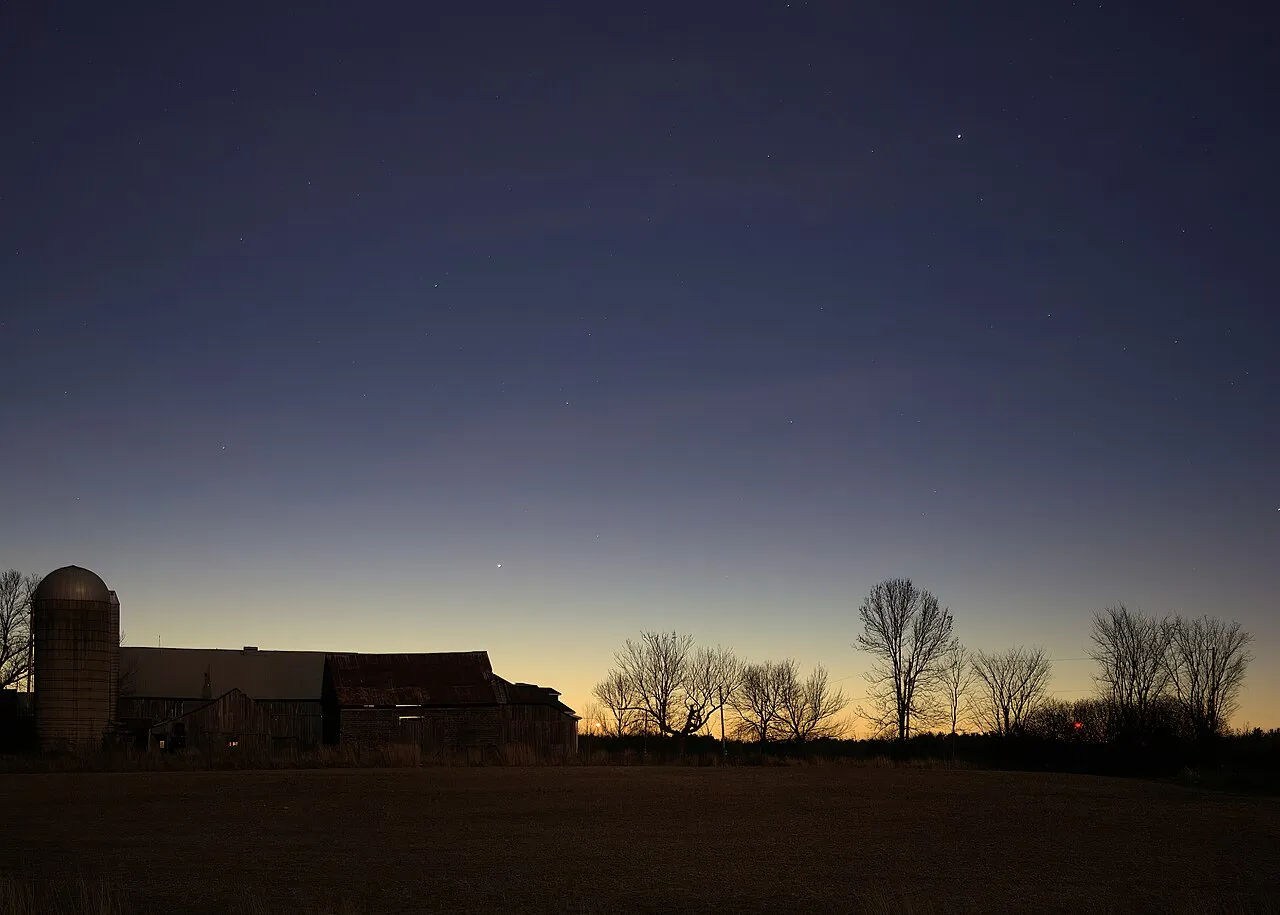
Ervad Ramiyar Karanjia's site reads the Geh as the "Dawn of new life for the soul". Its companions, Beregya and Nmânya in Mills's spelling (Berejya in Kanga's), are named in the Gah as "the holy lord(s) of the ritual order". Mills gives no gloss for either. Kanga's English explains Nmânya as the "chief Lord of the house".
Where do the companion names fit in?
Each Gah opens by naming its Geh together with companion beings. Mills calls them "lord(s) of the ritual order" and explains, in his Yasna notes, that they are lords "ruling as chief at the time of their mention". Kanga's footnote says these companions are generally regarded as the hamkārs, the co-working yazatas. Who they are, Geh by Geh, is the subject of the Yazatas of the five Gehs.
What each Gah prayer contains is described in the five Gah prayers in the Khordeh Avesta, and the published English versions are compared in the Gah prayers in English.
Practice varies between families and Agiaries; your family priest's guidance comes first.
Frequently asked questions
What does Geh mean in English?
Geh, also written Gah, means "time" or "period of time". Mary Boyce notes in Encyclopaedia Iranica that the Middle Persian word gāh can mean "place" or "time", and that in priestly use it goes back to Avestan gāθā-, the word for Zarathushtra's hymns. Why that word came to name the parts of the day is not certain.
What does Rapithwin mean?
Rapithwin is the midday Geh. The Bundahishn, in E. W. West's translation, calls it "the period of midday". Ervad Marzban J. Hathiram derives the word from "arem", righteous or timely, and "pithwa", nourishment. Ervad Ramiyar Karanjia's site links the name with Arempithwa, the mid-day division of the day named in Yasna 44.5.
Why is Havan sometimes spelt Hawan?
The Geh names have Avestan and Pahlavi forms, and Parsi writers spell them in more than one way. The Avestan form is Hâvani and the Pahlavi form in the Bundahishn is Hâvan. Avesta.org writes Hawan, and Ervad Ramiyar Karanjia's site writes Hāvan. Rapithwin and Rapithwan, or Ushahin and Ushahen, differ in the same way.
What does Aiwisruthrem mean?
No plain word-meaning for Aiwisruthrem appears in the translations we checked. The Bundahishn describes the period as running from the appearance of the stars until midnight. Ervad Ramiyar Karanjia's site gives a spiritual reading linking the name with aiwi-sru, hearing, and the soul's ability to listen to voices from the other world.
Is Ushahin linked to the dawn?
Yes, through its prayer. In L. H. Mills's translation the Ushahin Gah sacrifices "to the beautiful Aurora, and to the dawn of morning". The Bundahishn places the Geh from midnight until the stars fade, and Ervad Ramiyar Karanjia's site describes it as the "Dawn of new life for the soul".