PalV's Kasti
On this page
Uziran Geh is the third of the five Gehs of the Zoroastrian day: the afternoon watch, running from mid-afternoon to sunset. James Darmesteter's translation of the Khorda Avesta heads its prayer "Uzerin Gah - (mid-afternoon to sunset)". For India, Ervad Ramiyar Karanjia gives the start as 3:00 pm, or 3:38 pm by Indian Standard Time, and the end as sunset "whatever the time". So the watch grows and shrinks with the seasons. Its prayer turns first to Apam Napat, the "Son of the Waters", and to the waters made by Mazda. Mary Boyce, writing in Encyclopaedia Iranica, says that a Zoroastrian who says the prayers of the Uzērīn Gāh "has necessarily to call upon" him. The same prayer names Fradat-Vira and Dakhyuma, the stars, Moon and Sun, and eight priestly offices of the Yasna.
You will see the name spelt several ways: Uziran, Uzirin, Uzerin (Darmesteter) and Uzayeirina (in the avesta.org edition of L.H. Mills's Yasna translation).
શહેરેવર રોજ
Shehrevar Roj, Tir Mah · 1396 Y.Z.
When does Uziran Geh begin and end?
It begins in mid-afternoon and ends at sunset. The Bundahishn, in E.W. West's translation, calls it simply "the period of afternoon". It also says where the watch stops. The next period, Aiwisruthrem, begins "when the appearance of the stars has come into the sky".

| Source | Where it applies | Span given for Uziran |
|---|---|---|
| Darmesteter, Khorda Avesta | No place named | mid-afternoon to sunset |
| West, Bundahishn 25.9 | No place named | "the period of afternoon", until the stars appear |
| Ervad Ramiyar Karanjia, "5 Gehs – An Understanding" | India | 3:00 pm, or 3:38 pm IST, to sunset |
| Noshir H. Dadrawala, Parsi Times, 1 November 2025 | Western India | 3:00 pm to sunset |
The two present-day guides agree on the pattern. They fix the start by the clock and let the end move with the sun. Neither clock figure is universal, though. Each applies only to the place its author names, and sunset changes every day, so check your local sunset time. Dadrawala himself points readers to newspapers and apps for exact sunrise and sunset. Why the Indian figure sits 38 minutes after the round hour is covered in our guide to how Geh start times are calculated.
Uziran keeps its place all year. The Bundahishn says that winter has "four periods", because "from daybreak till Uzerin" it is all Hawan. Karanjia and Dadrawala describe the same custom today: from the beginning of Avan Mah to the Vahishtoisht Gatha, Rapithwin is not recited and the Hawan Gah is said in its place as the second Havan. Only the noon watch changes. The afternoon watch begins where it always does. To see when Avan Mah begins this year, use our Parsi calendar. If the Geh turns while you are praying, our answers on what to do when the Geh changes may help.
Practice varies between families and Agiaries; your family priest's guidance comes first.
Why is the afternoon watch linked with Apam Napat?
Because the afternoon has long been his watch. In her Encyclopaedia Iranica article on Apam Napat, Mary Boyce writes that in the old divisions of the day, the morning is "under the protection of Mithra". The afternoon, she says, belongs to Apam Napat.
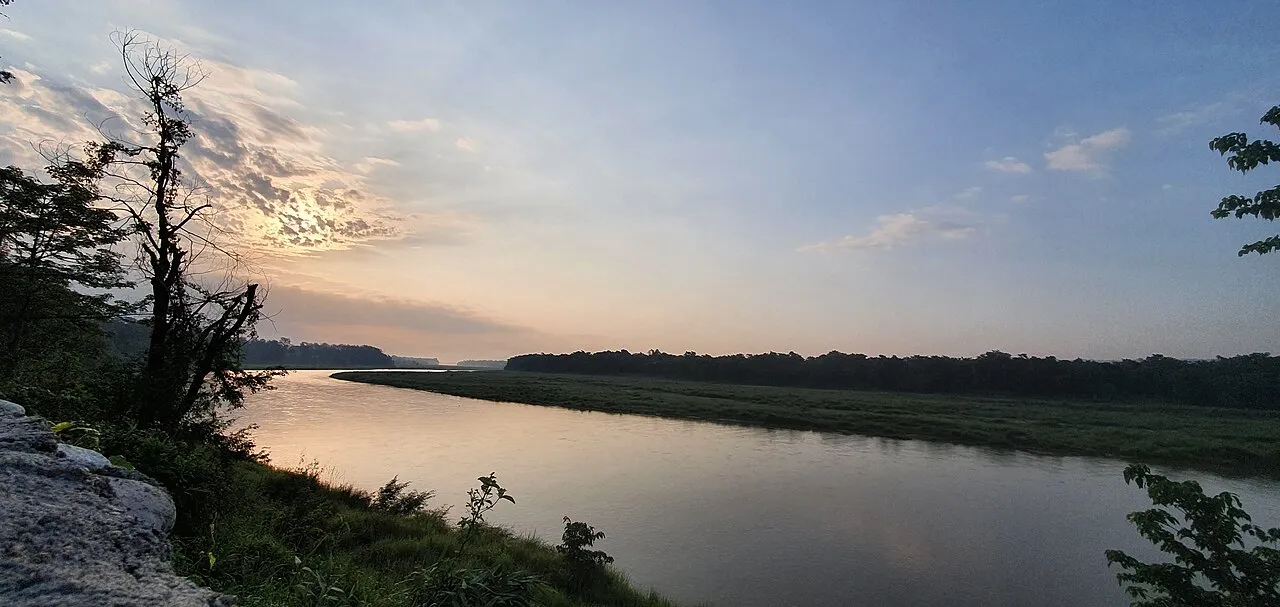
The prayer bears this out. In Darmesteter's translation, the second paragraph of the Uzerin Gah opens with "the lofty Ahura Apam Napat" and the waters of Mazda. Paragraph 8 comes back to him as "the lofty Ahura, the radiant Khshathra, Apam Napat", the one "possessing swift horses". Two other texts give the afternoon the same patron. In Sirozah 1, the line for the gah Uzerin addresses "Apam Napat, the tall lord", together with the water Mazda made. And Yasna 1.5, in the avesta.org edition of Mills, offers the Yasna to "that lofty Ahura Napat-apam (the son of waters)" as well as to the waters of Ahura Mazda.
That word Ahura matters. Boyce notes that Apam Napat carries "the title of Ahura (Lord)", a title she says is otherwise given only to Ahura Mazda and to Mithra. So the two daylight watches she describes each sit under one of the two lesser Ahuras, who were, in her words, "greatly and equally honored".
Which other divine beings does the Uzerin Gah name?
The Uzerin Gah runs to 11 numbered paragraphs in Darmesteter's edition. Besides Apam Napat, it names a mixed company:
- Uzerin itself and eight priestly offices. Paragraph 5 opens "We worship Uzerin, Ashavan, the master of Asha" and goes on to the Zaotar, Havanan, Aterevaxsh, Fraberetar, Aberet, Asnatar, Rathwishkara and Sraoshavarez. William Malandra's Encyclopaedia Iranica article on the Yasna gives the same eight Avestan names for the priests of that ceremony.
- Fradat-Vira and Dakhyuma, followed by the lights of the sky. Paragraph 6 worships this pair and then "the stars and the Moon and the Sun". Yasna 1.5 names the same pair.
- The lofty Ahura Apam Napat and the Ashavan waters, in paragraph 8.
Karanjia sums up the main matter of the Gah in a few words: "8 Priestly offices, Luminaries". His table lists Uzirina and Frādat-vira as the Geh's divine beings and Berez Yazad as its associate. Dadrawala also writes that Uziran "is presided over by Berez Yazata". For how these companions compare across all five watches, see the Yazatas of the five Gehs, and for the prayer texts themselves, our page on Geh prayers.
Is the afternoon one of the oldest prayer times?
On Mary Boyce's reading, yes. Writing of the morning of Mithra and the afternoon of Apam Napat, she judges it "probable" that before Zoroaster these were "the only divisions of the daylight hours". She then ties that history to present-day prayer: anyone saying the Uzērīn Gāh prayers today "has necessarily to call upon" the Son of the Waters.
Her separate Encyclopaedia Iranica article "Gāh" suggests the older day was "marked by prayers at sunrise, noon, and sunset". Uziran ends at the last of those three moments. After it comes the evening watch, explained in Aiwisruthrem Geh, the evening watch from sunset. For all five watches together, start with our guide to the Five Gehs.
Frequently asked questions
What time does Uziran Geh start?
Uziran Geh starts in mid-afternoon, according to Darmesteter's Khorda Avesta. For India, Ervad Ramiyar Karanjia gives 3:00 pm, or 3:38 pm by Indian Standard Time, and Noshir Dadrawala gives 3:00 pm for western India. The watch ends at sunset, so its length changes through the year with your local sunset.
Which divine being is invoked first in Uziran Geh?
The Uzerin Gah opens its second paragraph with the lofty Ahura Apam Napat, the Son of the Waters, and the waters made by Mazda. Mary Boyce writes that the afternoon is set under his protection. Ervad Ramiyar Karanjia and Noshir Dadrawala also name Berez Yazad as the associate divine being of this Geh.
Does Uziran Geh change in the winter months?
No. From the beginning of Avan Mah to the Vahishtoisht Gatha, the Hawan Gah is recited in the Rapithwin hours as the second Havan, according to Karanjia and Dadrawala. The Bundahishn describes winter Hawan running from daybreak until Uzerin. The afternoon watch keeps its place and its own prayer all year.
Which Geh comes after Uziran?
Aiwisruthrem Geh follows Uziran. Darmesteter's Khorda Avesta ends Uzerin at sunset and starts Aiwisruthrem at sunset. The Bundahishn is more exact and begins Aiwisruthrem when the stars appear in the sky. Noshir Dadrawala also notes that, traditionally, Aiwisruthrem begins only once it is dark and the stars are visible.
Who are the eight priests named in the Uzerin Gah?
Paragraph 5 of the Uzerin Gah, in Darmesteter's translation, worships the Zaotar, Havanan, Aterevaxsh, Fraberetar, Aberet, Asnatar, Rathwishkara and Sraoshavarez. William Malandra's Encyclopaedia Iranica article on the Yasna gives the same eight Avestan names for the priests of that ceremony. Karanjia sums up the Gah's main matter as priestly offices and luminaries.