PalV's Kasti

On this page
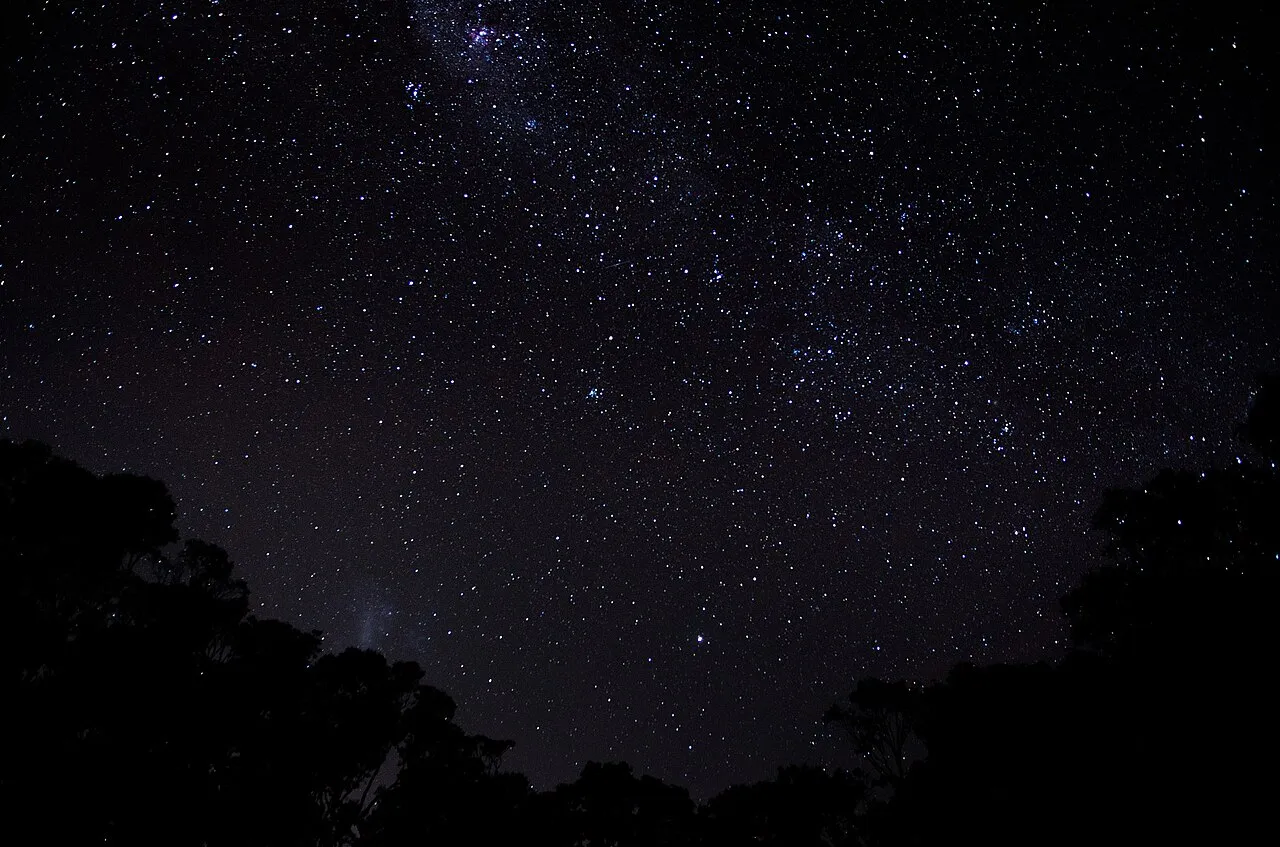
Ushahin Geh is the fifth and last watch of the Zoroastrian day. It begins at midnight and ends at dawn. The Bundahishn, in E.W. West's translation, defines it as the span "from midnight until the stars become imperceptible". Its prayer, the Ushahin Gah, turns first to Sraosha (Sarosh Yazad), and also names Berejya and Nmanya, Rashnu and Arshtat. Sraosha is the same divinity the older texts describe as keeping guard through the night. In present-day Parsi reckoning, as Ervad Ramiyar Karanjia sets it out, the watch runs from midnight up to sunrise, when Hawan Geh begins. So if you wake to pray before the sun is up, the prayer of the hour is the Ushahin Gah, which L.H. Mills notes is recited every day at the hour of Ushahina.
શહેરેવર રોજ
Shehrevar Roj, Tir Mah · 1396 Y.Z.
When does Ushahin Geh begin and end?
Ushahin Geh begins at midnight and ends at dawn. James Darmesteter's translation of the Khorda Avesta, as published on sacred-texts.com, heads the prayer "Ushahin Gah - (midnight to dawn)". The same edition heads the morning prayer "Hawan Gah - (sunrise to midday)". Read together, the two headings hand the night watch over to the morning watch at sunrise.
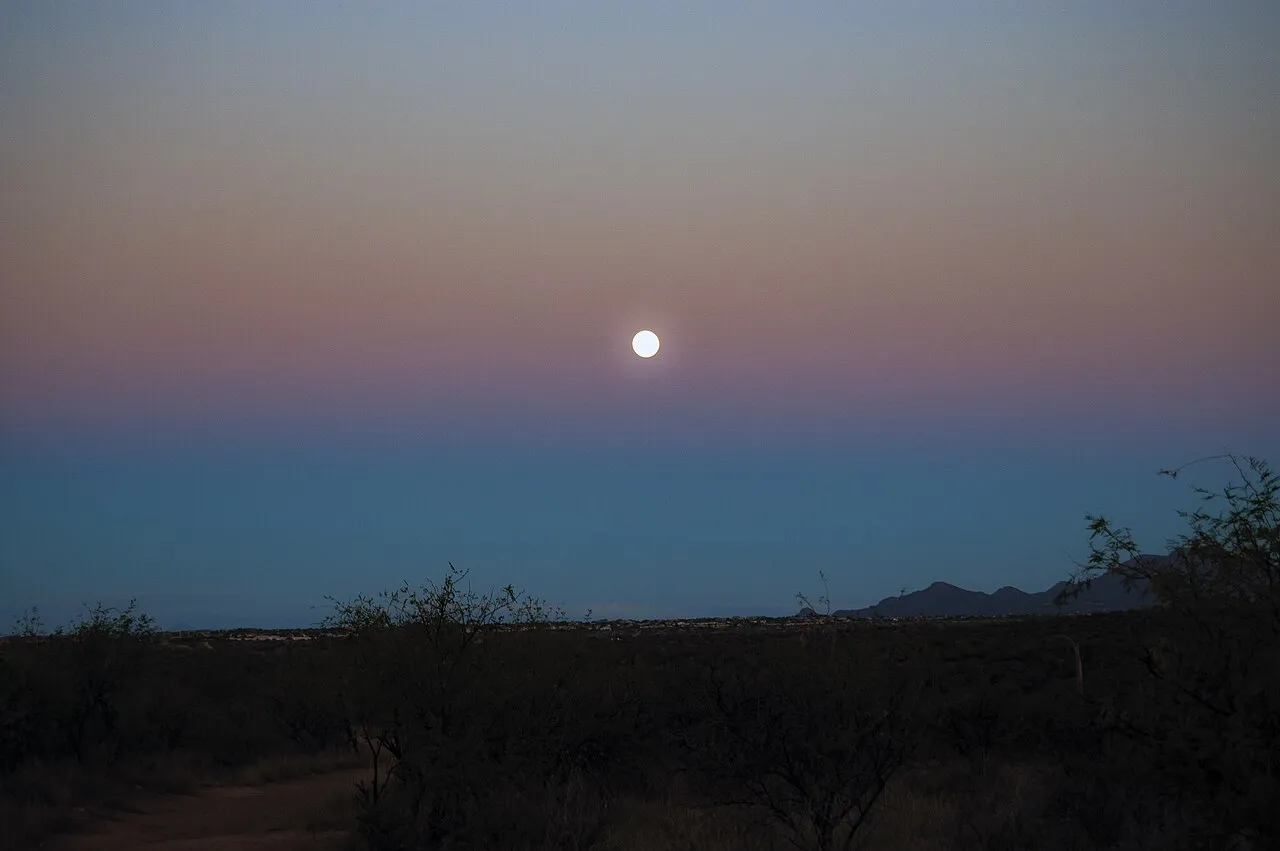
The Pahlavi Bundahishn gives an older and more visual definition. Chapter 25 lists the five periods of the summer months and ends the list with Ushahin, the period that runs "from midnight until the stars become imperceptible". The watch is defined by the sky, not by a clock.
| Source | Span given for Ushahin |
|---|---|
| Darmesteter, Khorda Avesta | midnight to dawn |
| West, Bundahishn 25.9 | from midnight until the stars become imperceptible |
| Ramiyar Karanjia, "5 Gehs – An Understanding" | from 12:00 midnight up to sunrise, "whatever the time" |
Because the watch ends at sunrise, its length changes through the year and from city to city. Ushahin is longer on a winter night than on a summer one. Karanjia's page also gives a second starting time in Indian Standard Time for those in India. Why a Geh in India can begin some minutes after the clock hour, and how sunrise fixes the end of the watch, is explained in our guide to how Geh start times are calculated.
Which Roj does Ushahin Geh belong to?
Ushahin Geh is the last Geh of its Roj, not the first Geh of the next one. The Zarthosti Anjuman of Northern California explains on its calendar page that a Roj "starts at sunrise" and runs until sunrise the following day. The hours between midnight and sunrise therefore still belong to the Roj that began at the previous sunrise.
The Bundahishn sets out the same order of counting. Chapter 25 opens its rules by saying it is necessary "first to count the day and afterwards the night". If you're unsure which Roj it is before dawn, our Parsi calendar shows the Roj for each date.
Which divinities are invoked in Ushahin Geh?
Sraosha leads the Ushahin Geh. The second paragraph of the Ushahin Gah opens "With propitiation of Sraosha, companion of Ashi, procuring rewards" in Darmesteter's translation. The divinities named across the prayer are:
- Ushahin, the watch itself, worshipped in paragraph 5.
- Berejya and Nmanya, its two companions, worshipped in paragraph 6. Mills calls the pair "the holy lord(s) of the ritual order".
- Sraosha, Rashnu and Arshtat, worshipped together in paragraph 7. Mills's line reads "And we sacrifice to Sraosha, and to Rashnu, the most just".
- Ushah, the dawn, praised in paragraph 5 alongside Ahura Mazda and four of the Amesha Spentas.
Sirozah 1, which carries short lines for the Gehs, gives the same leader. Its Ushahin line, in Darmesteter's translation on avesta.org, is addressed to "the holy, devout, fiend-smiting Sraosha". Ushahina also has its place in the opening of the Yasna. Yasna 1.7 announces the sacrifice "to Ushahina, the holy lord of the ritual order" in Mills's translation. For how these companions compare with those of the other four Gehs, see our article on the Yazatas of the five Gehs.
Why is Sraosha linked with the night?
The Avesta presents Sraosha as a guardian who works through the night. William Malandra's Encyclopaedia Iranica article on Sraoša describes him as "Especially active at night", and quotes Yasna 57.17 that he has "not slept since the two Spirits created their creations". The same article notes that he "protects the entire material world with his upraised weapon after sunset".
The Vendidad ties Sraosha to the end of the night through his bird. In Fargard 18, translated by Darmesteter, the bird Parodarsh is "the bird that lifts up his voice against the mighty Ushah". A footnote glosses that word as "the second half of the night", running from midnight to the dawn. The avesta.org editor, Joseph Peterson, adds "[Ushahin -JHP]" beside it. Verse 23 then says "the holy Sraosha wakes up the bird named Parodarsh", and the bird's call in verse 16 begins "Arise, O men!"
Dastur Dhalla carried the same picture into his own prayers. In chapter 51 of Homage unto Ahura Mazda he writes "Thy Sraosha keep his vigil from dusk to dawn".
What does the Ushahin Gah prayer contain?
The Ushahin Gah runs to 10 numbered paragraphs in the Darmesteter edition. L.H. Mills's footnote to his translation states that it is "Recited every day at the hour of Ushahina".
The fifth paragraph carries the image that gives this watch its character. After worshipping Ushahin, it praises the beautiful and radiant Ushah and her swift horses, which appear throughout the seven regions of the earth. Paragraph 7 turns to "Sraosha, companion of Ashi, fair of form, victorious". The closing paragraph asks for worship "for Sraosha, companion of Ashi" once more.
Don't confuse this full prayer with the one-line Ushahin dedication. The avesta.org Khorda Avesta prints a short form, "To Ushahin that furthers life, Ashavan, the master of Asha". Its note explains that these five dedications "are not recited independently" but are inserted into other prayers according to the time of day. Which ceremonies are performed in which watch is a separate question, covered in which ceremonies belong to which Geh.
Practice varies between families and Agiaries; your family priest's guidance comes first.
What did Dastur Dhalla write about rising at Ushah's dawn?
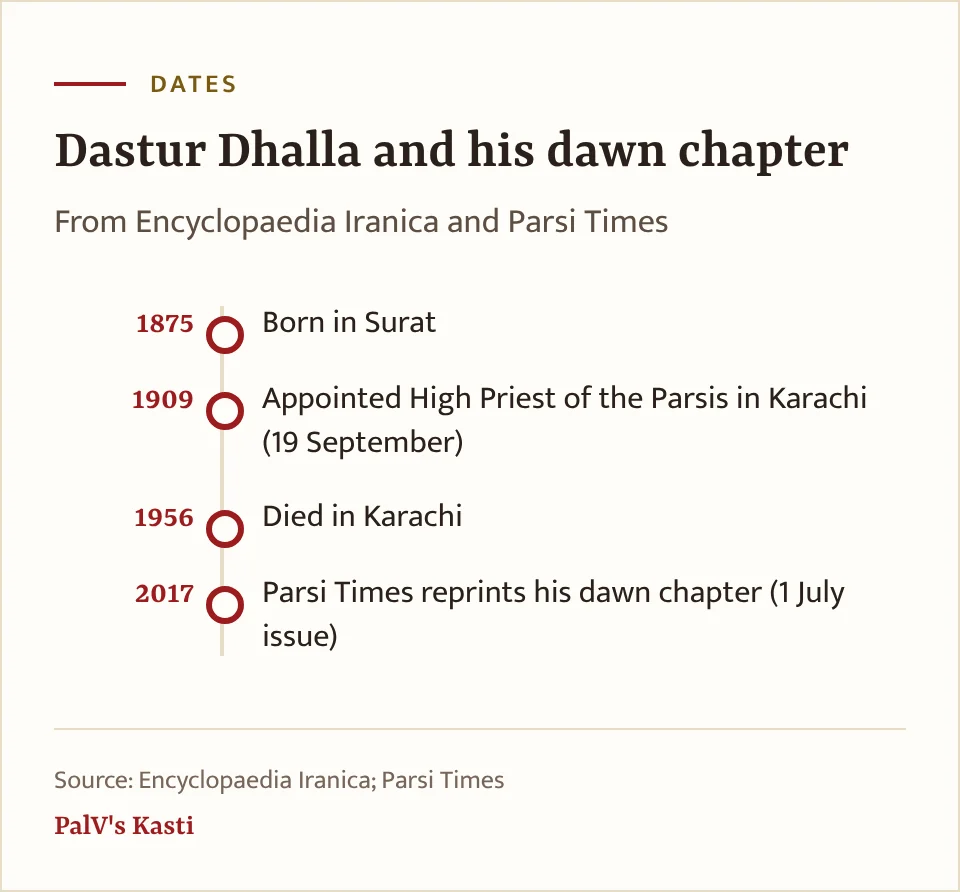
Dastur Dr Maneckji Nusserwanji Dhalla was born in Surat in 1875 and died in Karachi in 1956, according to Encyclopaedia Iranica. Roshan Rivetna's biography gives the same years. Iranica records that on 19 September 1909 he was "appointed the High Priest of the Parsis in Karachi". His book of devotional chapters, Homage unto Ahura Mazda, includes one titled "Let me rise early with bright Ushah's dawn". Parsi Times reprinted that chapter in its 1 July 2017 issue.

The chapter is written as a string of first-person resolutions. It opens "Let me rise with the dawn." Dhalla scolds himself: "Let me not waste my precious early hours in drowsiness." He pictures the shining Ushah arriving in "her brilliant chariot drawn by four ruddy steeds". And he ends by promising to spend "an hour in quiet, alone with thee" at dawn, planning the day under Ahura Mazda's guidance.
Mary Boyce held that Zoroaster asked his followers to pray at midnight and dawn as well. We look at that view in why the Zoroastrian day has five Gehs. For all five watches side by side, start from our guide to the five Gehs, their names, timings and meaning, and for the prayer texts themselves see our page on Geh prayers. The watch that follows has its own page: Hawan Geh, the morning watch from sunrise.
Frequently asked questions
What time does Ushahin Geh start?
Ushahin Geh starts at midnight. Darmesteter's Khorda Avesta heads its prayer "midnight to dawn", and the Bundahishn defines the watch as running from midnight until the stars fade. Ramiyar Karanjia's guide gives 12:00 midnight, with a separate Indian Standard Time figure for India. The watch ends at sunrise, so its length changes with the season.
Which prayer is recited before sunrise?
The Ushahin Gah is the prayer for the hours between midnight and sunrise. L.H. Mills, in his Sacred Books of the East translation, notes that it is recited every day at the hour of Ushahina. Once the sun rises, the period changes to Hawan Geh, which has its own prayer, the Hawan Gah.
Which Yazata leads the Ushahin Gah?
The Ushahin Gah invokes Sraosha first, in its second paragraph, and again with Rashnu and Arshtat in its seventh. It also names the companions Berejya and Nmanya. Sirozah 1 addresses its Ushahin line to the fiend-smiting Sraosha, and Ramiyar Karanjia's table lists Sarosh Yazad as the Geh's associate divine being.
Does Ushahin Geh belong to the old Roj or the new one?
Ushahin Geh belongs to the Roj that began at the previous sunrise. The Zarthosti Anjuman of Northern California's calendar page explains that a Roj runs from one sunrise to the next. So the hours after midnight are the closing watch of the old Roj, and the new Roj begins with Hawan Geh.
What is the connection between Ushahin and Ushah?
Ushah is the dawn, praised inside the Ushahin Gah itself, with her swift horses, in the fifth paragraph. In Darmesteter's Vendidad translation, a footnote also uses Ushah for "the second half of the night", from midnight to dawn, and the avesta.org editor marks it as Ushahin. The two words sit side by side in the prayer.