PalV's Kasti
On this page
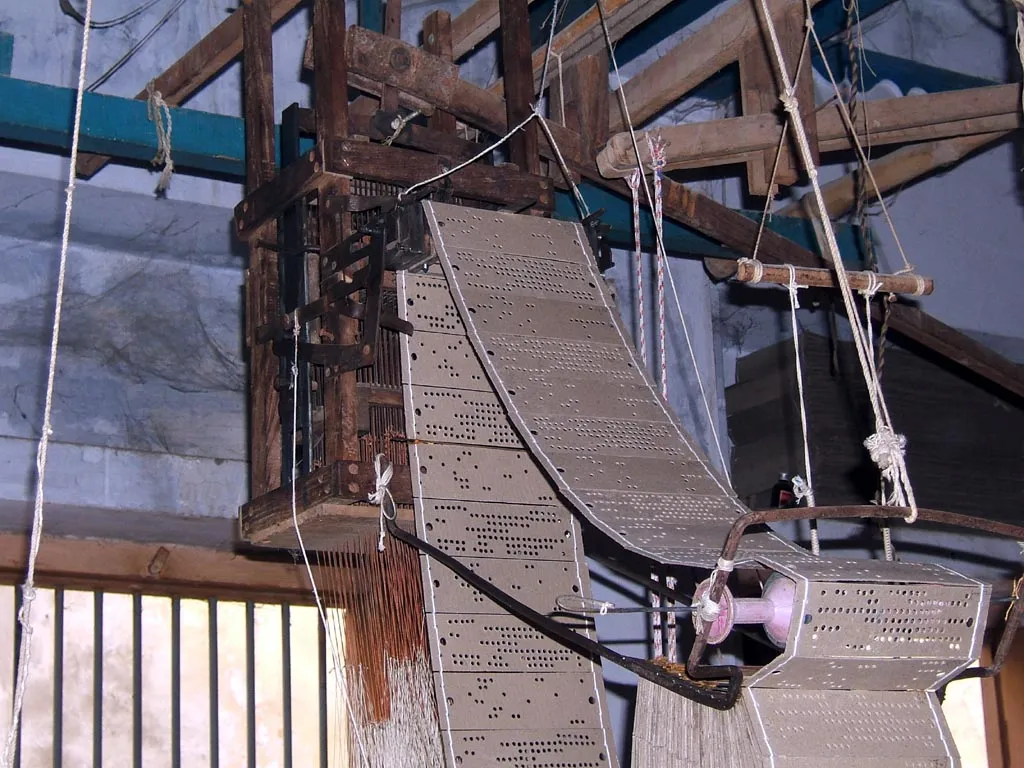
A woven gara takes the look of Parsi gara embroidery and makes it on the loom instead of with a needle. A traditional gara is embroidered: the CSMVS museum in Mumbai explains that the word garo came to be associated with "the chinese embroidered sari". The best-documented woven version is designer Ashdeen Z. Lilaowala's 2016 collaboration with the Banarasi handloom label Ekaya, which Open magazine says set out "to create woven garas". Reports describe those pieces in different ways, and a historian publicly objected to them. Lilaowala's own view is that the Parsi gara is "an aesthetic rather than a technique". Below we set out what is on record about Benarasi garas, the older Parsi weaving link in Surat, and what we could not verify about machine-woven copies.
શહેરેવર રોજ
Shehrevar Roj, Tir Mah · 1396 Y.Z.
How is a woven gara different from an embroidered gara?
The difference is where the pattern comes from. On a traditional gara, the motifs are stitched onto finished silk. CSMVS records that gara motifs were usually worked in long and short satin stitch and in the tiny kha-kha, or seed-pearl, stitch. On a woven piece, the pattern is built into the cloth on the loom.
That difference sits at the heart of the disagreement below. Lilaowala told Open magazine that he keeps saying the Parsi gara is "an aesthetic rather than a technique". On his reading, the gara is defined by its look and its motifs, and those can travel to other techniques. Our article on gara embroidery motifs covers what those motifs are and what they mean.
Who made Benarasi garas?
Ashdeen Z. Lilaowala worked with Ekaya Banaras in 2016. Two publications give that year: Open magazine, in February 2025, and The Nod, in January 2026.
They describe the result differently. Open says he "collaborated with Banarasi handloom label Ekaya to create woven garas". The Nod describes Benarasi saris and lehengas, made with Ekaya Banaras, that were "accented with gara embroidery". In a 2022 interview with The Established, Lilaowala himself called it the collaboration with "Ekaya where we innovated with the Benarasi weave". We couldn't open the original 2016 launch report, so we don't list the collection's name or motifs here.
Ekaya's own website describes the label as a 120-year-old, fourth-generation family business born in Banaras, names Palak Shah as its founder and CEO, and calls its textiles handwoven.
Why was the Benarasi gara controversial?
The Benarasi garas drew public criticism. Open magazine reports Lilaowala recalling that a historian "once called him a criminal for the gara Banarasis". The Nod reports the same episode in other words: a historian publicly called the work "a disservice to the community, to the craft". Neither publication names the historian.
Lilaowala has spoken about both his doubt and the outcome. He told The Nod, "I spent two days thinking, 'oh my god, have I done something terrible?'" The same article reports that "sales of those Benarasi looks were through the roof".
We set out both positions and don't pick a side. The case against rests on the gara being an embroidered textile, as CSMVS defines it. The case for rests on Lilaowala's view that the gara is an aesthetic.
Is weaving gara designs new?
No. The Benarasi garas weren't the first meeting of Parsis and the loom. The UNESCO Parzor Foundation credits Parsi weavers centred at Surat with pioneering three crafts: the Surti Ghat, the Tanchoi and the Garo. It adds that "The Sali Garo and Tanchoi were originally Chinese crafts".
Parzor also links Surat and Benares directly. It traces "the famous Tanchois of Surat (and later of Benares)" to three Parsi Jokhi brothers, a family it also spells Joshi. Its team says it has found early Tanchoi sample pieces made on the looms with the family's seal woven onto them. The story of that brocade belongs to our article on the Tanchoi.
Some embroidered garas were themselves worked on Surat-woven cloth. A Parzor story on Google Arts & Culture describes one engagement gara as "Made in Surat, on Surti gaaj or jacquard". And Lilaowala's own textile archive, Open reports, holds "Tanchoi and Banarasis" alongside his Parsi garas.
What about machine-woven and power-loom gara designs?
We haven't found a museum record, a Parzor publication or a named press report that documents machine-woven or power-loom versions of gara designs specifically. So we don't describe them here, and we don't give prices.
The pressure that power looms put on handloom weaving is on record more generally. Ekaya's Palak Shah told Homegrown in September 2024 that "the rise of cheaper, power-loom alternatives" is an ongoing challenge. She was speaking about Banarasi weaving as a whole, not about garas.
If you're trying to judge whether a gara in front of you is hand-embroidered or machine-made, start with our guide on how to tell a hand-embroidered gara from a machine-made one. For what a gara is in the first place, see our guide to the Parsi gara saree. For where historic garas are kept today, read the global gara, and for the wider craft, our guide to Parsi embroidery.
Frequently asked questions
Is a Benarasi gara a real Parsi gara?
Opinions differ. CSMVS ties the word garo to the Chinese embroidered sari, so a purely woven piece falls outside that definition. Designer Ashdeen Lilaowala argues that the gara is "an aesthetic rather than a technique". A historian publicly criticised his 2016 Benarasi garas with Ekaya. We record both views and leave the judgement to you.
Who made Benarasi garas?
Designer Ashdeen Z. Lilaowala made them with Ekaya Banaras, a Banarasi handloom label, in 2016, according to Open magazine and The Nod. Open calls them woven garas. The Nod describes Benarasi saris and lehengas accented with gara embroidery. Lilaowala told The Established in 2022 that the collaboration "innovated with the Benarasi weave".
What is the Parsi link to weaving in Surat?
The UNESCO Parzor Foundation says Parsi weavers centred at Surat pioneered three crafts: the Surti Ghat, the Tanchoi and the Garo. It traces the Tanchois of Surat, and later of Benares, to three Parsi Jokhi (Joshi) brothers, and says it has found early Tanchoi samples with the family seal woven in.
Are Ekaya's Benarasi saris handwoven?
Ekaya says so. Its own website calls its textiles handwoven, and Open magazine describes Ekaya as a Banarasi handloom label. CEO Palak Shah told Homegrown in 2024 that cheaper power-loom alternatives are an ongoing challenge for the business. None of these sources discusses machine-woven gara designs.