PalV's Kasti
On this page
- What does the name "Dae" mean?
- Why is the tenth month dedicated to Ahura Mazda but not named Hormazd?
- Which days of Dae Mah belong to Ahura Mazda?
- Why does Dae Mah have four feast days of Ahura Mazda?
- Were the three Dae days always dedicated to the Creator?
- Is Dae Mah a winter month?
- Where do you go next to learn about Dae Mah?
- Frequently asked questions
Dae Mah is the tenth month of the Parsi calendar, and it is the month of Ahura Mazda himself. Its name isn't Hormazd, though. It is a title: "Creator". The Avestan name is daθušō (māh-), "(month) of the Creator", and the Pahlavi translators rendered that word for "creator" as dādār, the Dadar of the Parsi phrase "Dae Dadar". Ahura Mazda already presides over four days of every month: the 1st, Hormazd, and the three Dae days, the 8th, 15th and 23rd. In Dae Mah his days and his month meet four times. As the historian Mary Boyce put it, that gave "four festivals for Ahura Mazdā in the month Dadvah".
શહેરેવર રોજ
Shehrevar Roj, Tir Mah · 1396 Y.Z.
What does the name "Dae" mean?
"Dae" goes back to the Avestan word for "Creator". The Encyclopaedia Iranica entry on the month, by William W. Malandra, gives the tenth month's Avestan name as daθušō (māh-), "(month) of the creator". The underlying word, daδuuah-, is a perfect active participle of the verb dā-, and Malandra explains that it could mean "who has created" or, "more likely, 'who creates'". He also notes that Pahlavi translations of Avestan texts always gloss daδuuah- with dādār. That is the word we still use when we say Dadar Ahura Mazda, a form that appears in the North American Mobeds Council's own greetings.
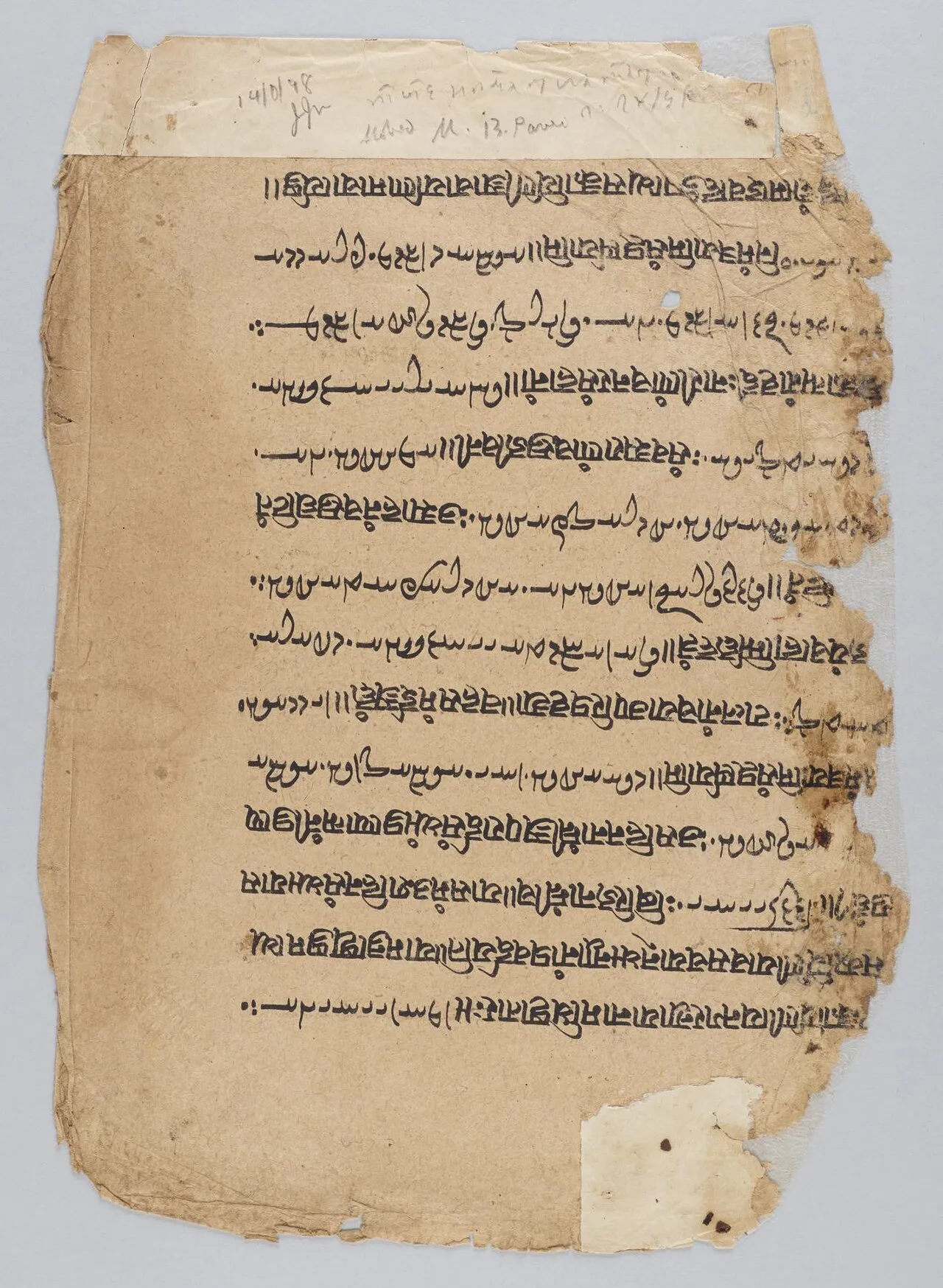
The month's name has been written several ways. You'll see all of these in sources about the same month:
| Form | Where it is used | Source |
|---|---|---|
| daθušō (māh-) | Avestan, "(month) of the Creator" | Malandra, Encyclopaedia Iranica |
| day | Pahlavi spelling of the month | Malandra, Encyclopaedia Iranica |
| Dai | Middle Persian, as Boyce writes it | Boyce, Encyclopaedia Iranica |
| Dadvah | Boyce's name for the month in Avestan form | Boyce, Encyclopaedia Iranica |
| Dae | Parsi spelling, in FEZANA's list of the twelve months | FEZANA calendar lesson |
Why is the tenth month dedicated to Ahura Mazda but not named Hormazd?
The month is named after Ahura Mazda's epithet "Creator" rather than his proper name. Malandra records both halves of the pattern: the tenth month was "(month) of the creator", and the 8th, 15th and 23rd days carried the same epithet, daθušō (aiiarə), "(day) of the Creator". Only the first day of the month carries the proper name. In L. H. Mills's translation of the Yasna, a footnote states plainly: "The first day of the month is called Ahura Mazda."
The Yasna opens with this same title. In Mills's translation, the first line announces the Yasna "to Ahura Mazda, the Creator, the radiant and glorious".
None of the sources we checked says why the month took the title instead of the name. We have left that question open rather than guess.
Which days of Dae Mah belong to Ahura Mazda?
Four days of Dae Mah belong to Ahura Mazda: Roj Hormazd (1st), Dae-pa-Adar (8th), Dae-pa-Meher (15th) and Dae-pa-Din (23rd). The same four days belong to him in every month. FEZANA's calendar lesson lists Dae pa Adar, Dae pa Mehr and Dae pa Din as the days linked with Hormazd.
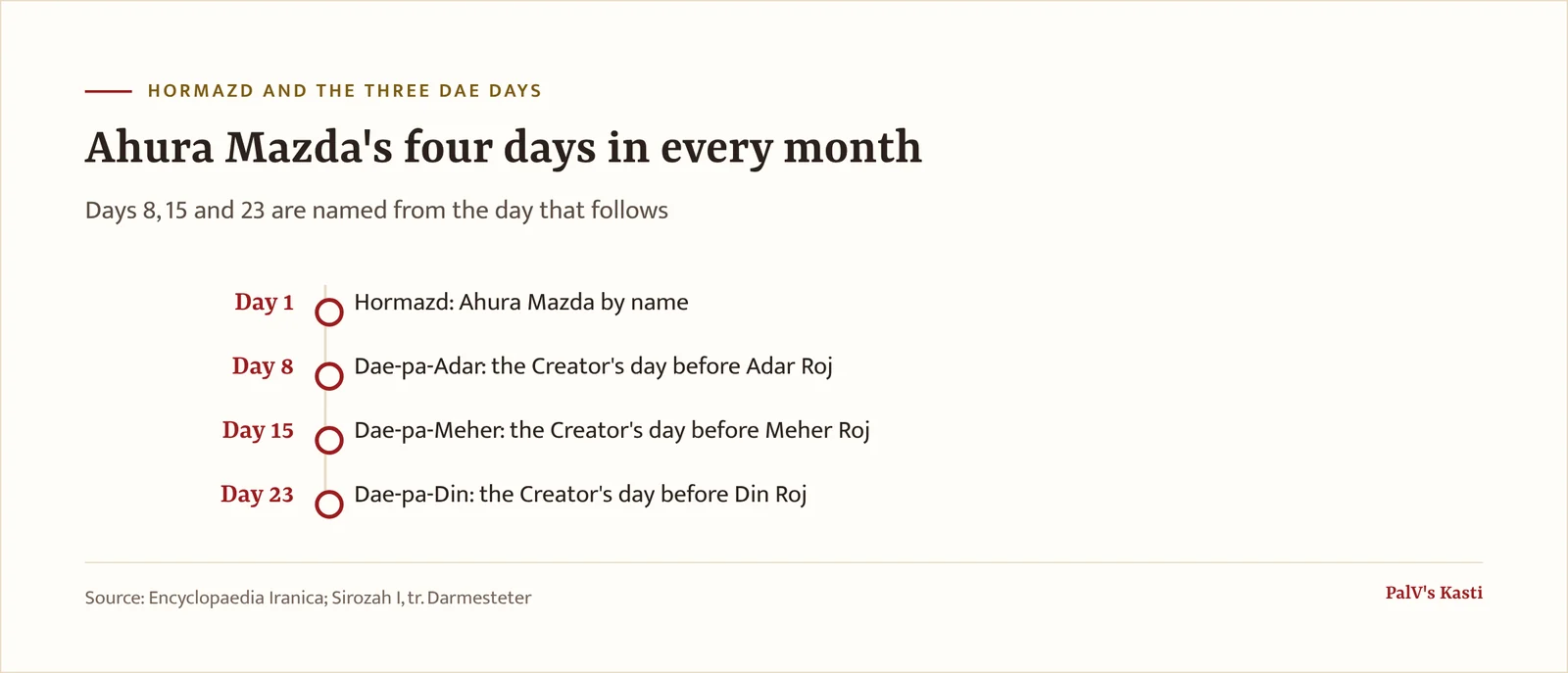
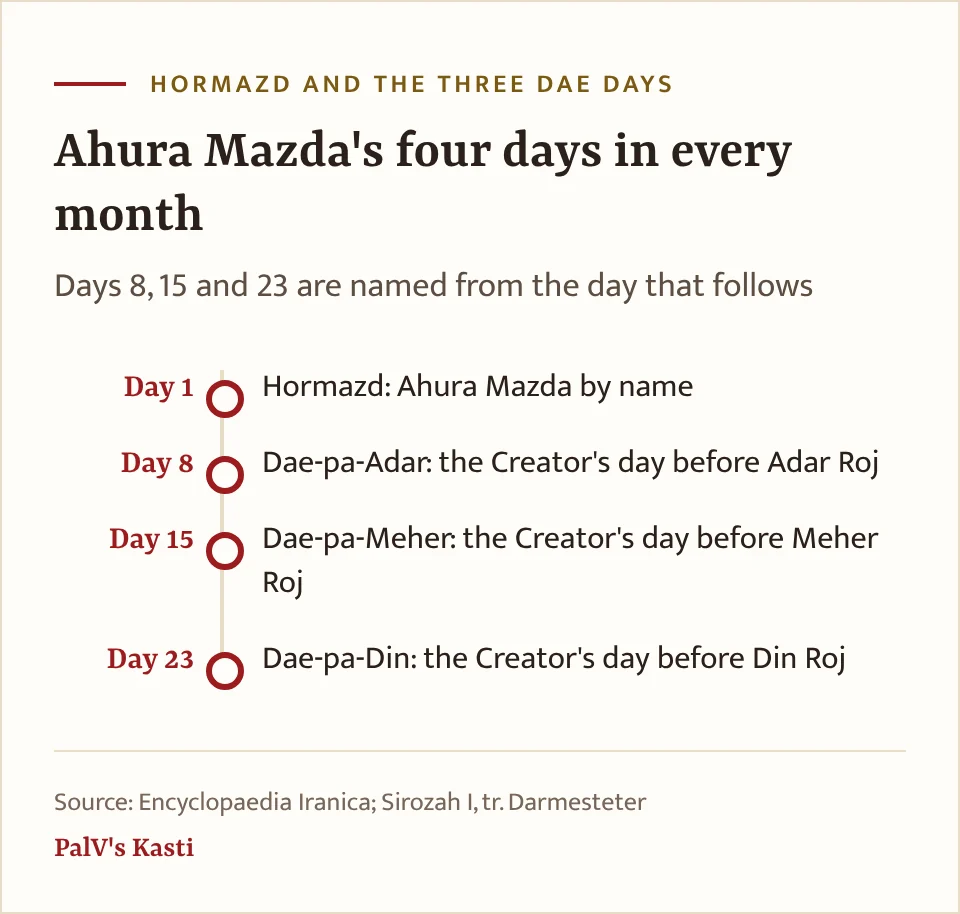
| Day | Name | How James Darmesteter's translation of Sirozah I opens the day |
|---|---|---|
| 1 | Hormazd | "To Ahura Mazda, bright and glorious" |
| 8 | Dae-pa-Adar | "To the Maker Ahura Mazda, bright and glorious" |
| 15 | Dae-pa-Meher | "To the Maker Ahura Mazda, bright and glorious" |
| 23 | Dae-pa-Din | "To the Maker, Ahura Mazda, bright and glorious" |
Look at the wording. Day 1 is "To Ahura Mazda". Days 8, 15 and 23 are "To the Maker Ahura Mazda". Darmesteter's footnote explains that these three days have "no name of their own". Each is "named from the day that follows". So Dae-pa-Adar is the Creator's day before Adar Roj. Malandra gives the Pahlavi forms as day pad ādur, day pad mihr, day pad dēn. Our guide to the Dae days of every month covers these three days in full.
Why does Dae Mah have four feast days of Ahura Mazda?
Because the month and four of its days share the same dedication. Mary Boyce, writing in the Encyclopaedia Iranica, describes the general rule: when a day-name and a month-name shared a dedication, that day became a festival for the yazata concerned. Her example is the day of Mithra in the month of Mithra. J. J. Modi stated the same rule for Parsi practice in 1922: the day bearing the name of the Yazata who also presides over the month "is held as a sacred Jashan day".
For a divinity with one day and one month, that meeting comes once a year. Ahura Mazda rules four days of every month and the whole of Dae Mah, so the meetings come four times in one month. Boyce's conclusion was that there were from then on "four festivals for Ahura Mazdā" in the month. Modi, writing of the Parsis, names the 1st, 8th, 15th and 23rd of Dae as "the sacred Jashan days" of the month. For the Jashan itself, see Jashans in Dae Mah.
Practice varies between families and Agiaries; your family priest's guidance comes first.
Were the three Dae days always dedicated to the Creator?
Not according to Mary Boyce. In her Iranica article on Zoroastrian festivals, she writes that at an earlier stage the 8th, 15th and 23rd days were "devoted, it seems, to Apam Nąpāt, Haoma, and Dahma Āfriti". Later, "possibly under Zurvanite influence", they were rededicated to the "Creator (Dadvah) Ahura Mazdā". She adds that, on this hypothesis, matching changes were made at that time in Yasna 16.
That is Boyce's reconstruction, and she hedges it twice, with "it seems" and "possibly". Darmesteter, writing more than a century earlier, records only that the three days are under the "rule of Ahura and the Amesha-Spentas, like the first day". Every source cited here agrees on the present arrangement: four days of Ahura Mazda in each month.
Is Dae Mah a winter month?
In origin, yes. Boyce calls Dadvah "a midwinter month", a time when the Creator's power and the joy of his creatures were most needed. She also reports, from the scholar Biruni, that the Sogdians held fairs on the three Creator days. The Sogdian calendar kept the old Iranian genitive form of the month's name, Malandra notes.

Today the answer depends on which calendar you follow. FEZANA's calendar lesson describes the structure: 30 days to a month, 12 months to a year. The Fasli calendar, FEZANA adds, was started in 1906 to begin the new year at the spring equinox, 21 March. Count nine 30-day months on from 21 March and you reach 16 December, which is where the Fasli month table on avesta.org starts the month of Day. So Fasli Dae Mah still falls in winter.
The Shenshai calendar has moved a long way from that. On 3 June 2013, the North American Mobeds Council dated its newsletter Shehenshahi Mah Dae, Kadmi Mah Behman and Fasli Mah Khordad. Shenshai Dae Mah, in other words, was under way in early June. For the current dates in all three calendars, see when Dae Mah falls in the Shenshai, Kadmi and Fasli calendars, or check today's Roj and Mah on our Parsi calendar.
Where do you go next to learn about Dae Mah?
This page answers one question: what the month is. The other guides in this series each take one question further:
- How Parsis observe Dae Mah, on the customs of the month, including Zarthost no Diso on Khorshed Roj
- Jashans in Dae Mah, on the Jashan held in this month
- The Dae days of every month, on Dae-pa-Adar, Dae-pa-Meher and Dae-pa-Din
- Prayers associated with Dae Mah, on what is recited in the month of the Creator
- When Dae Mah falls, on finding the month in each calendar
To see where Dae sits among the other eleven, read our guide to Parsi calendar names, or start with the Zoroastrian calendar as a whole.
Frequently asked questions
What is Dae Mah?
Dae Mah is the tenth month of the Zoroastrian calendar used by Parsis, and it is dedicated to Ahura Mazda as Creator. Its Avestan name, daθušō (māh-), means "(month) of the Creator", according to the Encyclopaedia Iranica. So the month is named after Ahura Mazda's title, Creator, and not after Hormazd, his proper name.
What does Dadar mean in "Dae Dadar"?
Dadar means "Creator". It comes from the Pahlavi word dādār, which Pahlavi translators always used to render the Avestan daδuuah-, the epithet of Ahura Mazda behind the month's name. William Malandra explains in the Encyclopaedia Iranica that daδuuah- most likely means "who creates". The North American Mobeds Council still writes Dadar Ahura Mazda.
Which days of Dae Mah are dedicated to Ahura Mazda?
Four days: Roj Hormazd on the 1st, Dae-pa-Adar on the 8th, Dae-pa-Meher on the 15th and Dae-pa-Din on the 23rd. These days belong to Ahura Mazda in every month. In Dae Mah they fall inside his own month, which is why the month holds four of his feast days.
Why does Dae Mah have more feast days than other months?
A feast falls when a day and its month share a dedication, as on Meher Roj of Meher Mah. Ahura Mazda presides over four days of every month and over the whole of Dae Mah, so the match happens four times. Mary Boyce wrote that this gave four festivals for Ahura Mazda in the month.
Is Dae the same as Dai or Day?
Yes, these are spellings of the same month. Day is the Pahlavi form given in the Encyclopaedia Iranica, Dai is the Middle Persian form Mary Boyce uses, and Dae is the Parsi spelling found in FEZANA's month list. All of them go back to the Avestan daθušō, "of the Creator".
When does Dae Mah fall?
That depends on the calendar. In the season-fixed Fasli calendar, Dae Mah begins on 16 December. The Shenshai calendar runs months earlier in the Gregorian year: on 3 June 2013, Shenshai Parsis were in Mah Dae while Kadmi Parsis had already reached Mah Behman. Our dates guide and Parsi calendar give the current dates.